Romania’s New Antisemitism Law Is Removing Monuments to One of Its Most Celebrated Poet
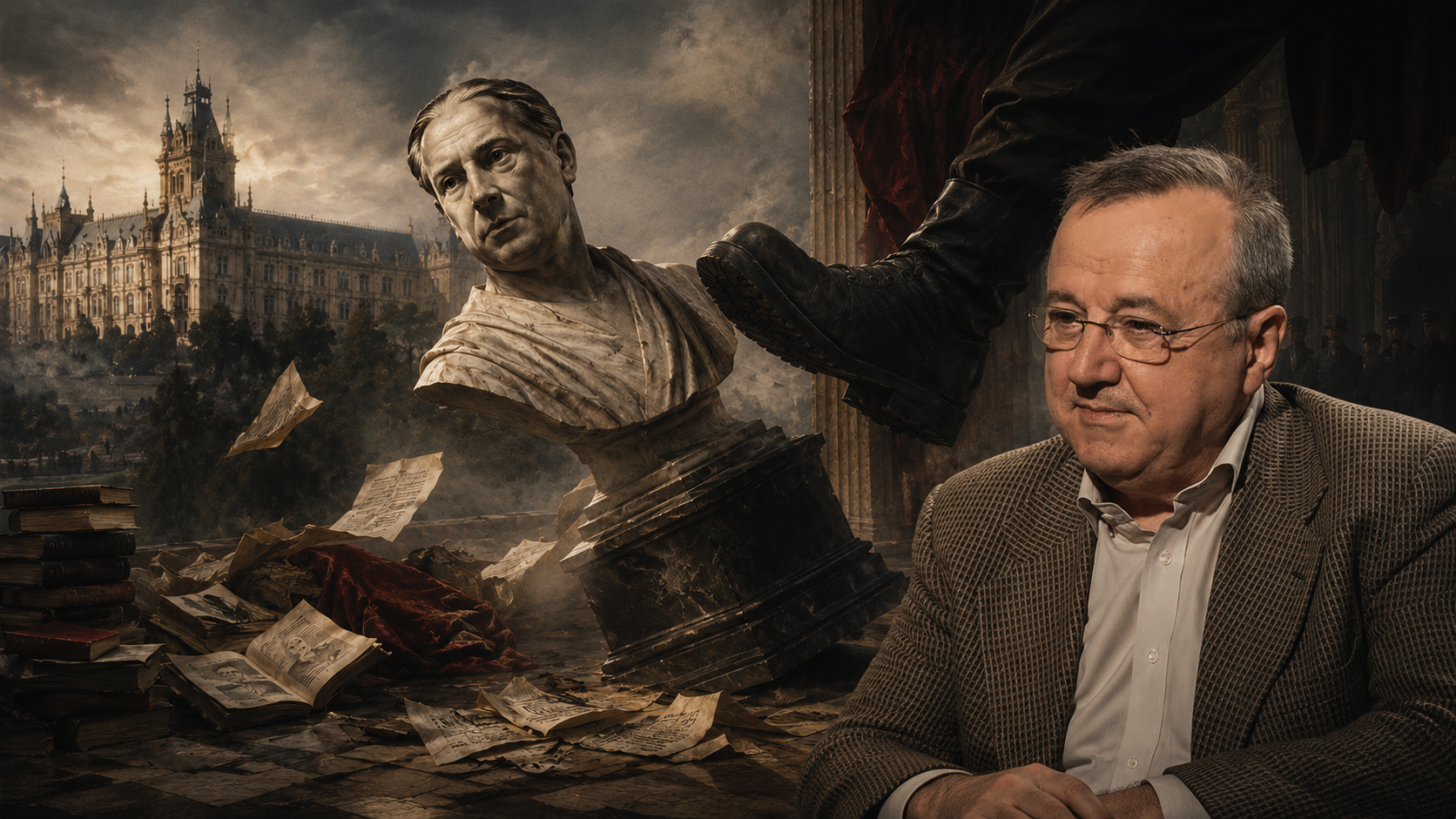
In late March, workers in the historic Romanian city of Iași quietly lifted the bronze bust of Octavian Goga from its pedestal in Copou, one of the city’s most beloved and most frequented spots, and carried it away to a storage hall. There was no ceremony, no public debate in the city council chamber, no referendum. There was only a letter from an NGO in Arad, four hundred kilometres away, and a new law: Law no. 241/2025, known across Romania as the “Vexler Law.”
Goga is not a marginal figure; generations of Romanians know him as “the poet of our suffering,” the bard of national awakening, whose verses gave voice to Romanians living under Austro-Hungarian rule and helped forge the emotional groundwork of the Great Union of 1918. His poetry is taught in schools; streets, libraries and schools across the country carry his name. And now, under the new legislation, his likeness has been declared unfit for public space.
The Vexler Law, initiated by deputy Silviu Vexler and published in Romania’s Official Gazette on 24 December 2025, updates the country’s anti-extremism legislation. Its stated purpose is beyond reproach: to combat antisemitism, Holocaust denial and the glorification of fascism and of the interwar Legionary Movement.
The controversy lies in the law’s amendments and their mechanical application. Articles 12 and 13 prohibit the erection or maintenance in public places (museums excepted) of statues, monuments and commemorative plaques dedicated to persons convicted of crimes against humanity or who were part of the leadership of fascist, legionary, racist or xenophobic organisations. It is this second, far broader category that has swept up Octavian Goga, who died in 1938 and was never tried or convicted of anything, and it is this category that critics say turns a law against hatred into a blunt instrument against Romania’s cultural memory.
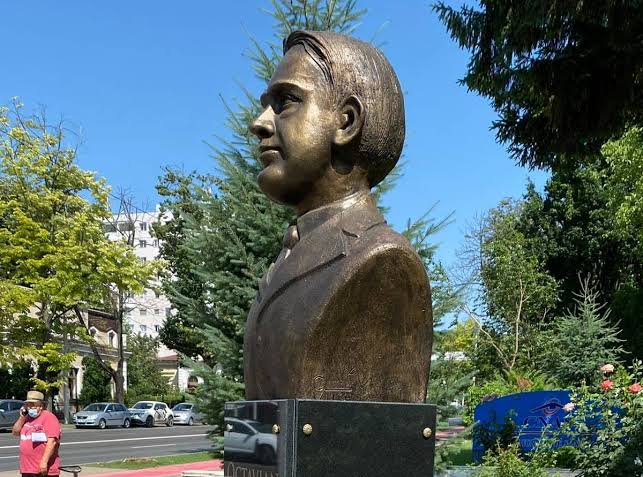
The Association for the Prevention and Combating of Antisemitism and Legionarism, based in Arad, invoked precisely these provisions in its request to the Iași City Hall. When the municipality failed to answer within the legal deadline, the association sued. The authorities complied: on 28 March 2026, the bust came down. The same association has since demanded that the Octavian Goga County Library in Cluj-Napoca be renamed, a signal that Iași was not an isolated episode but the opening act of a broader purge of Goga’s name from public space.
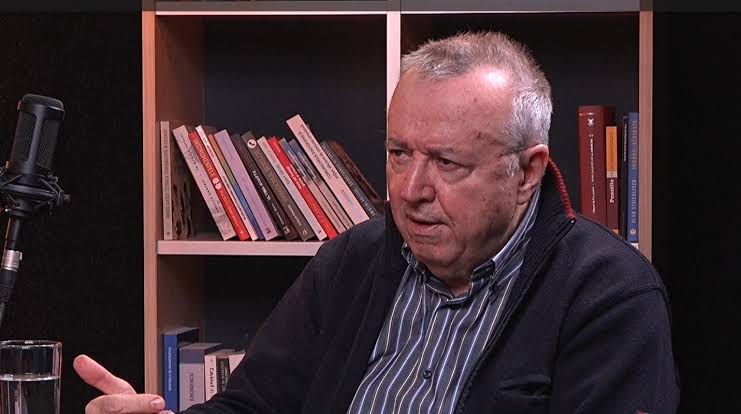
Among the first and most forceful voices to flag the absurdity of the situation was Ion Cristoiu, the veteran journalist and publicist who has spent decades excavating the paradoxes of Romania’s twentieth century.
Cristoiu’s argument carries particular weight because he has written extensively about the strange posthumous career of Octavian Goga. His research centres on 1957, when the communist poet Mihai Beniuc spearheaded the official rehabilitation and republication of Goga’s works. The paradox Cristoiu dissects is exquisite: a Stalinist regime that despised authentic Romanian nationalism nevertheless chose to resurrect Goga’s patriotic “Poet of the Olt” persona, carefully filtering out his far-right political journalism and capitalising on his anti-imperialist, socially rebellious verse. Beniuc himself recalled being “deeply offended” when, at the end of 1944, overzealous hands toppled Goga’s head from its plinth among the writers’ busts in Bucharest’s Cișmigiu Park.
For Cristoiu, the lesson of 1957 was that even the harshest ideological regime understood it could not simply amputate a poet of Goga’s stature from the national canon, that cultural legitimacy required tactical shrewdness rather than dogmatic purity. The bitter irony he now points to is that democratic Romania is doing what even the communists ultimately refused to do: erasing the poet along with the politician.
In his commentaries and video blogs, Cristoiu insists that Goga the poet should be celebrated publicly regardless of his disastrous political career, and he has described the removal of statues as a mutilation of historical memory reminiscent of communist-era censorship, a modern cancellation campaign, in his framing, waged against a pillar of Romanian national identity.
He is not alone. Historian Ioan-Aurel Pop, president of the Romanian Academy, reacted to the Iași removal by quoting Umberto Eco on “the invasion of imbeciles,” warning that tearing down statues, banning street names and purging school curricula produces nothing but “coffins” inside Romanian culture. In Cluj, a group of intellectuals issued a declaration calling any attempt to eliminate Goga the poet and unionist from public consciousness “an assault on national identity.” A conservative civic campaign to repeal the law has gathered more than 13,000 signatures, and the museum director in Sibiu, Goga’s native county, warned of a “dangerous precedent.” Even the Atheneum in Iași, the institution that both erected and removed the bust, stressed that the monument had honoured the poet, never the politician.
The Elie Wiesel National Institute for the Study of the Holocaust in Romania, backed by an open letter signed by dozens of public figures, argues that the law censors nothing: Goga’s literary and journalistic work remains fully available for study, publication and teaching. What the law prohibits, the Institute says, is the public validation of the political figure through monuments and honorific place names, and it calls attempts to frame his record “an attack on the democratic order.” The lawyer behind the Arad association’s request framed the removal not as a battle over the past but over “the kind of future we choose to build.”
The Goga affair thus distils a dilemma no democracy has fully solved: can a nation separate the poet from the politician, the artist from the man? Supporters of the Vexler Law answer that public monuments are not neutral archives but acts of honour, and that a state cannot honour the author of its first antisemitic law. Critics answer that memory laws applied without discernment do not defeat extremism, they feed it, handing real fascists a martyr and hollowing out the shared cultural inheritance that binds a nation together. Some observers have noted a further, uncomfortable irony: the polemic itself has unleashed waves of openly antisemitic commentary online, suggesting that the wound the law was meant to treat is far from healed.
There is something profoundly self-defeating about a democracy that dispatches municipal workers, armed with a court deadline and a bureaucrat’s checklist, to carry a national poet off to a warehouse.
No one disputes the ugliness of Goga’s politics; the article of faith being tested here is whether a modern state can exercise judgment, or only compliance. The Vexler Law’s authors set out to fight the glorification of fascism, and ended up handing a provincial NGO the power to redecorate the public squares of cities it has never governed, over the heads of local councils and the communities that raised those monuments. Every removed bust becomes a rallying image for the very extremists the law claims to combat, every purged street name a fresh grievance to monetize, while the actual task – fighting fascism – goes undone. Even Romania’s communist regime, no friend of nuance, understood in 1957 that Goga could not simply be amputated from the national canon. That a democracy in 2026 shows less discernment than a Stalinist censor is an abdication of the intellectual courage the past demands.
For now, the bust of the “poet of our suffering” sits in a warehouse in Iași, awaiting transfer to a museum, the one space the law still permits him. Whether that represents justice finally done, or history mutilated once again, is the question Romania will keep arguing over long after the pedestal in Copou has been filled by someone else.
Sources: Ziarul de Iași, Digi24, Agerpres, Mediafax, Jurnalul Național, Evenimentul Zilei, the Elie Wiesel Institute open letter, Law no. 241/2025 (Official Gazette no. 1200/24 Dec. 2025).
by I. Constantin