Trump Says 1,000 Missiles Are Aimed at Iran If He’s Killed. The Constitution Says It’s Vance’s Call
Late on Friday night, Donald Trump posted a message on Truth Social that reads less like a presidential statement and more like a deterrence doctrine written in capital letters.
1000 Missiles are Locked and Loaded and aimed at the Islamic Republic of Iran, with thousands more to immediately follow, should the Iranian Government act on its threat, pronounced in many corners of the Globe, to assassinate, or attempt to assassinate, the sitting President of the United States of America, in this case, ME!
He continued: “Orders have already been given, and the U.S. Military is ready, willing, and able, for a one year period of time, subject to extension, to completely decimate and destroy all areas of Iran.”
The post ended with a phrase that raised eyebrows across Washington: “PRAISE BE TO ALLAH!” A sardonic, provocative flourish aimed at the Islamic Republic’s own religious vocabulary.
Within hours, Iran’s new Supreme Leader Mojtaba Khamenei, the son of Ayatollah Ali Khamenei killed in the initial U.S. and Israeli strikes that started the war in late February, posted his own statement on X. “We pledge to take revenge for the pure blood of you and all the martyrs of these two wars from the criminal and disgraceful killers,” he wrote. “This revenge is the will of our nation and must certainly be carried out.”
The immediate catalyst was a Wall Street Journal report published earlier this week stating that Israeli intelligence had shared with U.S. officials fresh information suggesting Tehran was considering an active plot to assassinate Trump. The White House declined to confirm or deny the report. Trump, however, did not decline to reference it.
“They want to take out the U.S. leader, me,” he told reporters aboard Air Force One on Wednesday, during the flight back from the NATO summit in Ankara. By Friday night, that had become a Truth Social post threatening to reduce Iran to rubble.
The Iranian grievance driving the assassination discussion is not new. It has two distinct threads. The first predates the current war: Trump’s first-term authorisation of the drone strike that killed General Qasem Soleimani in January 2020 has never been forgiven by Tehran, which has maintained assassination plots against Trump and other senior American officials as a matter of policy for six years. The second thread is fresh and raw: the killing of Ayatollah Ali Khamenei in the February 28 strikes that opened the current war. That death, mourned in enormous funeral events across Iran this week, turned a long-standing political grievance into a personal one for his son and successor.
Mourners at the funeral in Mashhad carried banners reading “We Will Kill Trump.” That is the context in which Mojtaba Khamenei’s social media statement must be read.
Trump’s Truth Social post implies that he has put in place a preauthorised military response that would activate automatically if he were killed. In practice, no such mechanism exists or can legally exist in the American constitutional framework.
Garrett M. Graff, author of Raven Rock, a history of U.S. government continuity planning, was direct on this point. “The U.S. has, for a whole variety of reasons, never utilised a technical dead man’s switch that would prompt immediate retaliation.”
Under the 25th Amendment to the Constitution and the Presidential Succession Act of 1947, if Trump were killed, JD Vance would instantaneously become commander in chief with full authority over the military. Any decision to launch retaliatory strikes against Iran would be Vance’s to make, not Trump’s. Standing orders left by a deceased president carry no binding legal authority over his successor.
Graff suggested that what Trump likely means when he says “orders have already been given” is that he has communicated his preferences to military commanders and, presumably, to Vance directly. “What I believe Trump is saying is that he’s left standing orders to attack if he’s killed, that the Pentagon should proceed with standard launch protocols,” Graff said. “There’s a lot of reason to doubt the legality of such standing orders, since in the event of a president’s death, the nuclear launch authority would immediately pass to the vice president or designated successor.”
The more legally straightforward version of what Trump appears to be attempting, Graff noted, would be a direct verbal instruction to Vance: “If I’m killed, bomb Iran.” That would carry no binding force either, but it would at least reflect how presidential succession actually works.
Trump’s post did not reference nuclear weapons. He spoke of conventional missiles, which the U.S. has fired at Iran dozens of times since the war began in February.
The escalation is particularly alarming in light of the timing. The U.S.-Iran framework deal, announced on June 14 and signed in Switzerland on June 20, is barely three weeks old. The agreement extended a ceasefire, committed Iran to not developing nuclear weapons, and opened a 60-day window for nuclear negotiations. The Strait of Hormuz, closed since late February, was in the process of being reopened.
That fragile architecture is now under visible strain. Iran’s foreign minister arrived in Oman on Saturday for consultations, as Tehran simultaneously declared that the U.S. Treasury’s sanctioning of an alleged Iranian financier, announced alongside Trump’s post, violated the terms of the preliminary deal. The U.S. and Iran had, according to multiple reports, also resumed trading strikes in recent days, jeopardising the ceasefire that was supposed to hold the broader agreement together.
The peace that the world celebrated three weeks ago is not yet dead. But it is being tested by the same forces that made it necessary in the first place: deep mutual distrust, a new Iranian supreme leader with a personal score to settle, and an American president who processes geopolitical threats the same way he processes everything else: publicly, at maximum volume, and on social media at midnight.
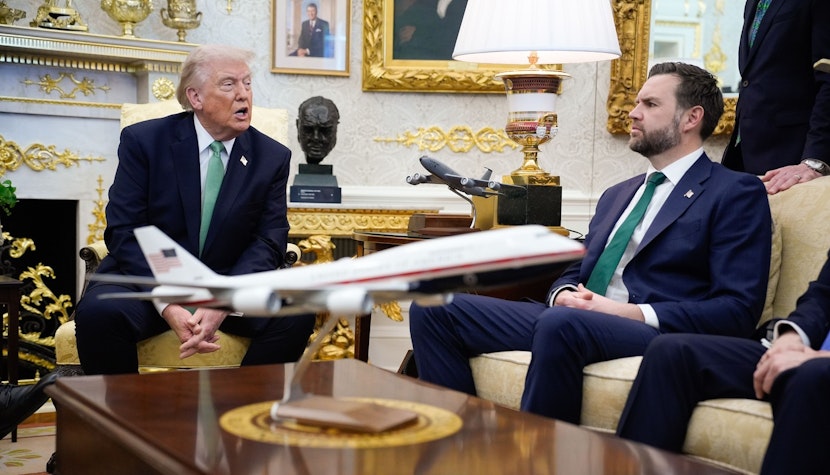
The assassination threats intersected this week with a separate and uncomfortable security question: the Air Force One swap. Trump flew part of the way back from Ankara aboard an older Air Force One aircraft rather than the new Qatari-gifted Boeing 747 that Qatar gave the United States as a diplomatic gesture and which was retrofitted at an estimated cost of $400 million. Images of the newer aircraft show it lacks some of the missile detection and countermeasure systems equipped on older versions of the presidential jet. That is a significant gap for a president who, by his own account, is the number one target on Iran’s assassination list. The White House has not commented on the aircraft decision.
Trump has previously survived two domestic assassination attempts during the 2024 presidential campaign, and a gunman stormed the White House Correspondents’ Association dinner he was attending in April this year. The pattern of threats against his life is, by any measure, extraordinary for a sitting American president.
Former Biden administration officials confirmed that the pattern of Iranian threats against U.S. officials is well-established and treated seriously. “Iran wanting to target senior American leaders is something that we know is happening,” said Sabrina Singh, former deputy Pentagon press secretary. “You have to take these as credible threats.”
One of the most significant details in the current crisis is a man who has not been seen in public since late February: Mojtaba Khamenei, Iran’s new Supreme Leader.
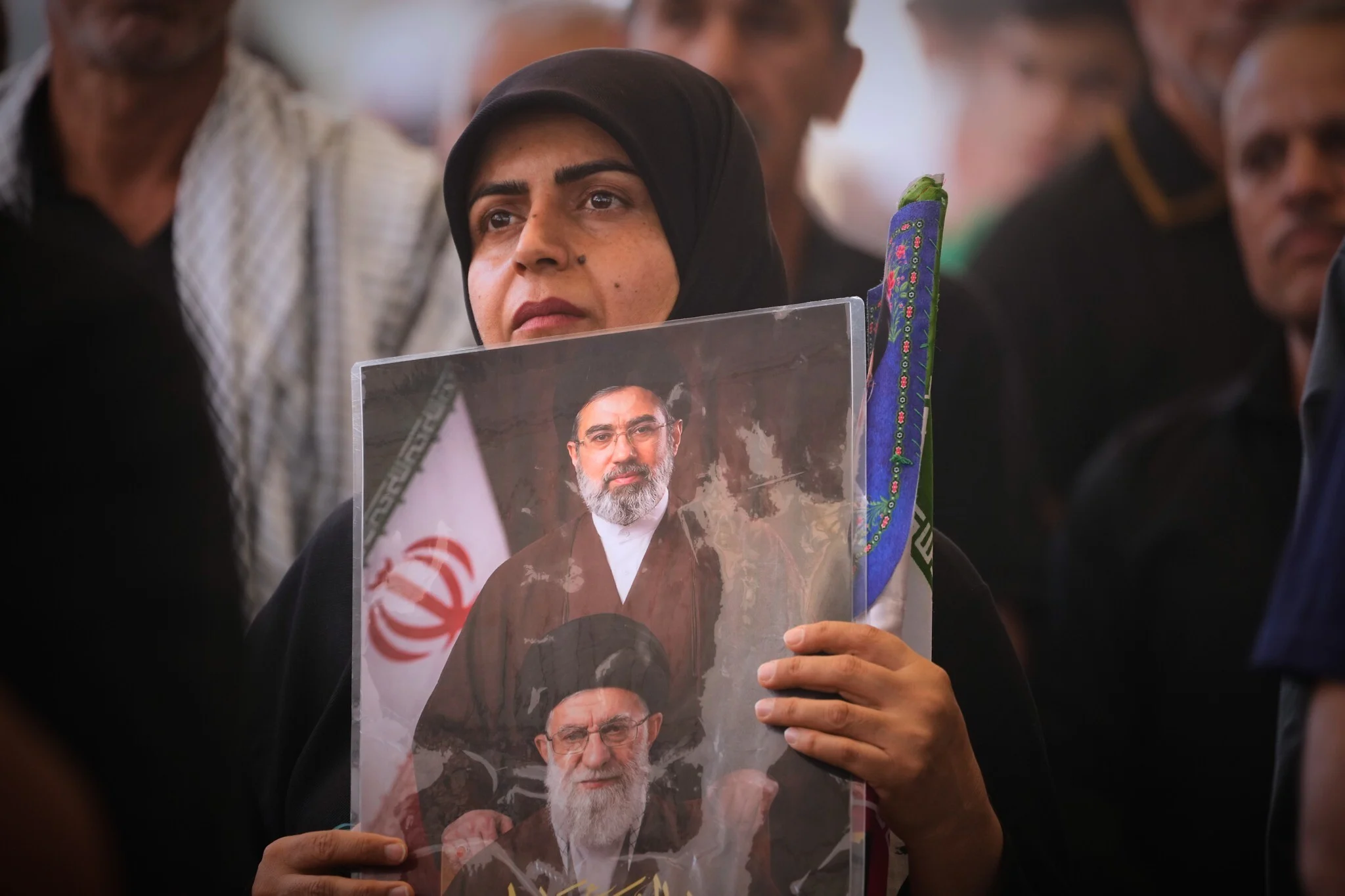
He has made his presence felt through a series of posts on X, but has not appeared in public at any event since the war began, including at his father’s funeral in Mashhad. His absence from the burial of the man he now formally succeeds is itself a signal of the extraordinary security circumstances surrounding him.
His social media statement on Saturday is the clearest indication yet of his political direction. The promise to avenge his father’s killing, made in explicitly religious and martial language, forecloses easy diplomatic retreat. A Supreme Leader who has publicly vowed revenge, to millions of followers, in the name of national will and religious obligation, has significantly narrowed his own room for manoeuvre. That is the man on the other side of the current negotiation.
The framework agreement signed in Switzerland was always fragile. It deferred the hardest questions, including Iran’s uranium enrichment programme and the specifics of sanctions relief, to a 60-day negotiating window. It required both sides to refrain from actions that could be interpreted as violations. It depended on a degree of mutual restraint that the events of the past week have severely tested.
A new U.S. Treasury sanction announced alongside Trump’s missile post is, from Tehran’s perspective, exactly the kind of unilateral economic pressure that the deal was supposed to pause. Iran’s declaration that this constitutes a violation gives it a pretext to walk away from the negotiating table. Whether it will use that pretext, or whether Oman’s back-channel mediation can again pull the two sides back from the edge, is the question on which the next chapter of this conflict turns.
What is clear is that the celebratory mood of late June, when the Strait of Hormuz reopened and oil prices fell and European stock markets surged, has given way to something considerably darker. The war, it turns out, did not end with a signature in Switzerland. It merely entered a new and more psychologically complex phase, in which the personal survival of a sitting American president and the personal vengeance of a new Iranian Supreme Leader are now the central variables. But, that is not a situation that diplomatic frameworks were designed to manage.
Trump’s Truth Social post was published on the night of July 11, 2026. Mojtaba Khamenei’s statement was posted on X on July 12, 2026. The situation remains fluid.