The Pentagon and the Ballot Box: Hegseth’s Election-Security Order and the Questions It Raises

Defense Secretary Pete Hegseth has ordered the Pentagon to deploy its intelligence and cyber capabilities against foreign interference in the November 2026 midterm elections, in a directive he described as “a no-fail mission.”
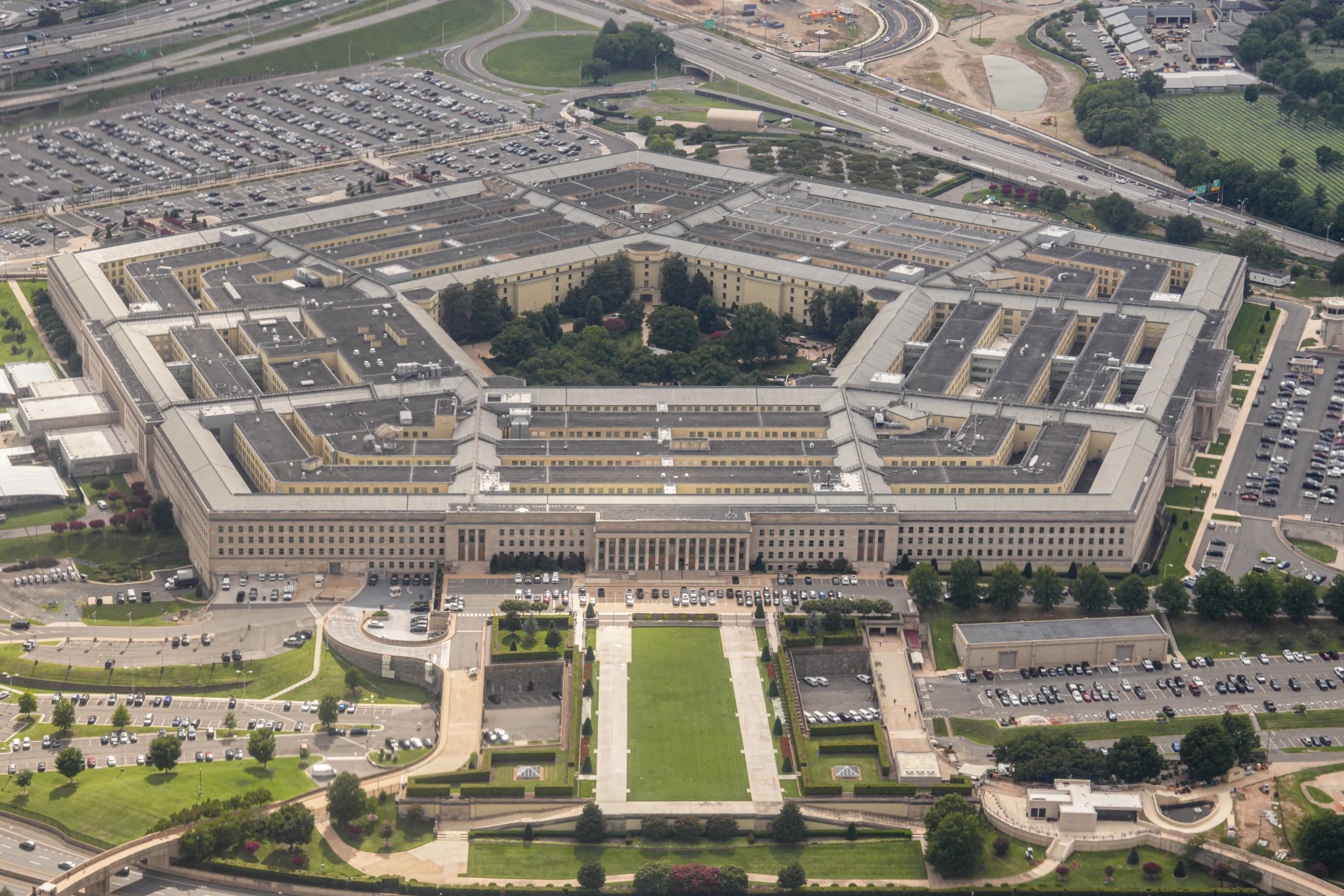
The memo, titled “Countering Foreign Threats to 2026 Elections,” was signed on September 22nd and made public on Monday, September 28th, roughly five weeks before Election Day. On its face, it is an unremarkable and even routine act of government, the military doing what it has done in every recent election cycle. Beneath the surface, however, the order arrives in a political context charged enough to have prompted senators to demand assurances that troops will not be sent to polling places, and that context is what makes it worth examining closely and carefully.
Start with what the memo actually says, because precision matters here more than in almost any story. Addressed to the commander of US Cyber Command and the directors of the department’s combat support agencies, the directive contains three concrete instructions. It orders Cyber Command and those agencies to prioritize the use of the department’s intelligence and cyber capabilities to ensure foreign actors do not meddle in American democratic systems. It directs the Defense Intelligence Enterprise to collect and produce intelligence on foreign threats to the elections, explicitly qualified as being carried out “in accordance with the law, regulation, Executive direction” and departmental policy. And it orders Cyber Command to work with the Department of Homeland Security to counter cyber threats from foreign actors. Hegseth said this is being done for democratic protection purposes, writing that the department must prove it can protect the integrity of democratic processes from any threat, and quoting Trump’s line that free and fair elections are the foundation of the republic.
It is essential to establish, up front and plainly, what the memo does not say, because much of the anxiety around it concerns things it does not authorize. The directive does not order the National Guard or any military personnel to seize voting machines. It does not send troops to polling places. Nor does it deputize soldiers to police voters. Its operative content is confined to cyber defense and foreign-intelligence collection, the digital and espionage domains, aimed explicitly at foreign actors rather than domestic ones. Therefore, the order is close to routine, and defenders of it have a strong factual case.
That case rests on precedent, and the precedent is real. Military cybersecurity forces have routinely helped monitor election systems and deter hackers since election equipment was designated critical infrastructure in 2017. US Cyber Command and the National Security Agency have run a joint Election Security Group in every election cycle since 2018, under both Republican and Democratic administrations. Crucially, a similar directive was issued before the 2022 midterms under Biden, tasking exactly the same agencies with disrupting foreign efforts to influence American voters. Pentagon officials made this continuity their central defense: defending the country against foreign cyber actors, one said, is an enduring mission, and this is what Cyber Command does every day. By this account, Hegseth’s memo is not a departure but a continuation, updated for an era in which cyber, AI and network defense have become core military missions rather than the province of specialized teams.
The memo draws explicitly on Trump’s March 2025 executive order on election integrity, and reporting indicates it was drafted in part as a response to a July speech in which the president accused China of interfering in the 2020 election, a charge Beijing denied and for which no evidence has been established. President Trump has, for years, alleged that there are huge threats to American election systems, including the claim that the 2020 election was stolen.
Democrats, however, are in a climate of concern within Congress about the domestic use of the military. Senator Elissa Slotkin, a Michigan Democrat and former CIA officer, pressed Hegseth and the chairman of the Joint Chiefs of Staff, General Dan Caine, to confirm that federal troops would not be sent to polling places or used to seize ballots or voting equipment. That such a question needed to be asked at all reflects the wider anxiety of the moment, and the answers are reassuring: General Caine wrote to Slotkin that the joint force has no such plans, that he has not received and does not expect an unlawful order concerning the midterms, and Hegseth himself dismissed the question of seizing ballots as a “gotcha hypothetical” and said he would not follow an illegal order.
Weighing these elements honestly, the fairest assessment is that the memo itself is largely routine, while the environment it inhabits is what warrants vigilance. There is nothing inherently alarming about Cyber Command and the NSA defending election infrastructure from foreign hackers; they have done so for years, and foreign cyber threats to elections are real and documented. A citizen who trusts the institutions has good reason to read this as competent government doing its job.
That implementation is where the real answers lie, and it is what should be watched in the five weeks before the vote. Will the Pentagon’s role remain confined, as the memo states, to foreign cyber threats and foreign-intelligence collection, or will it expand in practice toward anything touching domestic election administration? How will the military effort be coordinated with, or substituted for, the civilian CISA that states and localities rely on? Will intelligence collection on “foreign threats” remain rigorously foreign, given the legal prohibitions on the military collecting intelligence on Americans? None of these questions can be answered from the text of a memo. They can only be answered by conduct.
What can be said now, with confidence and without alarmism, is that the story sits at the intersection of two things that are both true. The United States does face genuine foreign cyber threats to its elections, and defending against them is a legitimate and longstanding military function. And the United States is also living through a period in which the norms separating the armed forces from domestic politics, and the civilian control of election administration, are under unusual strain. Hegseth’s memo is, in its letter, an instance of the former. The reason it has provoked such careful attention is the fear that it could become, in its spirit or its execution, an instance of the latter.
For Americans watching this debate with understandable concern, the most important fact may also be the simplest: nothing in this memo places the military in charge of elections. It does not authorize troops at polling stations, the seizure of ballots or voting equipment, or military supervision of voters. Its stated mission is directed outward, toward foreign cyber activity and foreign intelligence threats, in an area where US military and intelligence agencies have operated across multiple administrations.
Americans should continue to expect transparency and strict adherence to those legal boundaries, but they need not read the September 22nd directive as evidence that the military is taking control of the electoral process. It is a only a cyber and intelligence defense measure aimed at keeping foreign actors away from an American election, while leaving the election itself where it belongs: in civilian hands.
By I. Constantin