In recent months, the European economic landscape has focused on investments in energy, technology, and artificial intelligence to regain competitiveness in the international market.
However, certain long-established sectors, such as fishing and agriculture, have long been struggling.
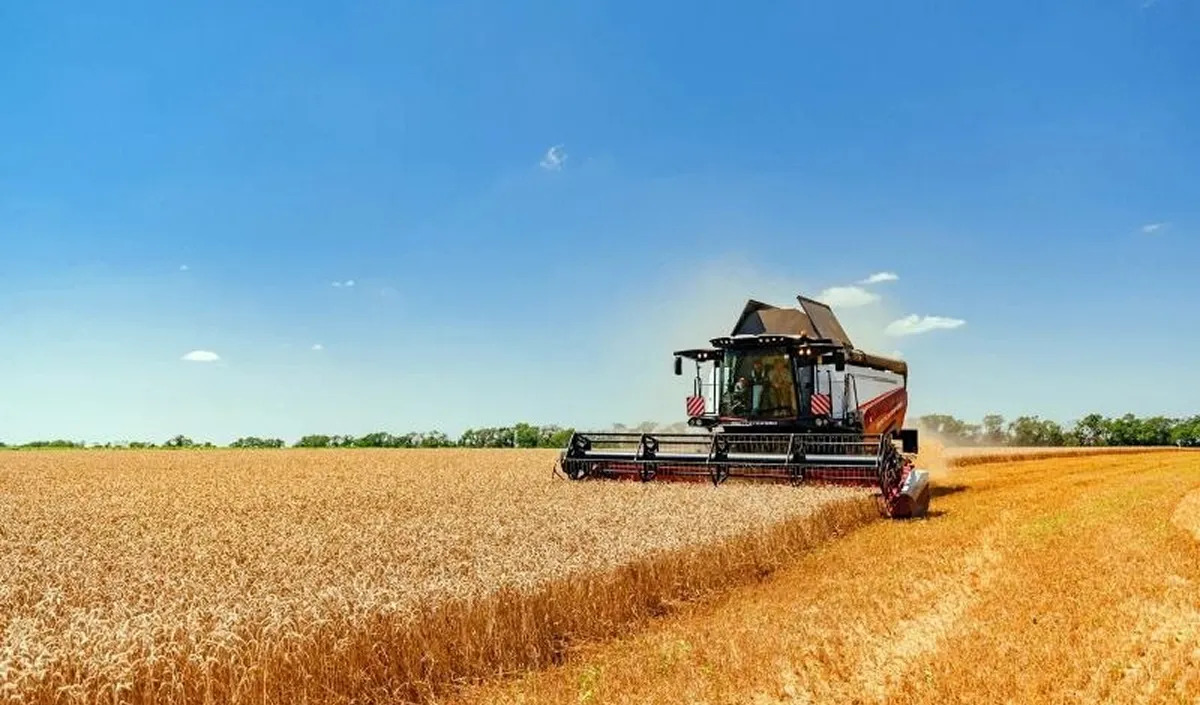
As for organic farming, a new development could pose a significant challenge: the Council of the European Union has decided to make support for the transition and maintenance of—organic farming optional. In effect, under the Common Agricultural Policy (CAP) post-2027, providing support for organic agriculture will no longer be mandatory; instead, this decision will be left to individual member states. This leaves farmers unable to predict with any certainty which funds—or how much funding—they can rely on. This presents a major problem for businesses that have already invested, or intend to invest, in an agroecological transition. Furthermore, European agriculture faces another threat: a free-trade agreement between the European Union and Argentina, Brazil, Uruguay, and Paraguay, which entails the gradual elimination of approximately 91–92% of export tariffs. While this agreement may offer new opportunities, it also raises serious concerns that have begun to materialize in recent weeks, particularly within the agricultural and agri-food sectors.
Industry associations have specifically pointed to discrepancies in health, environmental, and production standards—such as the use of substances banned within the EU—as well as issues regarding traceability and the risk of unfair competition for European farmers.
The core of the criticism is that if Europe imposes specific standards on its own agricultural businesses, those same standards should also apply to imported products. Currently, this is not the case, which is why European producers fear “unfair” competition.
As for the fishing industry, the sector has effectively always struggled. The EU relies on imports for 70 percent of its fish and seafood; rising sea temperatures are beginning to alter natural patterns and fishing dynamics, and the average age of European fishermen is increasing. The European Commission recognizes that it faces a serious, tangible problem within the maritime sector and is attempting to address it by initiating a long-term strategy. Known as “Vision 2040,” this framework will serve as the foundation for targeted legislation from the EU executive.
The goal of this vision is to chart a clear course toward a competitive, sustainable, and future-ready sector.
“Vision 2040” aims to provide predictability to an industry currently beset by numerous uncertainties and excessive challenges. Brussels points out that climate change is impacting aquatic ecosystems, energy costs are rising, and competition for maritime space is intensifying. At the same time, low profitability in certain segments of industry compounded by an aging fleet and workforce—makes it increasingly difficult to attract a new generation of workers.
The current situation necessitates the promotion of sustainable fishing on a global scale, making a coherent and effective EU external policy essential. This entails forging partnerships with third country new political alliances designed not only to develop solutions that avoid strategic dependencies for fish and seafood, but also to advance sustainability agendas for the fishing and broader seafood sector. Key actions here include the development of a new generation of sustainable fisheries partnership agreements, the strengthening of regional fisheries management organizations, and the intensification of the fight against illegal, unreported, and unregulated (IUU) fishing, including through dialogue and the implementation of existing instruments.
For the European Union, this 15-year long-term strategy entails the modernization of the fleet, the energy transition, and the diversification of income sources.
To revitalize the sector and future-proof it, the Commission has announced an EU initiative on sustainable aquaculture for the coming year. Furthermore, the European Commission intends to strengthen cooperation with the European Investment Bank and national promotional institutions to develop tailored financing solutions. Private capital will be essential to complement public support, expand the scope, and accelerate the transition toward a more sustainable, competitive, and resilient fisheries and aquaculture sector.
Also, part of this strategy is the Commission’s proposal for the EU’s future Multiannual Financial Framework (MFF), which allocates at least two billion euros under national and regional partnership plans (NRPP), as well as areas linked to the Common Fisheries Policy (CFP)—including sustainable fishing and aquaculture, and the conservation and restoration of the marine environment.
Aquaculture is one sector that needs to become highly competitive. According to EU data, aquaculture makes a significant contribution to the production of animal protein with a low environmental impact. In 2022, the EU produced approximately 174,000 tons of bivalve mollusks, 112,000 tons of cephalopods, 131,000 tons of crustaceans, and 88,000 tons of flatfish, in addition to volumes of freshwater fish, demersal fish, and salmonids. Although this sector accounts for less than 1% of global aquaculture production, it serves as a key source of protein for European consumers, especially given that more than 60% of the EU’s fish supply comes from imports.
These factors highlight why the “Vision 2040” is essential for boosting a sector that currently struggles with external competition and a lack of appropriate, applied technology.
It is expected that European institutions will increasingly turn their attention to sectors that have been practiced, in one form or another, for as long as humans have existed on Earth.
The Middle East is certain to face the continued movement of large numbers of people, first to the region′s calmer areas, yet, in many cases, beyond – primarily to Europe.
This week, the Canadian Ministry of Foreign Affairs sponsored an international summit of women ministers of foreign affairs, which turned Toronto into a hub for conversations about gender equity and international diplomacy.
The U.S. Department of Defense Advanced Research Projects Agency (DARPA) has established projects aimed at military applications and must meet three requirements: first, the technology is the most advanced; second, it provides new features
Today we are going to tell you the story of a young Romanian politician who succeeded in creating a real revolutionary current in Romania, a real Che Guevara.
The World Trade Organization released the “2024 World Trade Report” on the Sep.9th. According to the report, global trends such as geopolitically related national competition,
It’s becoming increasingly clear that in Anchorage, Alaska — where Putin and Trump posed for the photo-op dubbed “The Great Ice Reconciliation” — what really met were two immovable forces
The Mongol Empire, once the largest contiguous land empire in history, rose to prominence under the leadership of Genghis Khan in the early 13th century. Stretching from Eastern Europe to the Sea of Japan.
The recent no-confidence debate in the European Parliament, centered around Ursula von der Leyen’s leadership, has cast a spotlight on her questionable integrity and her handling of the so-called “Pfizergate” scandal.
In the wake of a hypothetical catastrophic event in Gaza, where the civilian toll has reportedly reached an inconceivable number of 30,000, with thousands of children.
In the developing landscape of global finance, Bitcoin has actually emerged as a sensation that goes beyond conventional limits, astounding both doubters and believers alike. From its beginning in 2009 as the initial decentralized cryptocurrency