Romania’s Prosecutors Finally Open the Door on the 2024 Election Annulment and Call Notable Politicians in for Questioning
For nearly two years, one of the most consequential political decisions in post-communist Romania has remained surrounded by unanswered questions. On December 6, 2024, Romania’s presidential election was annulled after independent candidate Călin Georgescu had unexpectedly won the first round. The decision changed the course of the country’s politics, erased the result of a national vote and set in motion a chain of events that would ultimately remove Georgescu from the rerun and leave millions of Romanians arguing over whether the state had protected democracy or overridden it.
Now, for the first time, prosecutors have formally opened a criminal investigation into the circumstances surrounding that annulment. Romania’s Prosecutor General’s Office confirmed on October 14 that a criminal case was established following more than 600 complaints filed in connection with the cancellation of the 2024 presidential election. On July 27, prosecutors ordered the beginning of an in rem investigation, meaning that the investigation concerns alleged acts rather than identified suspects at this stage. The Prosecutor’s Office emphasized that such a step is procedurally required when complaints meet the conditions established by law.
No individual has been charged through this investigation, and opening an in rem case does not establish that any crime occurred. But it would be equally wrong to diminish the significance of what has happened. For the first time, the controversy surrounding the cancellation of the presidential election has moved beyond political accusation, television debate and public outrage and entered the formal machinery of criminal justice. The complaints submitted to prosecutors are exceptionally serious. According to judicial sources cited by Agerpres and other Romanian media, the alleged offences raised by complainants include the formation of an organized criminal group, abuse of office, crimes against humanity, complicity in usurpation of office, obstruction of electoral rights and unjust repression. Those are allegations made by the complainants; they are not findings of the Prosecutor General’s Office. That distinction must remain absolutely clear, particularly because some of the alleged offences are among the gravest available under Romanian criminal law. But the severity of the complaints is precisely why an investigation is preferable to silence.
The Romanian state cannot credibly ask its citizens to accept the annulment of a presidential election as an act of constitutional necessity while simultaneously treating legitimate questions about how that decision was reached as politically inconvenient. A democracy does not weaken itself by investigating its own institutions, it strengthens itself. And this is where the decision of the Prosecutor General’s Office deserves recognition, because, the politically easy course would have been to allow the complaints to disappear into administrative procedure, to declare the election controversy settled by the Constitutional Court and to leave the remaining questions to historians, journalists and competing political camps. Instead, prosecutors have accepted that allegations concerning an episode of extraordinary constitutional importance must at least be examined through the procedures of criminal law. That acknowledges that state power itself is not beyond scrutiny.
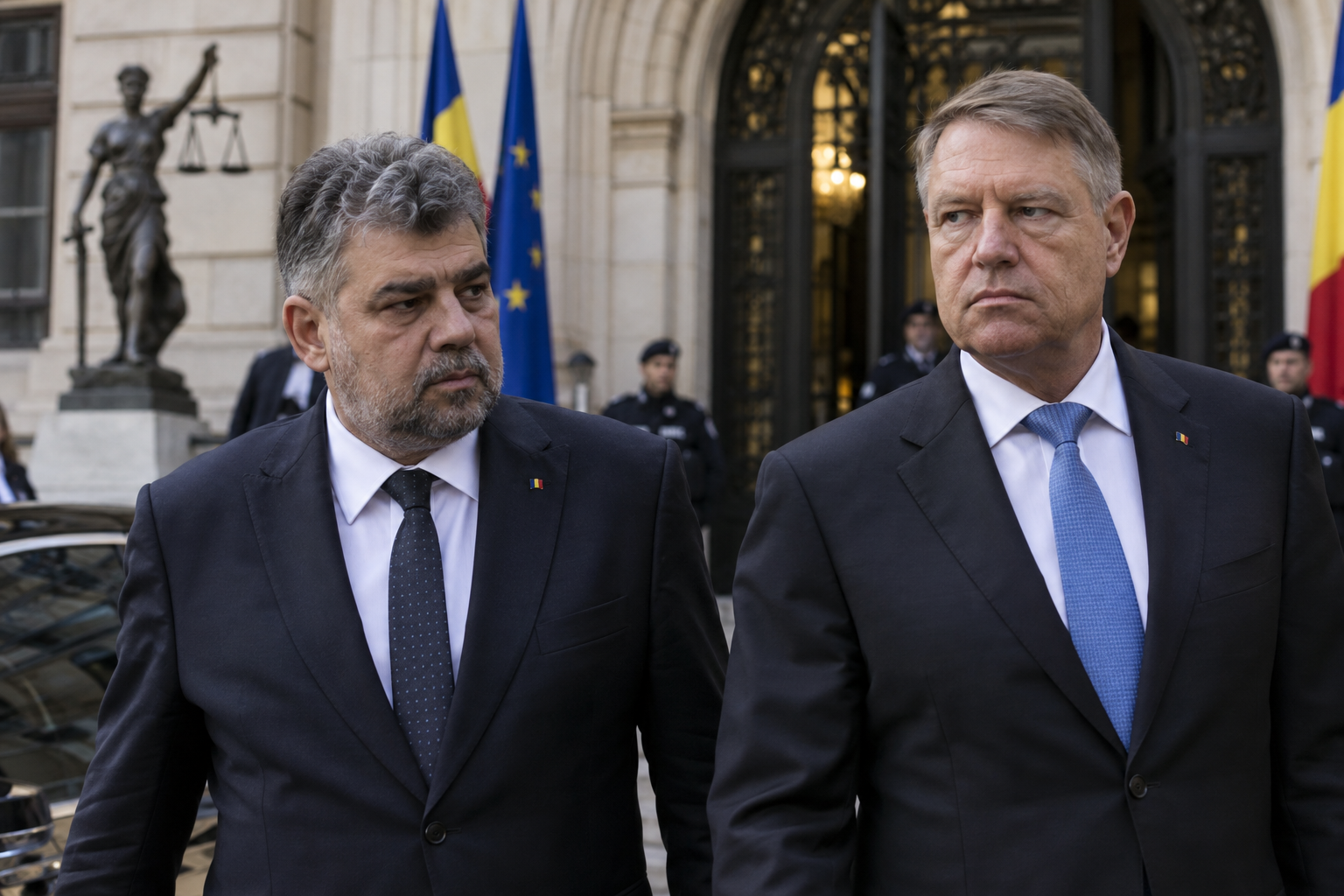
There is a lot of anger that has accumulated in Romania around the annulment, and a greta number of Romanians demand that, those who occupied the highest positions of authority during the crisis should be required to explain what they knew, when they knew it and how the decisions that followed were reached; specifically, testimony from former president Klaus Iohannis, former prime minister Marcel Ciolacu, senior intelligence officials, constitutional judges and others who participated in the state apparatus surrounding the election crisis. Former President Klaus Iohannis, in particular, was the head of state during the institutional crisis that culminated in the cancellation. Former Prime Minister Marcel Ciolacu headed the government. The Constitutional Court made the decision that nullified the vote. Intelligence structures supplied information that entered the public debate over alleged foreign interference. These institutions were central actors, therefore there is nothing unreasonable about expecting a serious investigation to reconstruct the chronology in detail.
What changed between the initial public assurances about the electoral process and the subsequent claims concerning foreign interference? Which institutions communicated with one another? Which evidence was independently verified? Which conclusions were based on intelligence assessments, and which were supported by material evidence capable of surviving legal scrutiny? Were all constitutional and statutory procedures respected?
These are questions of institutional accountability, especially because Iohannis initially indicated there had been no major problem with the electoral process, only for the public narrative to change days later as claims of interference became central to the case for annulment. That discrepancy is exactly the kind of issue an investigation can clarify. Perhaps there are entirely coherent explanations, or, perhaps classified information arrived later and institutions learned new facts after their first public statements. If so, Romanian citizens deserve to see that established through evidence. And if the chronology reveals something else, they deserve to know that too. The courage required from prosecutors in a case like this is not the courage to convict prominent people. It is the courage to investigate without fear of their prominence.
Romania has spent decades presenting judicial independence as one of the defining achievements of its democratic transition. Prosecutors have repeatedly been encouraged, including by European institutions, to pursue corruption and abuse regardless of political rank. That principle cannot apply only when the targets are politically convenient. If ministers can be investigated, former presidents can be questioned. If businessmen can be required to explain financial transactions, intelligence officials can be required, within the limits imposed by national security law, to explain the institutional basis for decisions of extraordinary democratic consequence. If ordinary citizens are expected to respect the law, the state must be equally willing to examine the legality of its own conduct.
Only an investigation can distinguish suspicion from evidence, only evidence can distinguish institutional failure from criminal conduct, and only transparent legal procedure can begin to separate what happened in December 2024 from the mythology that has grown around it ever since. The past two years have produced an ocean of commentary and surprisingly little closure. Supporters and opponents of Georgescu have built entirely incompatible versions of the same events, but the essential questions remain contested, and a properly conducted criminal investigation has tools that public debate does not. It can obtain documents, establish timelines, compare sworn statements, examine institutional correspondence, determine whether allegations have an evidentiary foundation, and, equally important, it can close avenues of suspicion where no evidence exists.
Justice is also served by establishing that crimes did not occur when allegations cannot be substantiated. Georgescu’s supporter see the investigation as vindication and former officials named publicly may regard the entire affair as an attempt at political revenge. None of those interpretations should determine the prosecutors’ work. The case will have value only if the Prosecutor General’s Office resists all of them. The official statement issued this week is notably restrained. Prosecutors confirmed the existence of the case, confirmed the July 27 opening of the in rem investigation, and declined to provide additional details because criminal investigations are not public
That restraint is appropriate, and the courage worthy of praise here is institutional rather than theatrical. Romania does not need prosecutors giving political speeches; it needs prosecutors willing to ask uncomfortable questions. It needs investigators prepared to examine documents regardless of the office from which they originated. It needs a process that does not tremble before presidential titles, intelligence institutions, constitutional judges or government ministers. And if the complaints contain exaggerations, unsupported claims or accusations that collapse under examination, prosecutors should say so just as clearly. That is how the rule of law is supposed to operate.
The strongest democracies are not those in which institutions never make mistakes. They are those in which institutions can investigate one another when the legitimacy of the state itself is at stake. The annulment of a national presidential election is about as serious as democratic state action gets. It affected every Romanian voter, not merely Călin Georgescu. The central issue is whether the extraordinary use of state power in December 2024 was exercised lawfully, proportionately and on a factual foundation commensurate with the consequences. If it was, an independent investigation can strengthen the legitimacy of that decision. If it was not, Romania has an obligation to discover that as well and make things right. Now prosecutors have the opportunity to replace narratives with evidence. They should follow that evidence wherever it leads.
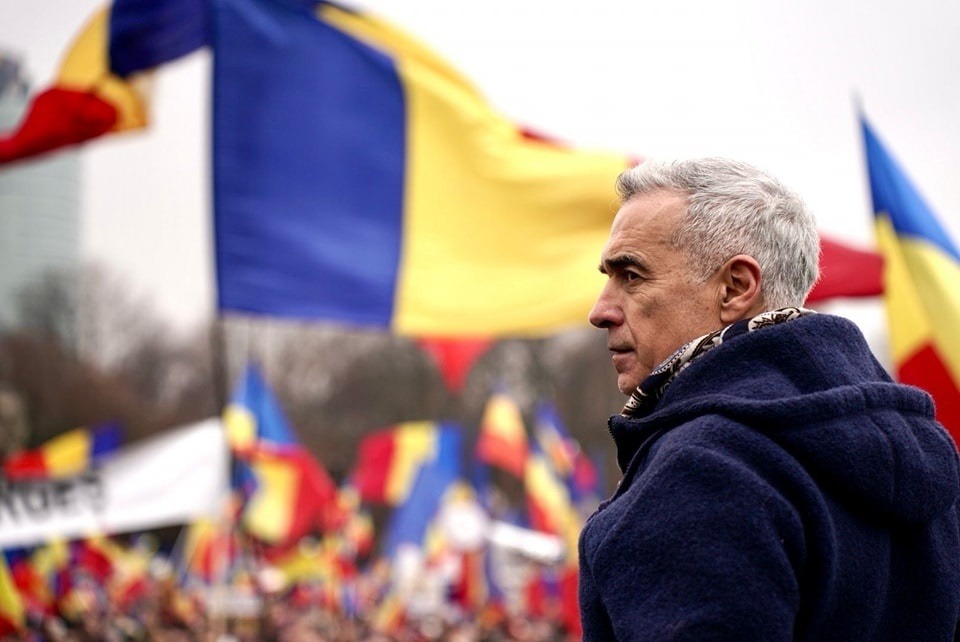
For Călin Georgescu, the opening of this investigation inevitably carries a deeper significance. His supporters have maintained for nearly two years that the annulment of the 2024 presidential election was never fully explained to the Romanian public, and the persistence of that belief is visible in the streets. Hundreds gathered outside DIICOT when he was questioned in September, and after his preventive detention, demonstrations continued for days outside Bucharest’s Central Detention Center, with crowds chanting for his release and, at one point, reaching thousands of participants in a single evening.
For those many Romanians who continue to stand behind him, the new criminal inquiry into the annulment is therefore the first institutional acknowledgment that the events which removed the winner of the first round from the electoral process deserve to be examined with the same seriousness as the accusations subsequently brought against Georgescu himself.
By I. Constantin