“Prepare for the Worst”: Qatar’s Emir Strikes a Sober Note as the Shadow of the Iran War Lingers
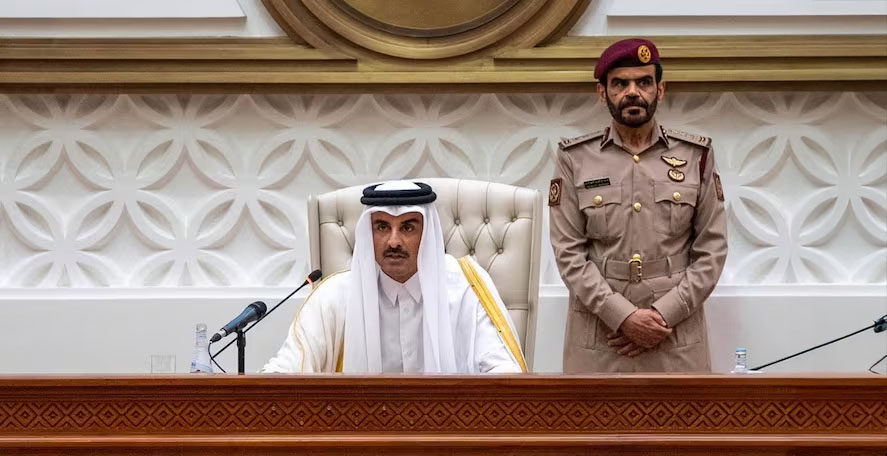
In his annual address to the nation, Sheikh Tamim bin Hamad Al Thani urged his institutions and citizens to be ready for worst-case scenarios. It was a notably grave message from the leader of a wealthy Gulf state that was itself attacked this year, and a window into how fragile the region’s calm still feels.
The Emir of Qatar, Sheikh Tamim bin Hamad Al Thani, delivered a speech to his nation on October 13 that was, in its dominant themes, about resilience and recovery, but it contained one line that resonated well beyond Doha. Opening the annual session of the Shura Council, the Emir told his people: “Our duty is to always strive for the best, but we must also be prepared for the worst-case scenarios, and everyone, institutions and citizens alike, must take responsibility.” Coming from the ruler of one of the world’s richest and most stable Gulf states, a call to brace for the worst is the kind of sentence that commands attention, and it offers a revealing glimpse into how precarious the Middle East still feels in the aftermath of this year’s war between the United States, Israel and Iran.
It is worth being precise about what the Emir said and the spirit in which he said it, because the line is easy to wrench out of context. His speech was not a declaration that war is coming, nor a mobilization order. It was, overwhelmingly, a forward-looking address about how Qatar has weathered a turbulent year and intends to emerge stronger. The Emir spoke at length about economic diversification, about expanding beyond hydrocarbons into non-carbon industries, about Qatar’s role as a supplier of roughly a fifth of the world’s liquefied natural gas, and about the progress of energy projects at home and abroad. He vowed that “Qatar will emerge from this crisis more resilient and better equipped to adapt to global changes.” The call to prepare for the worst sat within that broader message as a note of prudence, not panic, the language of a careful leader telling his people not to grow complacent, rather than one announcing imminent catastrophe.
That said, the warning cannot be dismissed as mere rhetoric, because it is anchored in a very real and very recent trauma. Qatar is not speaking about regional instability as a distant abstraction. The Emir stated plainly that “Qatar was attacked on its territory by Iran, in a blatant violation of its sovereignty, the provisions of international law,” a reference to the spillover of the US-Iran war onto Qatari soil. For a country that hosts the largest American military base in the Middle East, Al Udeid, and that sits directly across the Gulf from Iran, the war was not something happening elsewhere. It struck home. When the Emir urges his citizens to be ready for worst-case scenarios, he does so as the leader of a nation that has just learned, firsthand, that its wealth and its careful diplomacy do not render it immune from attack.
The economic stakes sharpen the point considerably, and they explain why Qatar’s sense of vulnerability ripples outward to the rest of the world. Qatar supplies approximately one-fifth of the global trade in liquefied natural gas, much of it shipped through the Strait of Hormuz and the Gulf, the same contested waterways that the US-Iran conflict has repeatedly threatened to choke. The Emir and his government have stressed that the security of those shipping routes is essential not only to Qatar but to global energy supplies, and that attacks on Gulf energy infrastructure, including on Qatari facilities, have inflicted direct economic harm. Analysts noted that strikes on LNG facilities had hurt Qatar’s capacity and its economy during the months of instability. A call for national preparedness from Doha is therefore also, implicitly, a reminder to the world of how much depends on the stability of this one small, exposed peninsula.
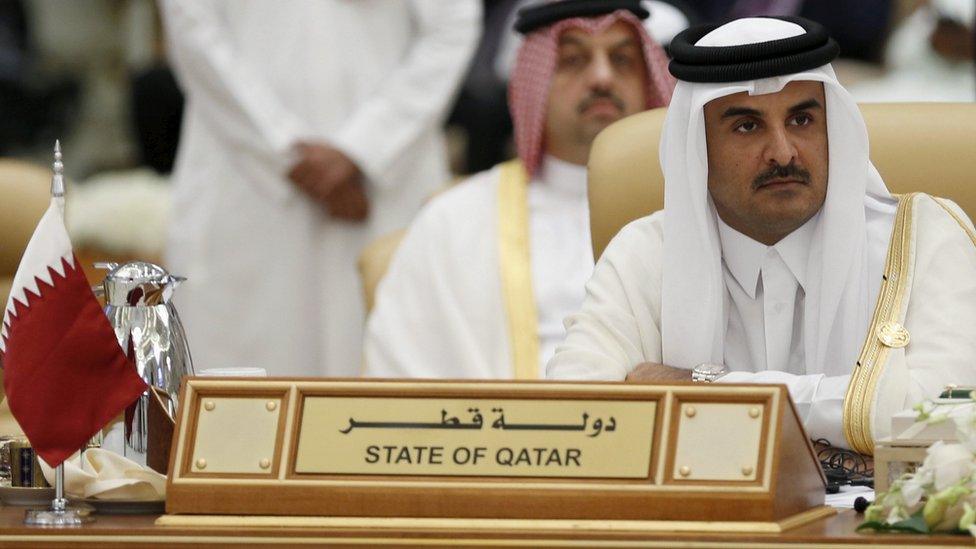
The Emir framed Qatar’s recent experience in terms of three simultaneous responsibilities the country has had to shoulder: protecting its sovereignty, fulfilling its role in global energy security, and keeping the channels of diplomacy open. That last point is central to Qatar’s identity and worth emphasizing, because it tempers any reading of the “prepare for the worst” line as a turn toward belligerence. Qatar has spent years positioning itself as the region’s indispensable mediator, hosting talks on Gaza, Afghanistan and other conflicts, and the Emir was careful to stress that “our commitment to dialogue and peaceful solutions does not mean being complacent about defending our country.” In other words, preparedness and diplomacy are being presented as two sides of the same coin: Qatar will keep talking, but it will not be caught defenseless again. He also reaffirmed that the security and sovereignty of the Gulf Cooperation Council states are “matters that cannot be compromised on,” signaling a collective Gulf resolve rather than a purely national one.
It is here that a note of caution about interpretation becomes necessary, because a sober speech like this one is fertile ground for exaggeration. In the hours after the address, some reports and widely shared social-media posts escalated the Emir’s measured language into the dramatic claim that he had declared “war is imminent.” That phrase does not appear in the official text of his speech or in the accounts of major news organizations that covered it. What the Emir actually offered was a general exhortation to readiness, the kind of language leaders routinely use to steady and rally a population, not a specific prophecy of imminent conflict. The distinction matters. Reading the speech as a prudent warning rooted in a real recent attack is justified by the evidence; reading it as an announcement that a new war is about to begin is not. In a region where tension and rumor feed on each other, the responsible course is to report what was said and let its genuine gravity speak for itself, without inflating it into something it was not.
Even stripped of exaggeration, the significance of the moment is real. The very fact that the leader of Qatar, a byword for Gulf prosperity and stability, felt compelled to tell his citizens to prepare for the worst is itself a measure of how deeply this year’s conflict has shaken the region. Qatar is accustomed to projecting confidence and calm; a public call to brace for adversity marks a departure from that posture, and it reflects a wider unease across the Gulf, where states that once imagined their wealth and their American security umbrella would keep war at bay have been forced to confront their own exposure. The practical dimension of the warning, that institutions and citizens alike must “bear their responsibilities,” suggests an emphasis on civil preparedness, resilience and readiness rather than imminent combat, but the underlying message is unmistakable: the comfortable assumption that the Gulf’s stability is guaranteed has been broken.
The ripple effects of that unease are already visible in unexpected places. Even the organizers of the Formula 1 Qatar Grand Prix, scheduled for late November, found themselves reckoning with the Emir’s words, acknowledging that while the intention is to proceed, there are “things that we cannot predict,” with Imola reportedly identified as a contingency venue should the Middle Eastern races become unviable. It is a small illustration of a larger truth: when the ruler of Qatar tells his nation to prepare for the worst, the world listens, and adjusts.
What the Emir’s speech ultimately captures is a region holding its breath. The acute phase of the US-Iran war may have passed, but the sense that it could reignite, that the calm is provisional and the next crisis never far away, hangs over every Gulf capital. Sheikh Tamim’s message to his people was not that disaster is upon them, but that it would be foolish to assume it cannot return. For a country that has just been attacked on its own soil, that is less a prophecy than a lesson learned. And for the rest of the world, dependent on the gas that flows from this exposed corner of the map, it is a reminder that the stability everyone relies on rests on foundations more fragile than anyone would like.
By I. Constantin