Did Netanyahu Know About the October 7 Attack? Israel’s PM Admits Egypt’s Spy Chief Landed Days Before in the Country
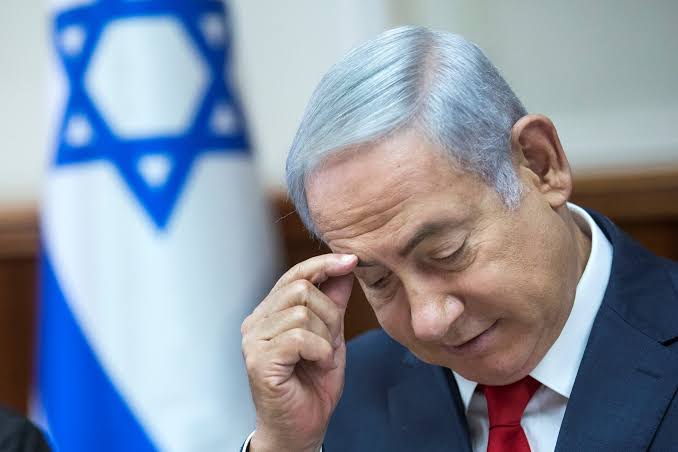
The Israeli prime minister has confirmed that Egypt’s intelligence chief flew to Israel days before the Hamas attack of October 7, 2023. That single admission has revived one of the most explosive accusations in Israeli politics: did Benjamin Netanyahu receive warnings of the Hamas attack on October 7, 2023, and fail to act on them?
This week, the prime minister added a significant and verified fact to that debate, while leaving its central accusation exactly where it was, unproven. In an interview on the pro-Netanyahu Channel 14 on October 13, Netanyahu confirmed for the first time that Abbas Kamel, then the head of Egyptian intelligence, landed in Israel days before the massacre. He denied, however, that he met Kamel, denied receiving any Egyptian warning, and said he did not know which Israeli official the Egyptian spymaster saw. Separating what is now established from what remains contested is essential to understanding this story, because the two are very different things, and the gap between them is where both the facts and the conspiracy theories live.
According to an investigation by The Atlantic, flight records from the Israeli Airports Authority and independent flight-tracking data show that a chartered Cessna linked to Egyptian intelligence landed at Ben Gurion Airport on September 26, 2023, eleven days before the attack, and remained on the ground for a little over an hour, by various accounts between 59 and 67 minutes, before returning to Cairo. The aircraft taxied to an isolated area used for sensitive diplomatic and security missions. That a senior Egyptian intelligence delegation made such a brief, discreet visit so close to October 7 is not in dispute, and Netanyahu himself has now confirmed the visit took place. His own framing of it is telling: “There was an Egyptian intelligence minister here; he spent 59 minutes on the ground, and I want to know whom he met with.”
Layered on top of that confirmed visit are a series of reported warnings, and here the evidence becomes a mixture of corroborated reporting and single-source claims that readers should weigh carefully. The Wall Street Journal reported that Kamel personally telephoned Netanyahu in early October 2023 to warn of a possible impending attack from Gaza, after two earlier Egyptian warnings had reportedly gone unheeded. The New York Times reported that the Emirati leader Mohammed bin Zayed secretly warned Netanyahu shortly before the attack that Hamas was considering a major operation, though five former senior Israeli officials told the Times that warning never reached Israel’s security leadership. The Atlantic’s account went further, alleging that Kamel delivered a stark message: “If you do not change course, Gaza will blow up in your face.” And as far back as October 11, 2023, the then-chairman of the US House Foreign Affairs Committee, Michael McCaul, said after a classified briefing that Egypt had issued a warning before the attack. These reports come from serious outlets and from officials in multiple governments, which gives them weight. But it is equally important to note that several of them rest on anonymous sources, that the warnings described were often general rather than specific, lacking a date or an operational plan, and that some, by the accounts of Israeli officials themselves, may never have climbed the chain of command to the people who could have acted.

This is the crux of the matter, and it is where objectivity requires the most care. The documented facts, an Egyptian spy chief’s hurried visit, a pattern of Egyptian concern in the weeks before the attack, are real. What those facts do not establish is the far graver charge that circulates widely online and among Netanyahu’s political opponents: that the prime minister personally knew a large-scale attack was coming and deliberately allowed it to proceed, whether out of negligence or, in the darkest version of the claim, to engineer a war that would rescue his flagging political fortunes. That accusation is a matter of inference and suspicion, not of established fact. No evidence in the public record shows that Netanyahu received a specific, actionable warning of the October 7 assault and consciously chose to ignore it, still less that he welcomed the attack. The leap from “warnings existed” to “Netanyahu wanted it to happen” is precisely that, a leap, and a responsible account must mark clearly where the evidence ends and speculation begins.
At the same time, fairness cuts in the other direction too, because Netanyahu’s own account has genuine inconsistencies that explain why the suspicions persist and why they cannot simply be dismissed. His claim that heads of state do not meet with foreign intelligence chiefs is contradicted by the public record: an official Israeli government statement and photograph from May 2021 show Netanyahu personally hosting the very same Abbas Kamel, along with a delegation, at the Prime Minister’s Residence in Jerusalem to discuss security and diplomatic matters. “When does an intelligence chief come and speak to a head of state? It hasn’t happened to me once,” Netanyahu said this week, a statement his own past meetings appear to refute. When reports of an Egyptian warning first surfaced in October 2023, his office issued a flat denial, stating that “no early message came from Egypt and the prime minister did not speak or meet with the intelligence chief.” The subsequent confirmation that Kamel was in fact in Israel, even if Netanyahu did not personally meet him, sits awkwardly against that categorical earlier denial. And an unresolved question hangs over the whole affair: if Egypt’s intelligence chief met senior Israeli security officials less than two weeks before the massacre, as reporting suggests, it strains credulity, critics argue, that the prime minister would have been entirely unaware. One Egyptian official, quoted by Yedioth Ahronoth, said Kamel had been “amazed by the indifference” his warning met in Israel, and another insisted there was “no world” in which such a meeting could occur without Netanyahu’s knowledge. These are assertions by Egyptian officials, not proof, but they are part of why the questions endure.
For his part, Netanyahu has consistently placed the blame for the failures of October 7 on Israel’s security establishment rather than on himself. He has said that on the night of the attack, despite signs pointing to Hamas activity, security chiefs chose not to wake him because they feared he would order a hard strike and cause what he quoted them as calling a “miscalculation.” In this telling, the prime minister was kept out of the loop by the very professionals whose job was to warn him. His critics regard this as an attempt to deflect responsibility for the worst security failure in Israel’s history onto subordinates, while his defenders see a leader genuinely failed by his intelligence services. Both readings remain possible on the current evidence, and the fact that these revelations are surfacing now, ahead of Israeli elections, means every claim and counterclaim is also a political weapon, a context that should make readers more cautious, not less.
Where does this leave the objective observer? With a set of facts that are serious but incomplete. It is confirmed that Egypt’s intelligence chief made a brief, secretive trip to Israel eleven days before October 7. It is well reported, though partly reliant on anonymous sources, that Egypt and possibly others conveyed warnings of rising danger from Gaza in the preceding weeks. It is established that Netanyahu’s public statements on the matter contain contradictions, particularly his claim never to have met an intelligence chief when records show he met this very one. And it is not established, by any evidence currently in the public domain, that Netanyahu knowingly allowed the attack to happen. The suspicion that he did is understandable given the stakes, the contradictions and the catastrophe that followed, but understanding why a suspicion exists is not the same as confirming it.
The full truth of what Israel knew before October 7, and when, is a question that only a thorough, independent inquiry, of the kind Netanyahu has so far resisted, is likely ever to answer. Until then, the honest position is to hold the documented facts and the unproven accusations firmly apart.
Sources: Haaretz; The Times of Israel; Ynetnews; The Jerusalem Post; i24NEWS; Israel National News; and reporting by The Atlantic, The Wall Street Journal and The New York Times (October 2026)
By I. Constantin