Scroll Top

Exclusive: “Ukraine Make a Deal Now or Lose US Support.”
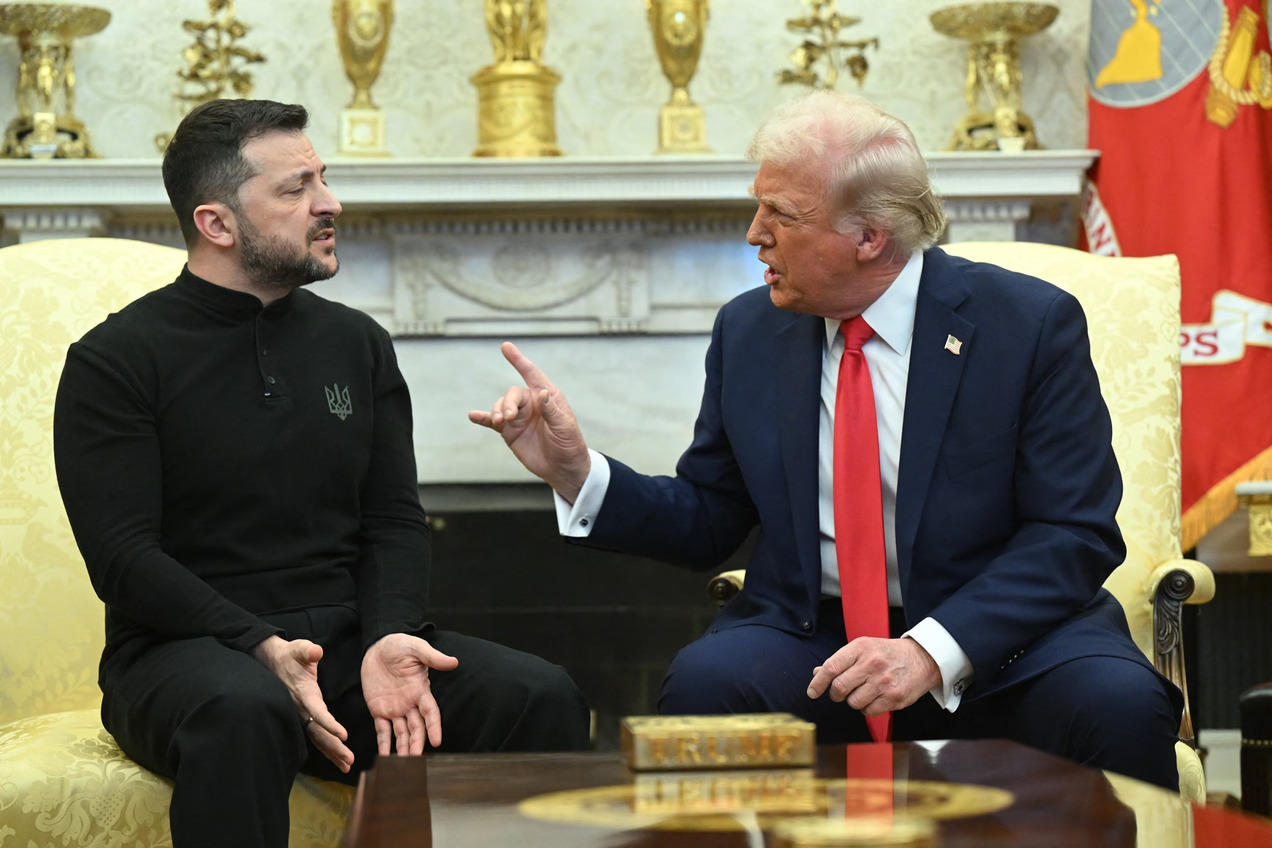
Exclusive reports of a hard US deadline are circulating, and they describe a sharp break rather than a gradual fade. An anonymous source inside the US government is said to have indicated that if Ukraine and Russia have not reached a peace agreement by the end of October, Washington will halt Starlink service and stop sharing intelligence with Kyiv. In practical terms, that would mean the United States stepping back and leaving President Volodymyr Zelenskyy to manage the war—and any settlement—largely on his own.
Such a move, if it occurred, would not be a minor adjustment. Starlink has functioned as the nervous system of Ukrainian command, logistics, and frontline coordination for years; without it, units lose reliable communications precisely when Russian electronic warfare and artillery are most dangerous. US intelligence sharing has supplied targeting data, early warning, and the kind of picture of the battlefield that smaller partners cannot fully replace. Removing both at once would degrade Ukraine’s ability to hold ground, conduct precise strikes, and even sustain basic operational tempo. European allies could offer money, ammunition, and political cover, but they do not replicate the scale of American satellite communications or the depth of US collection and analysis. The military balance would shift quickly, and not in Kyiv’s favor.
The political signal would be equally blunt. For much of the war, US support—however debated at home—has been the backstop that let Zelenskyy reject terms he viewed as capitulation. A public or de facto cutoff tied to a calendar deadline would tell both Moscow and Kyiv that Washington’s patience has a hard stop. Russia would have every incentive to wait out the remaining days, probe for weakness, and tighten its negotiating position. Ukraine would face the classic dilemma of a partnered war: fight on with sharply reduced capabilities, or bargain while leverage is collapsing.

Would Zelenskyy accept a peace deal under those conditions? The pressure to do so would be severe, but acceptance is not the same as endorsement. Zelenskyy has consistently framed any settlement around territorial integrity, security guarantees, and the avoidance of a frozen conflict that simply lets Russia rearm. Those positions are rooted in both principle and domestic reality; a deal widely seen as surrender could fracture his political coalition and invite accusations of betrayal after immense sacrifice. At the same time, leaders do not get to choose the battlefield they inherit. If the alternative is a rapid deterioration in Ukraine’s ability to defend itself, a ceasefire that freezes current lines, trades some occupied territory for a pause, or accepts uncomfortable neutrality provisions becomes harder to refuse outright. History is full of wartime presidents who swallowed bitter compromises once external support evaporated and the military outlook turned grim. Whether Zelenskyy would cross that line depends on the exact terms Russia offered, the state of Ukrainian forces in those final weeks, and his judgment about whether a flawed deal preserved a viable state or merely postponed a worse defeat.
None of this is confirmed policy. Anonymous sourcing on a decision this consequential should be treated with caution until officials speak on the record or actions make the intent unmistakable. What the claim illustrates, though, is the structural fragility of long wars that depend on a single major patron. When that patron sets a deadline and threatens to remove the tools that make resistance possible, the smaller partner is left negotiating not from strength but from the edge of isolation. In that setting, “accepting a peace deal” can mean many things—from a negotiated pause that buys time, to a settlement that locks in losses, to a refusal that courts further military disaster. Zelenskyy’s choice, if the reported deadline is real, would be made in the narrow space between those outcomes, with fewer friends in the room than at any point since the full-scale invasion began. 
By Paul Bumman

Related Posts