The Flamingo Revolution: What Is Really Happening on the Streets of Tirana, and Who Stands to Gain
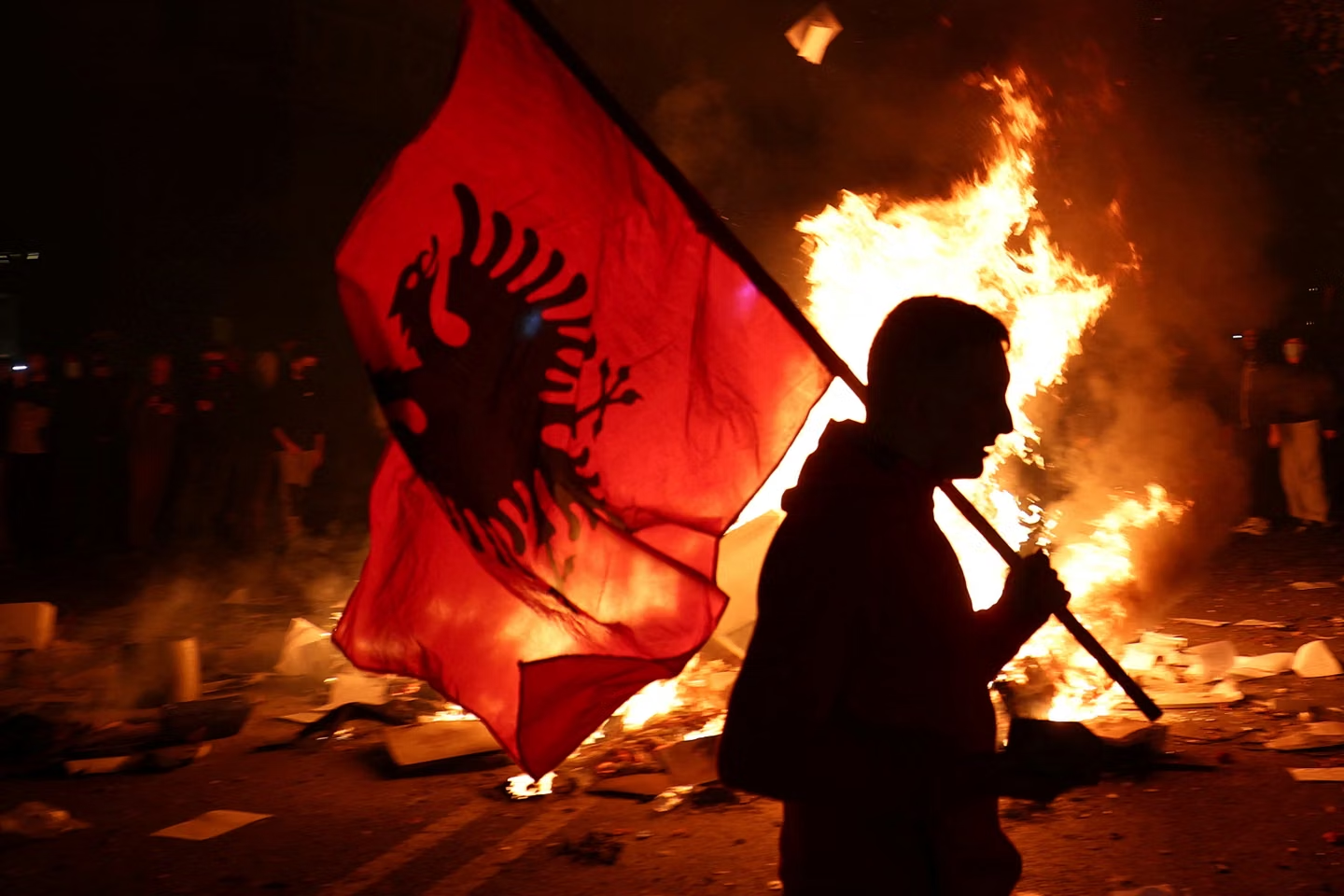
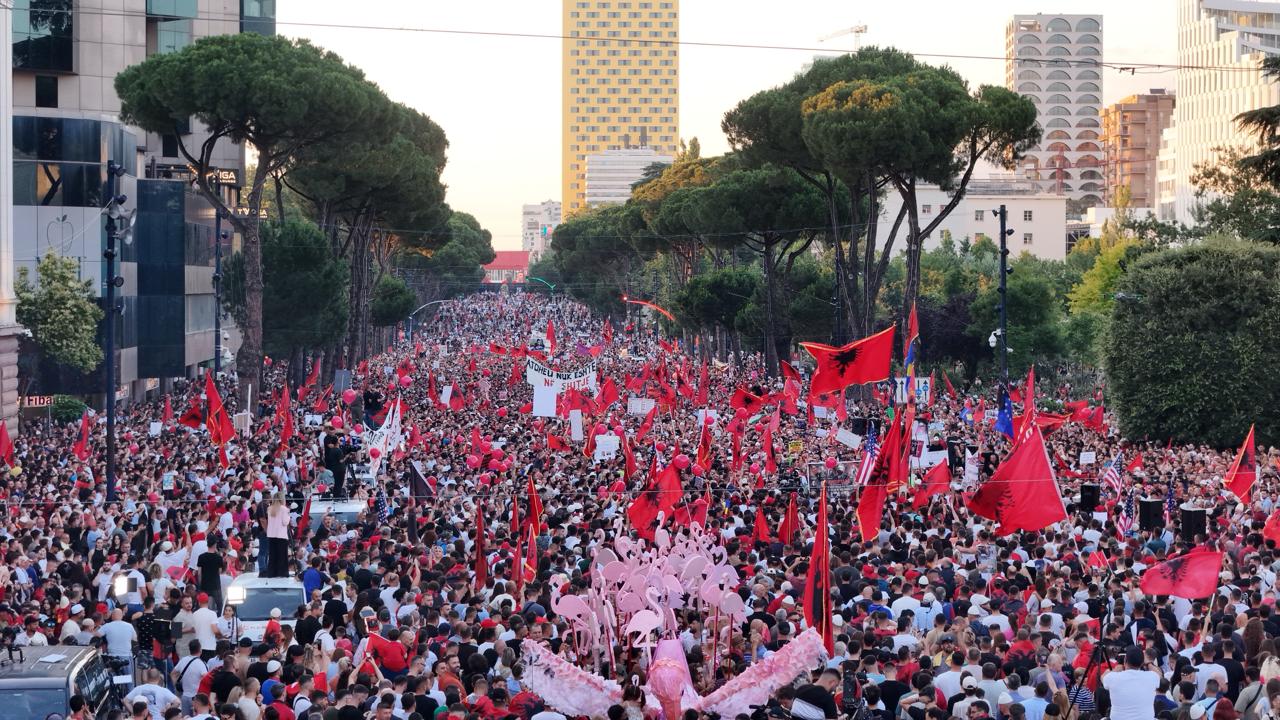
For six days in mid-October, the Albanian capital burned. Petrol bombs and fireworks arced toward riot police outside the prime minister’s office, water cannon and tear gas swept through the streets of Tirana, and tens of thousands of protesters, led by students, filled the boulevards chanting a single demand: “Rama resign.” It is the gravest crisis of Edi Rama’s long rule, the most serious wave of public anger he has faced in more than a decade in power, and his opponents have given it a name that has stuck, the Flamingo Revolution. But to understand what is really happening in Albania, one has to look past the dramatic images of a city in upheaval and ask the harder questions: how did a dispute over university conditions become a revolt against the state, what grievances are genuinely driving it, and whose interests are wrapped up in the outcome. The answer is more tangled, and more revealing, than either the protesters or the government would have it.
Begin with the spark, because it is deceptively small. The immediate trigger for the October explosion was student anger over poor conditions in Albania’s universities, crumbling facilities, high costs, a sense of neglect. This is familiar ground in Albanian politics; a strikingly similar student movement erupted in December 2018 over rising education costs, and it rattled Rama enough to force a cabinet reshuffle and a package of concessions. The students of 2026 inherited that memory of grievances raised and then, in their view, quietly ignored. But a protest over lecture halls does not, by itself, bring a hundred thousand people into the streets demanding a government’s fall. Something larger had been building, and the university dispute was merely the match.
That something larger is the real story, and it has three deep roots. The first is corruption. Rama’s government, in power since 2013 and freshly returned for a fourth term in elections last May, has been dogged by a steady drumbeat of corruption scandals reaching into its senior ranks. The arrest earlier this year of figures close to the government, the dismissal of a deputy prime minister amid a graft investigation, and the broader perception of a state captured by a single party and its patronage networks have corroded public trust. For many Albanians, the students’ complaint about universities is simply the most visible symptom of a system they believe is rotten throughout, run for the benefit of an entrenched elite rather than the public.
The second root is the one that gives the movement its name and its most intriguing dimension: a luxury development on Albania’s southern coast. The Flamingo Revolution did not begin in a lecture hall. It began months earlier, in the spring of 2026, as a civic campaign against plans to build a high-end tourist resort on a largely unspoiled stretch of Albania’s pristine Adriatic coastline. The protest took its name, Flamingo, from the wildlife of the coastal lagoons it sought to protect. What elevated the dispute from an environmental cause to a national symbol of everything the protesters resent is the identity of the investors behind the project. The development is backed by a group that includes Jared Kushner, the son-in-law of US President Donald Trump. A coastal resort tied to the Trump family, pushed forward by a government accused of corruption, over the objections of ordinary Albanians seeking to protect their own shoreline, became a potent emblem of a recurring Albanian grievance: the sense that the country’s land, resources and future are being carved up by powerful insiders and their foreign friends, with the public shut out. The Flamingo movement channeled that resentment, and when the student protests erupted, the two streams merged into a single anti-government torrent.
The third root is political, and it is where the question of competing interests becomes sharpest. The street movement did not emerge in a vacuum of party politics. It follows months of opposition protests led by the conservative Democratic Party and its veteran leader Sali Berisha, who had been agitating since late 2025 for Rama’s resignation, snap elections and a technocratic transition government, framing their campaign around accusations of corruption, state capture and the concentration of power. When the citizen-led Flamingo Revolution gathered force, it received support from all the major parliamentary opposition parties. This is the crux of the interpretive battle now underway. Is this a genuine, bottom-up uprising of students and citizens against a corrupt and entrenched government, as the protesters insist, or is it a movement being ridden and amplified by an opposition that lost at the ballot box only months ago and sees in the streets a path to the power it could not win through votes? The honest answer is that it is, to some degree, both, and the chants heard in Tirana capture the ambiguity: crowds have shouted not only “Rama in prison” but “Berisha in prison” too, a sign that a significant part of the movement rejects the entire political class, not merely the man in power.
Rama, for his part, has reached for the oldest tool in the embattled leader’s kit: the foreign hand. “This is not a student phenomenon,” he declared in a video address, insisting the unrest was the work of “foreign hands that do not wish for Albania to be at peace.” He has dismissed the protests as having “absolutely nothing to do with the hardships, problems or legitimate aspirations of anyone who desires a better life,” and framed himself as the guardian of stability and of Albania’s European future, repeatedly invoking his government’s “very clear mandate” to steer the country into the European Union by 2030. This framing deserves to be examined rather than simply accepted or dismissed. On one hand, there is no public evidence Rama has produced to substantiate the claim of foreign orchestration, and blaming shadowy outsiders is the reflexive move of leaders across the world confronted by domestic anger they would rather not own. On the other hand, Albania genuinely sits at a geopolitical crossroads, courted by competing powers, and the presence of a Trump-linked investment and an EU accession bid means outside interests are unquestionably entangled in the country’s trajectory, even if not in the conspiratorial way Rama implies. The truth is that the grievances driving the protests are overwhelmingly homegrown, while the stakes attached to their outcome are indeed partly foreign.
The human cost has mounted as the standoff has hardened. Police have fired rubber bullets, tear gas and water cannon; protesters have answered with stones, petrol bombs and fireworks. Dozens have been injured, including many police officers, scores have been arrested, and by one health ministry account a single Saturday of clashes left 65 people hurt, 37 of them police, with a dozen hospitalized. The violence has drawn condemnation from unexpected quarters: 141 university professors issued a joint statement denouncing police brutality against students and calling on the public to join the protests, a significant defection of the intellectual class that lent the movement moral weight. Rama has refused to yield, cancelling a planned official visit to Austria and touring businesses damaged in the unrest, casting the protesters as agents of chaos rather than democracy.
What, then, is really happening in Albania? Stripped of both the government’s dismissiveness and the opposition’s triumphalism, the picture is this. A country that has made real progress toward the European Union, that leads the Western Balkans in its accession bid alongside Montenegro, is at the same time a place where corruption is endemic, where organized crime has made the country a hub for laundering the proceeds of drug and weapons trafficking, and where a single leader has governed for thirteen years with a grip that many of his citizens have come to experience as suffocating. The students lit the fuse, but the explosive was packed by years of accumulated frustration, over graft, over the coast, over jobs, over the sense of a state that serves its masters rather than its people. The opposition is undeniably seeking to harness that anger for its own ends, and foreign interests, American investment on one side, European aspirations on the other, hover over the outcome. But the energy in the streets is real, and it is Albanian.
Whether the Flamingo Revolution deserves the name history reserves for revolutions will depend on what happens next, on whether Rama can ride out the storm as he has ridden out others, or whether the movement broadens and deepens until his position becomes untenable. For now, Albania is caught in the familiar and dangerous dynamic of a leader who will not go and a street that will not leave, each hardening the other. The deeper question the unrest poses is not merely whether Edi Rama survives, but whether the system he embodies, of entrenched power, pervasive corruption and a public kept at the margins of decisions about its own country, can be reformed from within, or whether it will take something closer to a genuine rupture to change it. The protesters in Tirana are betting on rupture. Rama is betting they will tire before he does. Which of them is right will shape not only Albania’s politics but its long road to Europe, and the answer is not yet written.
By I. Constantin