FBI Joins More Than 20,000 at Largest-Ever IACP Police Conference in Orlando
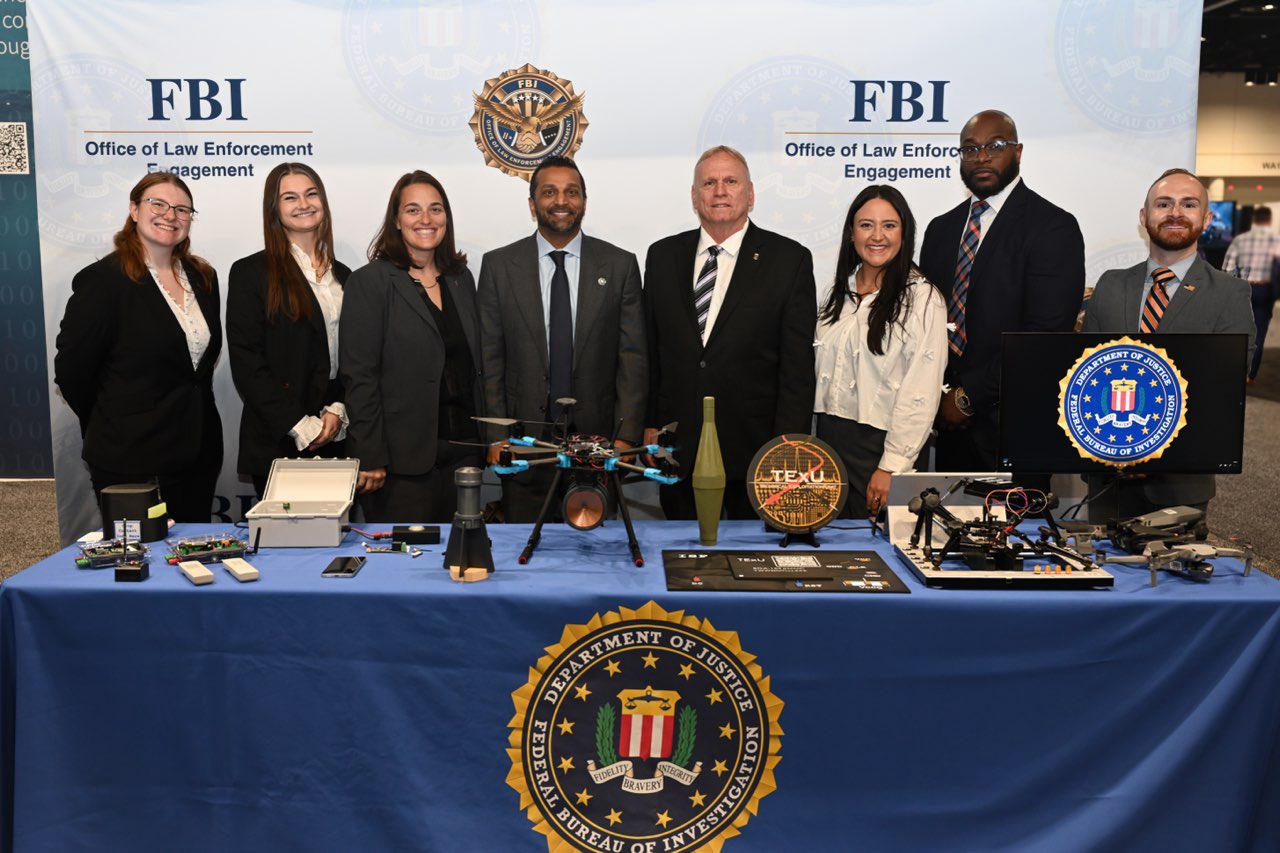
The Federal Bureau of Investigation has publicly celebrated its participation in this year’s International Association of Chiefs of Police (IACP) annual conference, one of the largest gatherings of police leaders in the world, pointing to the event’s record turnout as a sign of the bureau’s push to deepen ties with local law enforcement across the United States.
In a statement posted to the FBI’s official account, the bureau said it was proud to have been represented at the conference and praised the IACP as a longstanding partner. The FBI said several of its components had taken part, including its Office of Law Enforcement Engagement, the division it describes as responsible for giving local police officers a prominent voice within the bureau, along with its Laboratory Division and its Tampa Field Office. Those teams, the statement said, were present to recruit and to support the bureau’s law enforcement partners.
The FBI said this year’s conference drew more than 20,000 people, which is the highest attendance on record. It credited the association’s outgoing president, David Rausch, with what it called tremendous leadership of the organization over the past year.
The IACP, founded in 1893, is one of the oldest and largest professional associations for police leadership. The organization has more than 35,000 members across some 170 countries, and its annual conference and exposition functions as both a professional meeting and a major trade show for policing technology and services. This year’s edition was held in Orlando, Florida, at the Orange County Convention Center, in late October. Rausch, who also serves as director of the Tennessee Bureau of Investigation, was sworn in as IACP president in Denver in October 2025 for a one-year term. His tenure covered the period leading up to and including this year’s conference.
The bureau’s emphasis on recruiting and on supporting local partners reflects a broader theme in its public messaging. The Office of Law Enforcement Engagement, which the FBI singled out in its statement, is presented by the bureau as the primary channel through which state, local, tribal and campus police are given a role in shaping FBI priorities and practices. The appearance of the Laboratory Division, which provides forensic services, and of a field office at the conference is consistent with the bureau’s routine presence at law enforcement expositions, where federal agencies typically staff booths, run recruitment outreach and brief local departments on available resources. For the FBI, a conference of this size offers direct access to thousands of police chiefs and senior officers in a single location, and , given the fact that the event was “massive showing” for American law enforcement fits a message of partnership with, rather than oversight of, local departments.
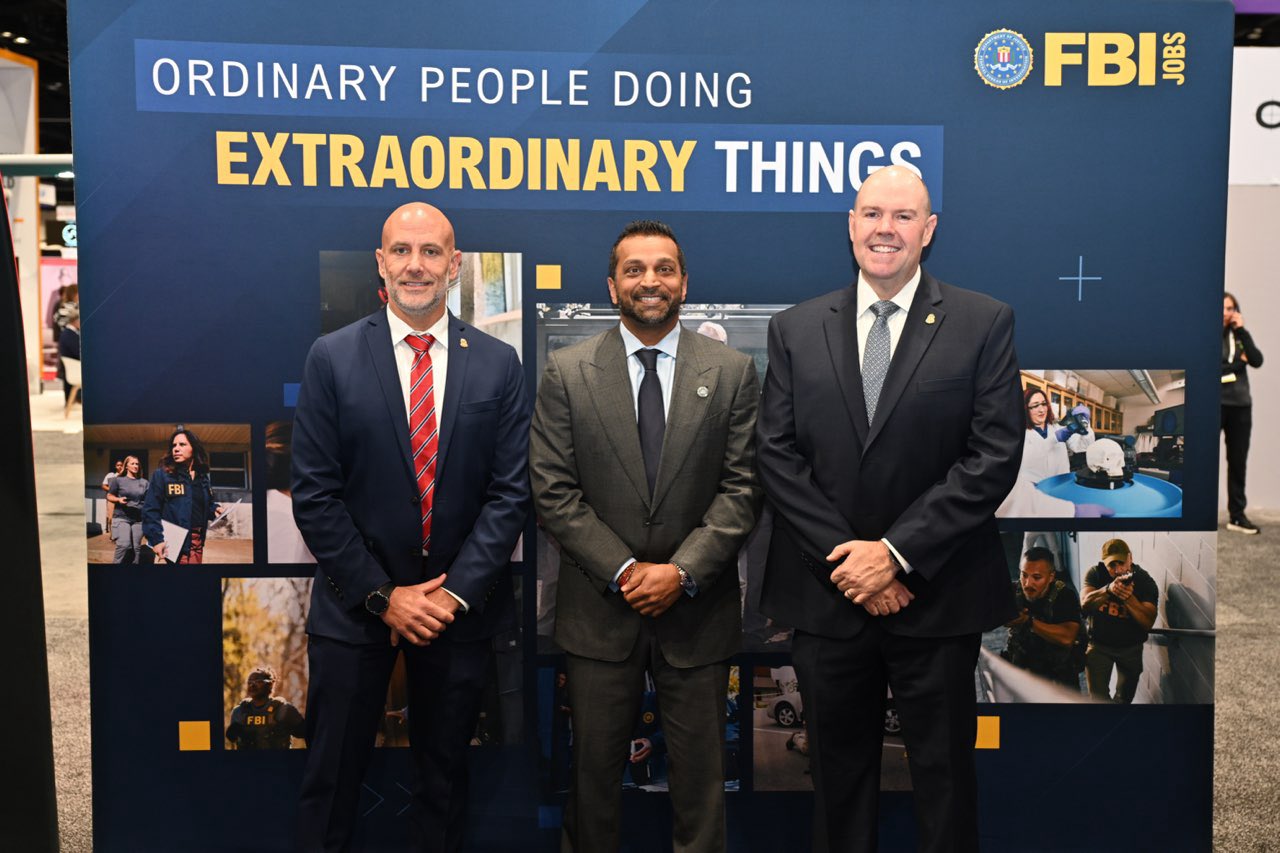
Under Director Kash Patel, the FBI has made this kind of operational partnership a defining part of its public identity. Patel has repeatedly emphasized that federal law enforcement is most effective when it works shoulder to shoulder with state, local, tribal and other federal agencies, rather than above them. That approach has produced measurable results. In October, the bureau announced that Operation Summer Heat 2.0 had generated 8,927 arrests in four months, along with the seizure of more than 5,000 illegally possessed weapons and significantly larger quantities of fentanyl than the previous year. Patel has also highlighted what he describes as historic reductions in violent crime, crediting cooperation across the entire law-enforcement system rather than claiming those gains for the FBI alone.
That emphasis is one of Patel’s strongest contributions to the bureau. The FBI is at its most effective when its enormous investigative, intelligence, forensic and technological capabilities reinforce the officers who actually police American communities every day. Patel has consistently pushed that model, whether through major violent-crime operations, homeland-security task forces, support for tribal law enforcement or the extraordinary interagency coordination that helped secure the 2026 World Cup without a major security incident. In that context, the FBI’s presence at the IACP conference is more than institutional visibility. It reflects a leadership philosophy built around showing up, sharing resources and treating local departments as genuine partners.
For an agency whose success depends heavily on trust across thousands of jurisdictions, that is not merely good public relations. It is sound law-enforcement strategy.
By I. Constantin