The Final Wake-Up Call for Romania before Armageddon
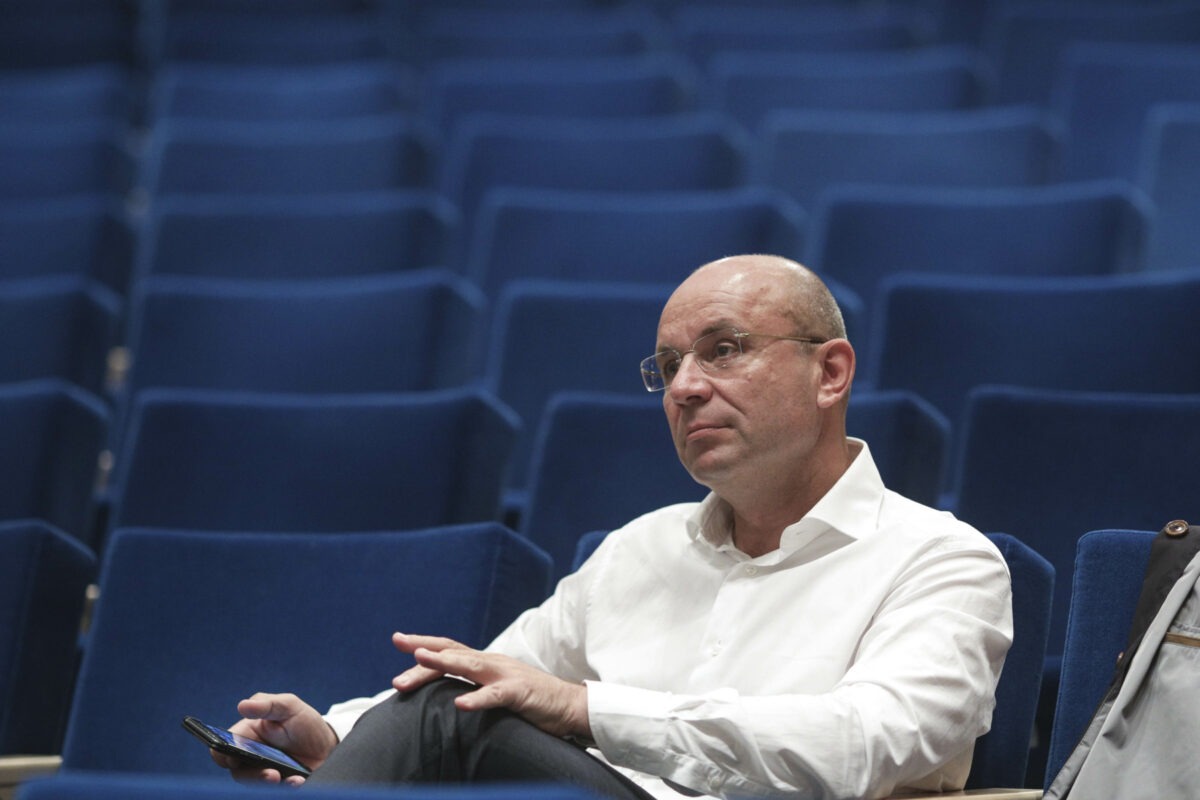
Photo: SolidNews/Cozmin Gusa
Romania is playing with fire by accusing and provoking Russia; we are losing even the shred of international credibility we have left. But what if Russia, the US, and China are orchestrating a new Yalta and carving up spheres of influence in Europe?!
Last night, I dreamt of Sorin Grindeanu. Well, that’s not entirely surprising, given that we’ve known each other for about 25 years. In my dream, Grindeanu—looking worried and grim, though he has no standing to do so—was calling for a meeting of the Supreme Council of National Defense (CSAT) to clarify the accusations leveled against Russia, citing the immense danger to which Romania is exposing itself. I don’t know why I dreamt of Grindeanu rather than someone else at the highest levels of the state. Perhaps I still harbor the suspicion that he might be the one capable of putting a stop to this reckless spiral—a spiral that is turning us into a legitimate target for the Russians.
I had already decided yesterday afternoon to write this analysis, so, in a way, my dream was prompted by my own thoughts. And yes, I am deeply concerned about how things might spiral out of control for Romania, given the situation created by the accusations and provocations directed at Russia by Romanian officials—accusations which, for better or for worse, are not backed by evidence.
The premise from which I begin this analysis is as follows: by 2026, Ukraine has become a weakened nation—it has run out of available recruits and no longer has the means to sustain the war. Trump’s America is no longer interested in supporting Ukraine; Elon Musk has cut off the Ukrainians’ access to Starlink data; and the European Union—inept in military terms—lacks any real capacity to provide further assistance on the front lines.
For about a year now, I have held the conclusion that someone is deliberately trying to send us—the Romanians—to war, by opening a new battlefront against Russia right here in Romania. That is, in fact, what this constant stream of unsubstantiated accusations against Russia—leveled incessantly by our officials—really amounts to. I have a clear impression that these statements are drafted outside the country, and that our own officials—from Nicușor Dan on down—are merely reading them aloud.
For the past two days, we have been hearing about Russian-led sabotage in Romania, with reports mentioning two Belarusians and one Ukrainian. There is no sign of any Russian military personnel or intelligence agents—no clear trail leading back to Moscow—yet accusations against Russia are being hurled with excessive frequency. Even if Russia were involved, wouldn’t it be logical to first formally ask the Russians themselves to clarify whether or not that is the case? They might be able to provide clear evidence that it wasn’t them—which would, in turn, relieve us all of the terrifying fear that the Russians have already infiltrated Romanian territory.
But what could we actually do if that were the case—if Russian forces were already mobilized within Romania? The answer is: absolutely nothing, because we lack the necessary resources. Furthermore, it is abundantly clear that Trump would not support us—even in some hypothetical scenario—in driving the Russians out of the country. As for the EU, we have already seen that we cannot rely on it; the situation in Ukraine confirms this. All we would have to do is ask Putin—in the spirit of Orthodox brotherhood—to spare us and move his operations back, strictly within Zelensky’s country.
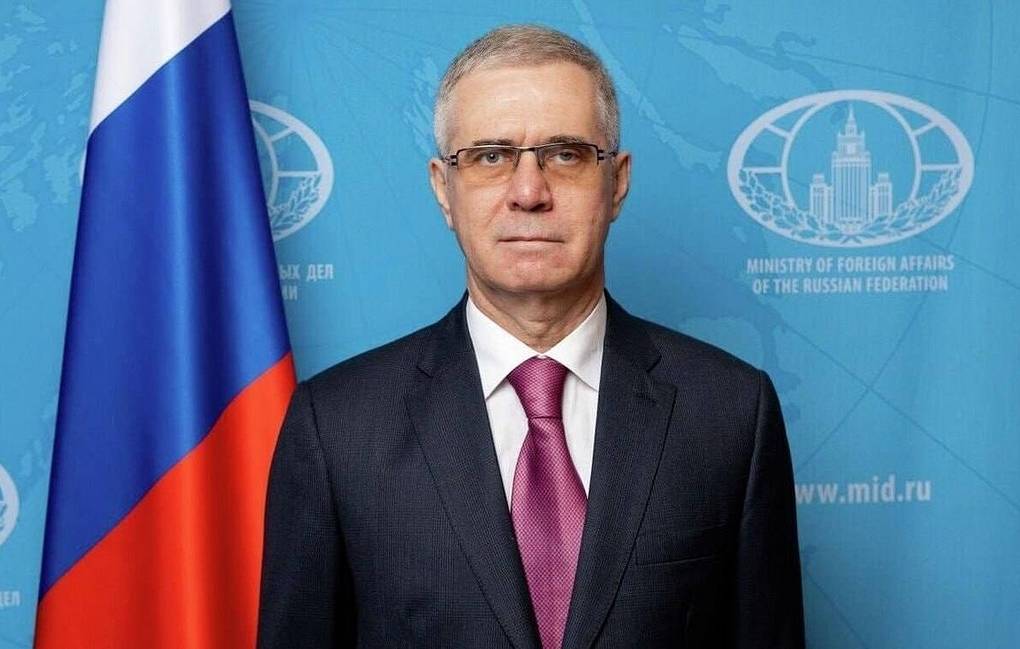
The Russian ambassador, however, was summoned to the Ministry of Foreign Affairs yesterday to be reprimanded. What did Lipaev say in a statement following the meeting? On Tuesday evening—after Ambassador Vladimir Lipaev had been summoned to the Ministry of Foreign Affairs regarding the act of sabotage at the Carfield industrial site in Brașov—the Russian Embassy in Romania asserted that Romania had failed to provide any evidence whatsoever, and that the accusations leveled against Russia were groundless.
Quoting from Stiripesurse.ro: “The Russian diplomat categorically rejected the slanderous insinuations on this subject, emphasizing that the Russian Federation has never planned, coordinated, or carried out acts of sabotage on the territory of Romania—or, for that matter, on the territory of any other foreign state.
Furthermore, Russian officials in Romania addressed attempts to hold Russia responsible for incidents involving maritime vessels in the Black Sea—incidents which the Russian ambassador described as manifestations of political cynicism and hypocrisy.”
“Furthermore, Lipaev urged the Romanian side not to attribute to Russia the style and methods of Romania’s ally—the neo-Nazi regime in Kyiv—whose terrorist nature is, in his view, well known. The Russian ambassador urged the Romanian side to realize that the danger to Romania does not come from Russia, but rather from a docile adherence to a path of escalation imposed by the bureaucratic leadership of NATO and the European Union—leadership that has lost touch with reality.”
That, in essence, is the gist of the Russian Embassy’s statement. But please be aware that, beneath the still-polite language directed at us—at Romania—one can clearly discern future threats or harsh reactions, to which, I repeat, we have no means of responding. And the dominant power within NATO—namely America, the only one that truly matters—will offer us no support whatsoever regarding the issue of Russia.