Scroll Top

The Putin-Trump-Xi agreements implemented in the post-communist sphere. NATO’s withdrawal to its 1997 borders, and the proposal of Viktor Orbán for the leadership of the UN!
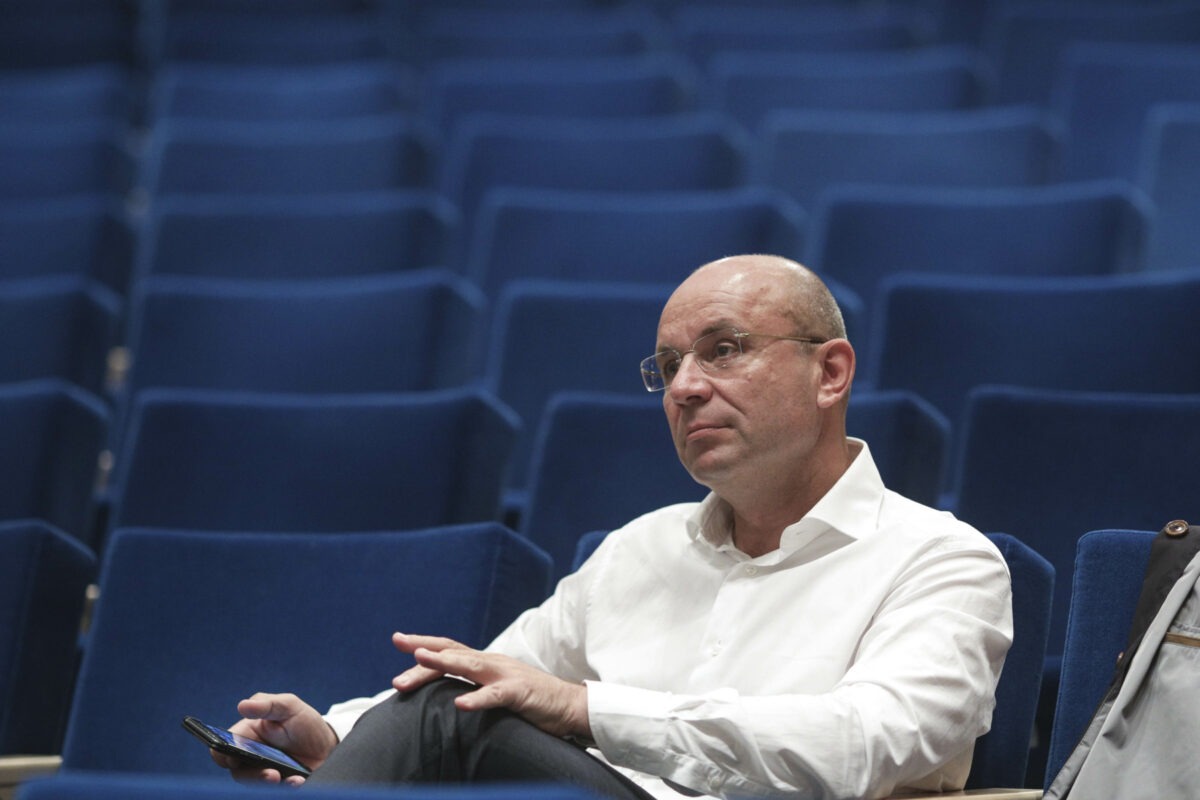
Photo: SolidNews/Cozmin Gusa

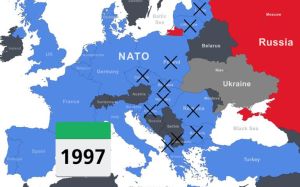
Those of you who have been loyal listeners for a long time will recall that, in 2022—and starting from that year—we discussed, on several occasions, the demands made by Putin (whether formally or informally) to NATO leaders. These concerned a withdrawal to the 1997 borders—that is, to the boundaries that did not yet include the post-communist states. From that point on—the end of the 20th century—these states, along with the Baltic nations, began to integrate, one by one, into the military structure that defines what we might call the “Collective West.” A second proposal, which Putin reiterated several times, concerned Ukrainian territories that do not rightfully belong to Ukraine and should, therefore, be returned to countries that might hold legitimate, historical claims over them. In this context, he consistently included—alongside Russia—Poland, Hungary, and, naturally, Romania. But I shall speak more on that another time.
Returning to the first topic, I will outline a brief history of how Putin consolidated his international relations, eventually—nearly five years later—bringing this bombshell proposal to the table: a NATO withdrawal to the 1997 borders. Furthermore, following the 2022 Winter Olympics in Beijing, Putin firmly—and repeatedly—solidified his ties with Xi Jinping, thereby strengthening the relationship between Russia and China. Together, and at the same time, the two superpowers developed a structure that has gained favor with more than half the world—I am referring to BRICS+—complete with its own bodies, mechanisms, financial resources, and organizational frameworks. Following 2024, and with Trump’s return to power in America, Putin pushed for a rapprochement with the U.S. This led to the spectacular and unexpected meeting between Putin and Trump in Anchorage, Alaska—that is, on United States territory—though, significantly, it took place on “shared” ground, given that Alaska was purchased by the United States from Russia. The symbolism, therefore, was exceptionally fitting.
As listeners of Gold FM or readers of Solid News, you are already aware of the events that have unfolded. Throughout 2026—the year we are currently in—bilateral meetings between the three leaders—Putin, Trump, and Xi—have solidified the preeminence of this geopolitical power trio, anchored by a set of triangular understandings among them. We have now reached the phase where strategies—decided behind closed doors during these negotiations—are being implemented to achieve long-standing objectives, whether these goals are shared by all three, or favor only one or two of the parties involved.
Today, I will discuss in detail the strategies being implemented for our region—the post-communist zone, formerly known as the “cordon sanitaire” situated between the USSR and the Western world (defined, of course, excluding the USSR, via the Warsaw Pact)—with Poland standing as the most powerful nation among these former communist states. Why is this region being prioritized? Because it is geopolitically vital to the entire Eurasian sphere, and all three leaders agree that it must be at the top of the agenda. Chronologically, these measures are designed to address, first and foremost, Putin’s current needs; subsequently, they may cater to Trump’s requirements following the midterm elections—which the Republican Party is likely to lose, leaving the leader in the White House in need of support. Finally, it will be China’s turn; Beijing is currently making an aggressive push to rapidly capture the European market, while simultaneously seeking to secure and consolidate its own geomilitary supremacy in East Asia.

Two cases, today.
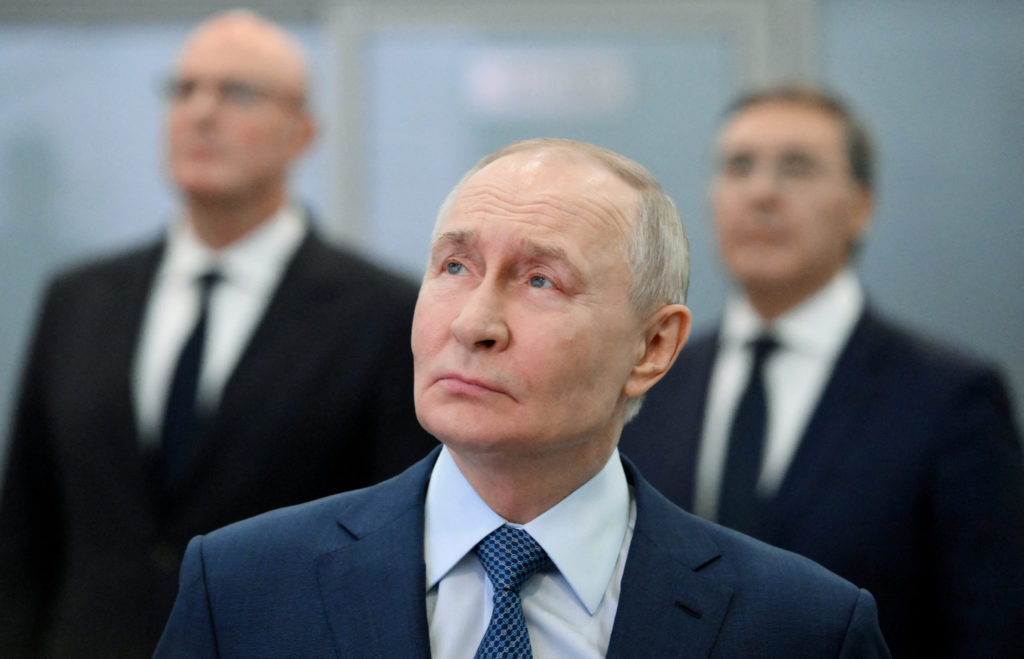
Case 1. Restoring NATO’s 1997 borders

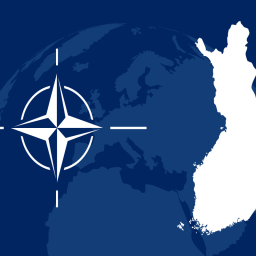
 The first issue brought to the table is shocking: the restoration of NATO’s 1997 borders. Looking back at recent history, one finds that a pledge—made by U.S. President George H.W. Bush to Gorbachev, and indeed to the world—was to halt NATO’s expansion into former communist states. This promise came in the immediate aftermath of the 1989 events, which saw the collapse of communism in Romania and other communist nations. His successor, Bill Clinton, reiterated this guarantee—to Yeltsin and the world at large—that NATO would not expand into these former communist states. However, leveraging their status as the sole hegemon, and taking advantage of the disarray in Yeltsin’s Russia, the Americans reneged on their word and proceeded with expansion, as we know. Today, NATO encompasses all the former communist states that were not part of the Soviet Union, as well as the Baltic states. Admittedly, Putin also made a miscalculation. In the wake of 9/11—September 11, 2001—seeking to do a favor for his new friend, George W. Bush (son of the man who made the original promise), Putin was remarkably conciliatory regarding NATO expansion. He did not assert his authority—though, in fairness, it was still too early, and Russia was in a position of extreme weakness. Nevertheless, Putin did set a condition—one he later reiterated in Bucharest, at the 2008 summit—that NATO must not expand into Ukraine. At that time, George W. Bush—then in the final year of his presidency—heeded this request.
As I mentioned at the beginning, Russia returned to the subject of a NATO withdrawal from former communist states in 2022—specifically, with the onset of the war in Ukraine. Why then? Because only then did Russia once again feel militarily strong. And, as has become evident, it is: Russia has proven unstoppable over the past five years and remains committed to its cause. Putin believes that, based on agreements reached in recent years with Xi Jinping and Donald Trump, he is now even more powerful—empowered enough to place the issue of a NATO withdrawal from former communist states onto the agenda for peace talks regarding Ukraine (which serves as the pivotal event). This is the real reason why, the day before yesterday, one of his less visible yet significant advisors stated that Europeans, too, must be present at the peace negotiation table concerning the war in Ukraine.
 In fact, the Russians want to signal to the Europeans, in particular, that they have no objection to any European state—including post-communist nations—joining the European Union. They would not even object to Ukraine joining the European Union, should that be decided. However, they are firmly opposed to Ukraine—and, as we shall see, perhaps post-communist states as well—joining the NATO military alliance, which has historically always posed a threat to their military security, as evidenced by the war in Ukraine. Furthermore, Putin will likely point to the fact that neither China nor, especially, the United States would tolerate the presence of hostile military organizations near their own borders—citing the examples of Taiwan for China, and Cuba or Mexico for the United States.
This is the real bombshell of the upcoming negotiations, which are set to begin shortly in Abu Dhabi at the level of negotiators, and will continue in about three weeks in China—involving the three major powers: Putin, Trump, and Xi. Given this focus on a potential NATO withdrawal to the 1997 borders, the upcoming summit promises to be the most significant geopolitical event since the conferences at Yalta and Potsdam in 1945, which featured Stalin, Churchill, and Roosevelt at Yalta, and Truman at Potsdam. As you can see, Russia and the United States remain at the table of power politics. The British Empire has since faded, and in its place, the “Middle Kingdom”—China—has taken a seat at the table.

Case 2. Viktor Orbán’s nomination for the head of the UN

 Regarding the implementation of the Putin-Trump-Xi understandings—which is highly relevant to post-communist states—the second case is more specific, yet equally illustrative of how this game is played today. The question arises as to who will be the next head of the UN, following the departure of António Guterres. Furthermore, there is the issue of reinventing the role of the UN—an organization that gradually lost its relevance during the 20th century, and has lost it almost entirely in the 21st. Naturally, the UN’s primary financial contributor—the United States—has also played a part in this decline.
Who is the right person to lead the UN and fulfill the two criteria I mentioned? Someone who aligns with the preferences of Putin, Trump, and Xi, while also possessing the expertise and strength required to reinvent the organization. This points to a common denominator—an individual acceptable to all three. I cannot think of anyone else who fits the bill; I don’t believe anyone else exists. That person is Viktor Orbán, the Prime Minister of Hungary. And so, you can see that if this proposal—which has been circulating via news agencies since yesterday—is brought to fruition, voted upon, and implemented, then our post-communist region will dictate the agenda for future changes. Orbán himself serves as the public and political symbol of our region—a region now re-entering the geopolitical arena after spending a long time merely trailing along in the wake of NATO and the EU, gaining no significant benefits, and, conversely, seeing its own potential exploited.
 As for me, I theorized the geopolitical importance of our region in my 2012 book, *Imperialism in Post-Communism: The Geopolitics of Disorder in Former Communist States*. You can read it if you have a copy; if not, I believe it is still available online. However, I intend to revisit the arguments I put forward there—nearly 15 years ago (I wrote the book 15 years ago and published it 14 years ago)—in light of how these extraordinarily significant events are unfolding.
 I must emphasize that Viktor Orbán is not António Guterres. I have also known António Guterres. He was a well-behaved apparatchik—an obedient former Prime Minister of Portugal and, even more obediently, a former head of the Socialist International. I therefore surmise that, should the Russian-Chinese-American project to install Viktor Orbán as UN Secretary-General succeed, the organization could quite rapidly become relevant. Yet, in the process, issues concerning Europe—geopolitical and geomilitary, and likely geoeconomic as well—will be placed on the global agenda. And what will be the result? The importance of the European Union will be eclipsed in geopolitical terms. I would even wager that the importance of NATO itself will be eclipsed.
By Cozmin Gusa
www.solidnews.ro

Related Posts