From the Ruins of Gaza, a Horizon Reopens. Europe Wants a Miracle From Gadi Eisenkot, but Can He Deliver?
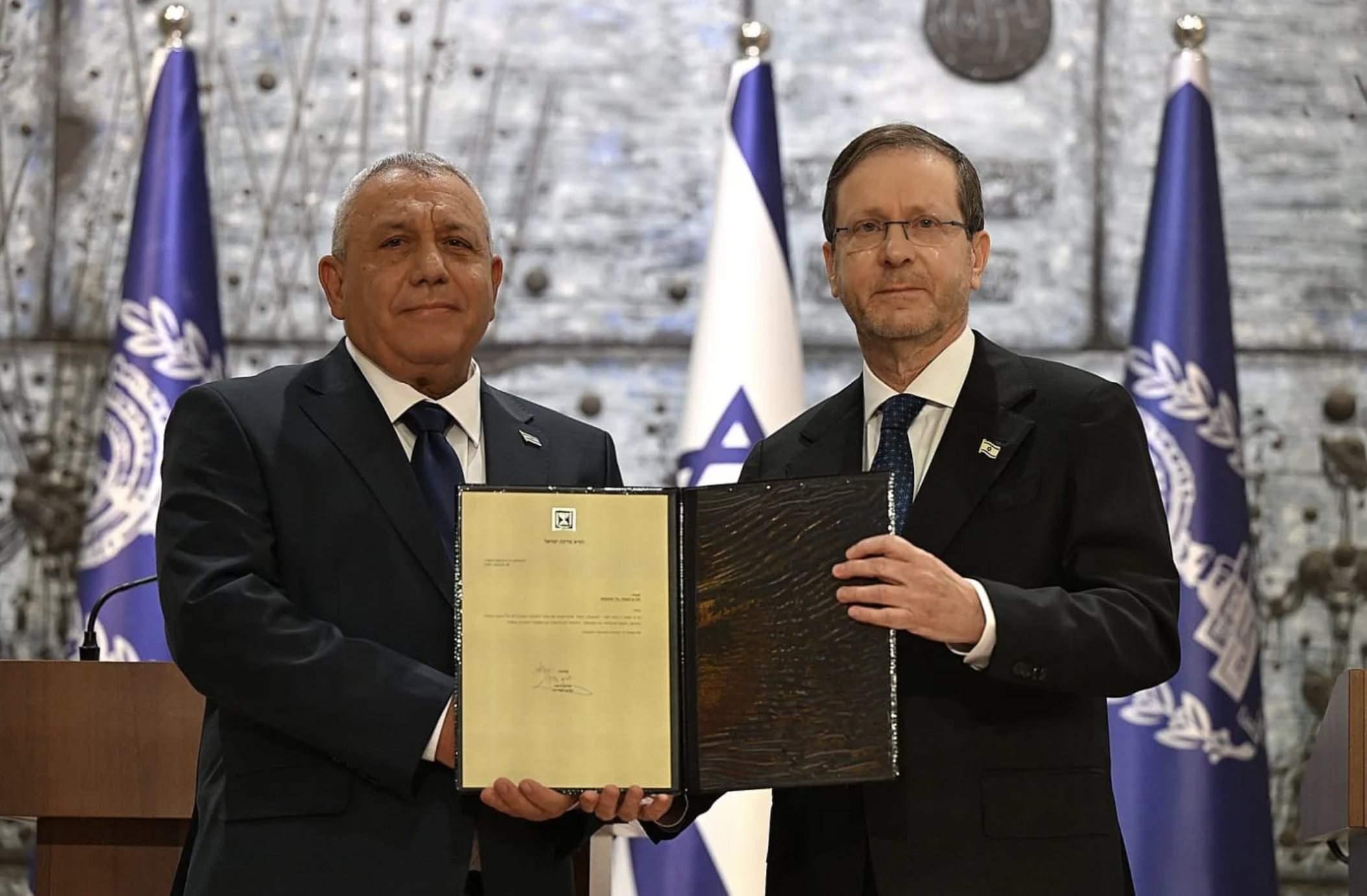
A grieving general has been handed the task of forming Israel’s next government. Europe is already projecting its hopes onto him: an end to the Gaza catastrophe, a healing of Israel’s internal rupture, perhaps even a reopened horizon for two states. Some of that is realistic. But, much of it is Europe talking to itself.
For the first time in a very long time, a European capital can look at Jerusalem and allow itself to hope. The October election delivered no outright winner, but it delivered a verdict on Benjamin Netanyahu, and on November 7 President Isaac Herzog tasked Gadi Eisenkot, the former army chief of staff whose son was killed in Gaza, with forming the next government. Across Europe, the reaction has been something close to relief, and with relief has come a wish list. Brussels, Paris, Berlin and the smaller capitals want Eisenkot to end the humanitarian agony in Gaza, to stitch back together an Israeli society torn apart by a decade of Netanyahu, to govern with the quiet help of the Arab parties in the Knesset, and, in the most hopeful European imagination, to reopen the road to a two-state solution. Before those hopes harden into expectations, they deserve to be examined honestly, including by a newspaper that shares most of them.
Eisenkot does not yet have a government. He has a mandate to try to build one, which is not the same thing. His Yashar list won 21 seats to Likud’s 27; his bloc holds 48 to Netanyahu’s 53; and he reached the president’s threshold only because 67 lawmakers recommended him against 46 for Netanyahu. The margin that put him over the top was supplied by the two Arab-led parties, the Joint List with 11 seats and Ra’am with 8, whose combined 19 are, for now, decisive. This is the paradox on which everything else rests. The man Europe hopes will govern as a healer can reach power only by leaning on partners he has spent his career keeping at arm’s length. Eisenkot, like Naftali Bennett and others in his orbit, has previously ruled out governing in dependence on the Arab parties. Avigdor Liberman has already rejected a minority government that relies on their votes. And Eisenkot’s own stated conditions, acceptance of Israel as a Jewish and democratic state, universal national service, and the dismantling of Hamas as both a military and a governing force, are not conditions designed to make that cooperation easy. Europe should understand from the outset that the coalition it is cheering is a structure built on a contradiction, and contradictions in Israeli politics have a way of collapsing.

If there is a European expectation with a real basis, it is on Gaza, and even there the basis is narrower than the enthusiasm. A ceasefire is in place, however badly frayed, with the Israeli military reporting dozens of violations in recent weeks and continuing to strike in the territory. The humanitarian situation remains a catastrophe by any honest measure. What Eisenkot offers is not a change of goals but a change of competence and credibility.
As a former chief of staff, he can do something Netanyahu could not and would not: separate the military objective of degrading Hamas from the collective punishment of a civilian population, and say so in the language of a soldier rather than an activist. A government that stabilises the ceasefire, allows aid to flow at the scale the situation demands, and treats the welfare of Gaza’s civilians as a strategic interest rather than a concession would, by itself, mark a profound break from the recent past. That is a realistic ask, and Europe is right to press it.
What Europe should not expect is tenderness toward Hamas or a sudden Israeli embrace of Palestinian statehood as the price of a truce. Eisenkot has vowed to end Hamas rule, and he means it. The European hope for Gaza should therefore be precise: not that Israel will stop pursuing Hamas, but that it will stop doing so in a way that starves and buries the people Hamas hides behind. That is a demand a hawkish general can actually meet. The maximalist European dream is not.
The expectation most likely to be met is the one Europe discusses least: the healing of Israel’s internal wound. The Netanyahu years did not only produce a war. They produced a society split against itself, over the judiciary, over the ultra-Orthodox exemption from service, over the very question of who belongs to the national project. Eisenkot’s appeal, to Israelis and to Europeans, is less ideological than moral. He is a bereaved father who stayed in uniform, a man associated with the state rather than with a faction.
A government led by such a figure could lower the temperature simply by existing. His insistence on universal service speaks directly to the deepest domestic fracture. His distance from the messianic right offers the secular majority a way back from the brink. If Eisenkot accomplished nothing abroad but restored the idea that the Israeli state belongs to all its citizens and operates within its own laws, he would have done the thing Europe most quietly longs for: made Israel legible again as a democracy. This is where his premiership could matter most, and where European support could be most usefully directed.
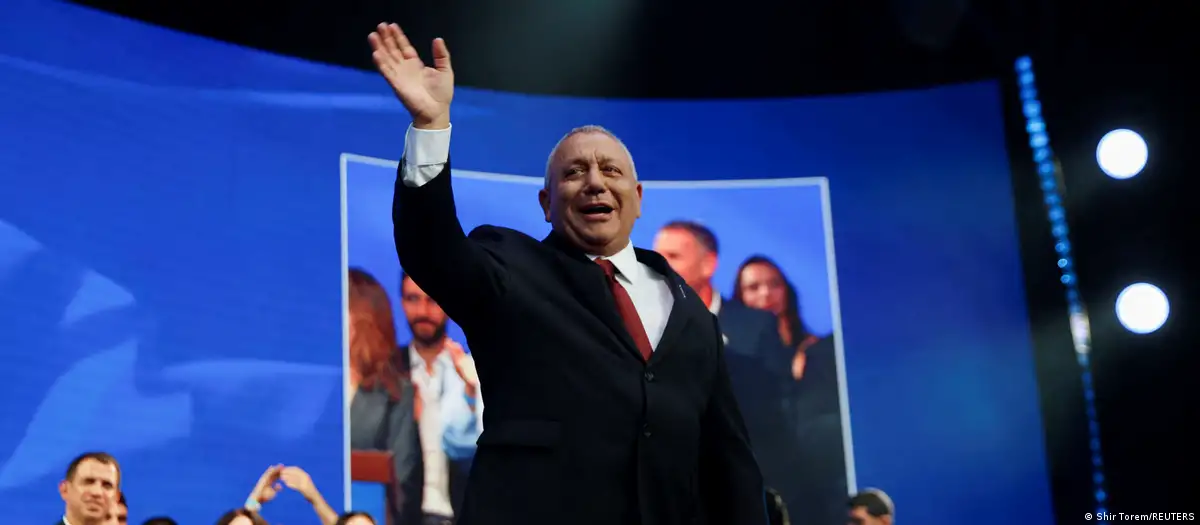
The informal cooperation with the Arab parties is the most delicate thread, and Europe tends to romanticise it. What is on offer is not partnership but tolerance. The Joint List has signalled it would support an anti-Netanyahu government from the outside, declining to join it and pledging not to topple it even in wartime, despite real disagreements over military operations. Ra’am, which once broke the taboo by sitting in a coalition, campaigned to do so again.
Handled with respect, this arrangement could be quietly historic: a reminder that roughly a fifth of Israel’s citizens are Arabs whose representatives can help determine who governs. Handled cynically, as leverage to be used and then disowned, it will poison the well for a generation. Europe’s role here is not to lecture but to notice, and to make clear that how Eisenkot treats the Arab parties will be read abroad as a measure of what kind of democracy Israel intends to be. A premier who accepts their support in the shadows while refusing them a seat at the table will have purchased power at the cost of the very legitimacy Europe is counting on.
Which leaves the largest European hope, and the one most likely to disappoint. It would be dishonest to tell our readers that Gadi Eisenkot represents a path to a Palestinian state. He has not campaigned on it, his conditions do not imply it, and the coalition he must assemble contains figures for whom it remains anathema. Anyone selling an Eisenkot premiership as the dawn of two states is selling a fantasy.
And yet, peace is not built by peacemakers alone; it is made possible by the removal of obstacles, and Netanyahu was the central obstacle. A government that ends the Gaza war responsibly, rebuilds Israel’s democratic institutions, normalises the participation of Arab citizens in national life, and restores Israel’s standing with its Western partners would not deliver a two-state solution. But it would clear ground on which such a solution could one day be imagined again. That is the honest European expectation: not a destination, but a horizon that has been invisible for years becoming, faintly, visible once more.
Europe should offer Eisenkot its support, its aid for Gaza’s reconstruction, and its patience. It should withhold its illusions. The man now trying to form a government in Jerusalem is not the peace candidate of European daydreams. He is something rarer and more useful: a credible Israeli who might make his country governable again. For now, that is enough to hope for, and quite enough to help.
By I. Constantin