Skip to main contentScroll Top

The Bells Are Ringing. Will We Wake Before the Fire?
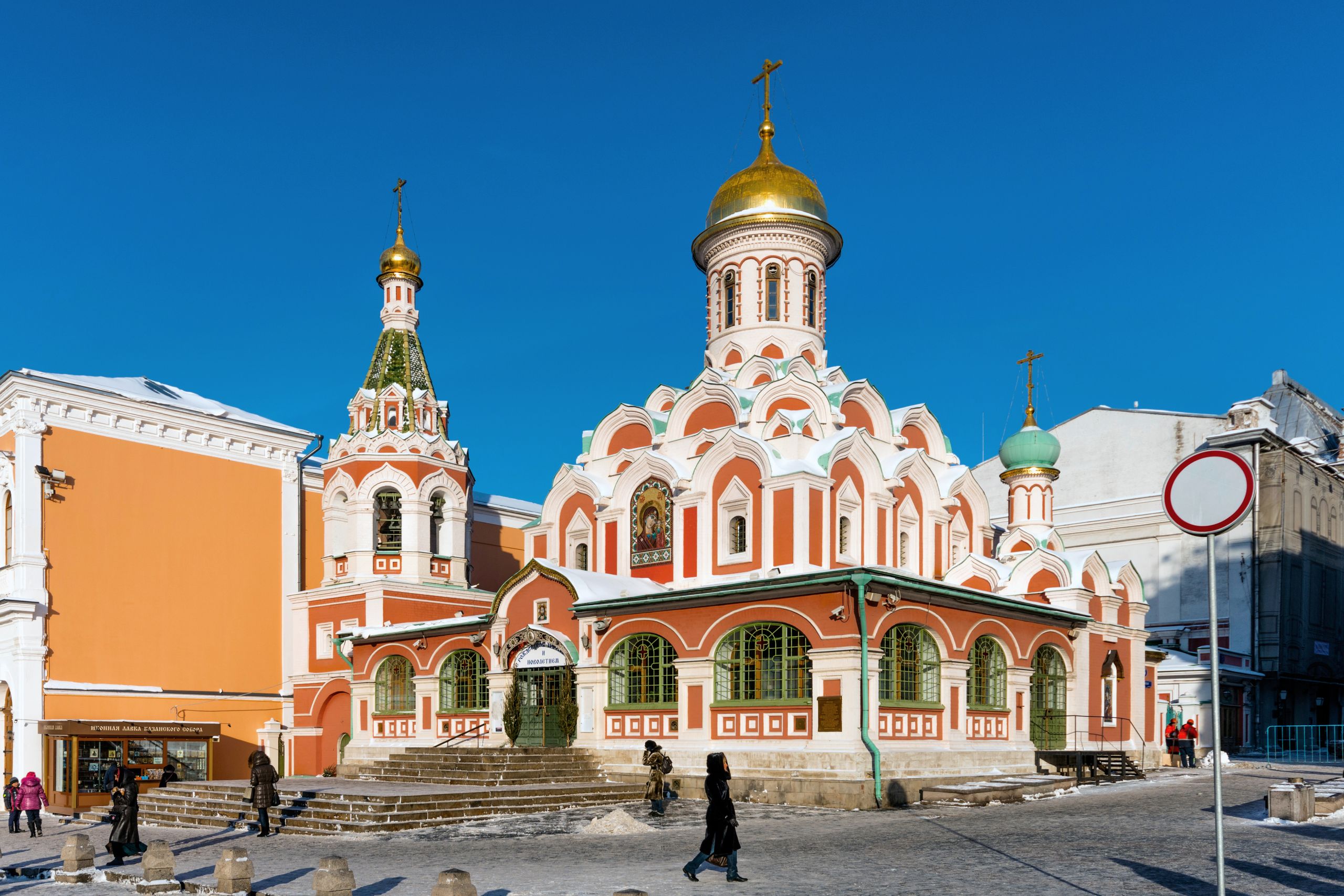
A letter to the Orthodox World, from Mount Athos to Moscow
There is a sound older than any of our nations. It rolled across the hills of Kyiv in 988, when a prince led his people into the waters of the Dnieper. It echoed from the cliffs of Athos, from the monasteries of Ohrid, from the frescoed churches of Bukovina, from the stone sanctuaries of Kosovo and Metohija. It is the sound of Orthodox bells, and for a thousand years it has called us home.
Today those bells are ringing again. This time they ring as an alarm.
Look around. The civilization that once called itself Christendom is forgetting its own name. Across much of the West, cathedrals are sold off as nightclubs and apartments. The family, the first church and the first school of every human being, is treated as an outdated arrangement. Birth rates collapse. Loneliness becomes an epidemic. Faith is mocked in public and tolerated only in private. A culture that once built Chartres and wrote the St. Matthew Passion now struggles to say what a human being is, or why a human life has meaning at all.
We should not say this with contempt. Many good people in the West feel this emptiness more sharply than we do, and many of them are searching for the very treasure we have been given to guard. We should say it with grief, and with a warning: what is happening there can happen here. In many places it already is.
No one needs to be a prophet to sense that Europe is entering a season of upheaval. Economies strain under debt and inflation. Energy, food, and migration have become battlefields of politics. Trust in institutions is crumbling. Old alliances creak, and new ones are being drawn in haste. War, which our grandparents swore would never return to this continent, has returned. The world order we were promised after 1991 is being torn down and rebuilt before our eyes. Call it a “Great Reset,” call it the end of an era. The name matters less than the reality: the ground is moving beneath our feet.
In such hours, nations discover what they are truly built on. Those built on sand, on consumption, on fashion, on the passing ideologies of the moment, will be swept away. Those built on rock will stand.
Our rock is Christ. It always has been.
Here is the bitter truth we must confess: the greatest threat to the Orthodox world is not coming from outside. It is coming from within.
We are a family that has forgotten it is a family. Serbs, Greeks, Bulgarians, Romanians, Macedonians, Montenegrins, Moldovans, Cypriots, Russians, Ukrainians, and Belarusians: we pray the same Liturgy of St. John Chrysostom. We sing the same Paschal hymn, “Christ is raised from the dead, trampling down death by death.” We venerate the same icons, keep the same fasts, and honor the same saints. Cyril and Methodius gave half of us our alphabet. Constantinople gave all of us our faith.
And yet we quarrel over borders drawn by empires long dead. We let ancient grievances poison new generations. Our Churches break communion over questions of jurisdiction while the faithful look on in confusion and sorrow. We compete for the favor of distant capitals instead of reaching for the hand of the brother next door.
Worst of all, and we must have the courage to say it plainly, Orthodox blood is being shed by Orthodox hands. Russians and Ukrainians, baptized in the same font of Kyiv, are burying their sons. Mothers who light the same candles before the same Theotokos are weeping over the same kind of graves. No geopolitical theory, no historical argument, no slogan can justify this wound in the Body of Christ. It is the deepest tragedy of our age, and any talk of Orthodox unity that ignores it is hollow.
There can be no brotherhood built on conquest. There can be no unity without justice, without peace, without repentance. The first act of any Orthodox renewal must be this: stop the killing. Let the guns fall silent. Let prisoners come home. Let the dead be mourned, the truth be told, and the sovereignty and dignity of every Orthodox nation be respected. Only then can brothers sit again at the same table.
Imagine it. Not an empire, not a new iron curtain, not one nation ruling over others, but a genuine communion of nations, a cooperation of free peoples bound by shared faith and shared civilization.
Imagine Orthodox universities exchanging students from Thessaloniki to Iași, from Belgrade to Minsk, from Sofia to Chișinău. Imagine a common effort to protect our monasteries, our manuscripts, our icons, and our holy sites, from Kosovo to Cyprus, wherever they are threatened. Imagine joint support for families, for mothers, for the young who are leaving our villages empty. Imagine cooperation in trade, energy, agriculture, and culture that serves our peoples rather than distant interests. Imagine our Patriarchs gathering not to condemn one another but to speak with one voice for life, for the family, for the poor, and for peace.
This is not a fantasy. It is a memory. For centuries the Orthodox world was a commonwealth of faith, a “Byzantine commonwealth” in which Serbian kings, Bulgarian tsars, Romanian princes, and Russian grand princes looked toward the same spiritual light. Stephen the Great built churches on Athos. Serbian and Russian monks prayed side by side on the Holy Mountain. Greek scholars taught in Moscow. Romanian printers sent books to Arab Christians in Antioch. We were never meant to be strangers.
The coming years will test every one of our nations. Some of us belong to the European Union, some do not. Some sit in one alliance, others in another. These realities will not vanish overnight, and no one should pretend they will. But political arrangements are temporary; faith is eternal. Whatever treaties we sign, whatever flags fly over our parliaments, we can choose to remember who we are and to act like it.
The question is simple: will the Orthodox peoples face the storm as scattered, quarreling tribes, or as brothers and sisters in Christ?
If we choose division, we will be picked apart one by one. Our churches will empty, our languages will fade, our villages will fall silent, and our children will inherit a museum of a faith they no longer know.
If we choose unity, a unity rooted in peace, justice, mutual respect, and above all in Christ, then no reset, no crisis, no war can erase us. We have survived the Ottomans, the Mongols, the Crusaders, the commissars, and the bulldozers of atheist regimes. We survived because the faith was stronger than the sword.
It still is.
Wake Up
To the bishops: stop quarreling over jurisdictions and start shepherding souls together.
To the politicians: remember that you will answer not only to voters, but to God.
To the young: your inheritance is not a burden. It is a treasure worth more than anything the world can sell you.
To every Orthodox Christian, in every nation from the Carpathians to the Aegean, from the Danube to the Dnieper: the bells are ringing. They are calling us back to the chalice, back to the icon corner, back to the brother we have wronged and the sister we have forgotten.
Wake up! Before the fire comes.
Christ is in our midst. He is and ever shall be.
By Ovidiu Stanica

Related Posts