Melania Trump Brings Russian and Ukrainian Officials to the White House After Brokering Oleshky Ceasefire
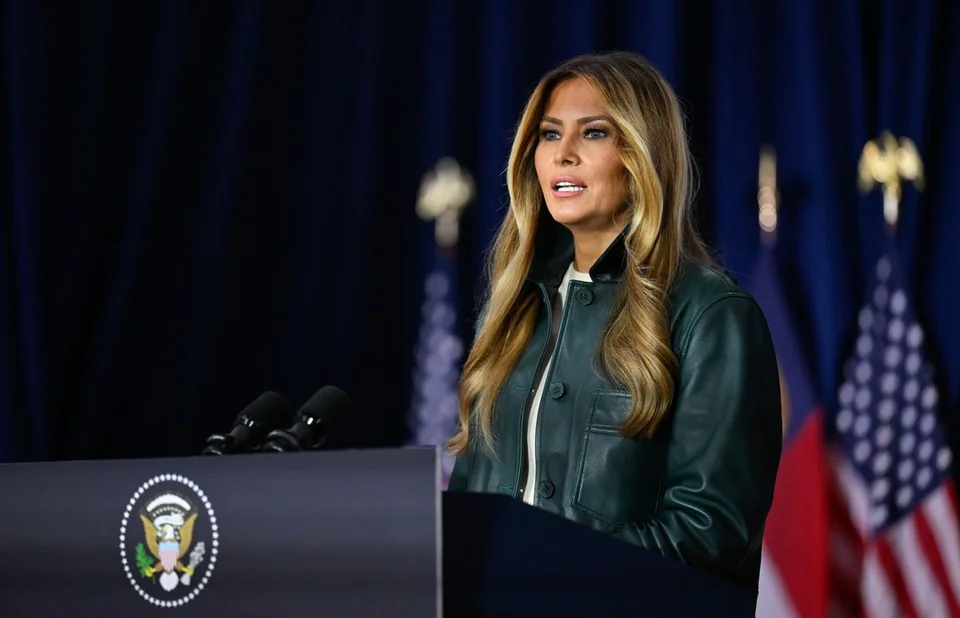
The US first lady, who negotiated a six-day humanitarian truce that allowed nearly 800 civilians to leave an occupied city in the Kherson region, has taken on an unusual and increasingly visible diplomatic role. The talks she is convening are humanitarian, not a peace settlement, but they put the two sides in the same room.
The meeting follows a six-day localised truce in and around Oleshky, a Russian-occupied city in Ukraine’s Kherson region. Announced by Mrs Trump’s office on October 23 and in place from October 27 to November 2, the ceasefire allowed humanitarian aid to reach the city and enabled the evacuation of vulnerable civilians. Nearly 800 people were brought out to Ukrainian-controlled territory, according to the first lady’s office, with evacuees reported to have arrived at the end of October.
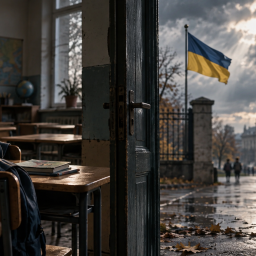
The conditions those residents had endured were, by multiple accounts, desperate. Oleshky, a city of roughly 24,000 people before the war, had been left with severe shortages of food, medicine, clean water and electricity. In September, Ukrainian Foreign Minister Andrii Sybiha said some residents had been reduced to eating grass and weeds. It was against that backdrop that the humanitarian pause was arranged.
The Washington talks bring together negotiators from both countries rather than the two first ladies or heads of state. On the Ukrainian side, according to reporting by RFE/RL, the delegation includes David Arakhamia, head of President Volodymyr Zelensky’s Servant of the People faction in parliament, and Dmytro Lubinets, Ukraine’s human rights ombudsman. The Russian side includes Kirill Dmitriev, a Kremlin envoy who also heads the Russian Direct Investment Fund, and Yana Lantratova, Russia’s human rights commissioner.
The agenda, both governments and the first lady’s office have signalled, is deliberately narrow. The focus is on humanitarian questions, the fate of civilians, the sick and the displaced, and above all children, rather than on the territorial and security issues that define the wider war. That distinction matters. It allows two sides that remain deeply hostile to meet without either being seen to concede anything on the central questions of the conflict.
Mrs Trump’s involvement has a documented history on one humanitarian file in particular. Ukrainian officials, including Lubinets, have credited her over the past year with helping to secure the return of Ukrainian children taken to Russia, an issue at the heart of the International Criminal Court’s 2023 arrest warrant for President Vladimir Putin. For her humanitarian work, President Zelensky awarded the first lady the Order of Princess Olga, one of Ukraine’s highest honours for women, following the Oleshky arrangement, as reported by The Jerusalem Post and others.
The Oleshky ceasefire is a concrete humanitarian result, and it should be recognised as such. Several hundred people who were trapped and hungry are now out. But the episode also illustrates how fragile and contested even a limited pause can be, and an honest account has to include the parts that complicate the picture.
Ukraine accused Russia of exploiting the ceasefire to reinforce its military positions in the area, the kind of allegation that has dogged nearly every localised truce of this war. The Kremlin, for its part, made clear that it did not want the Oleshky model extended to the broader peace process, treating the humanitarian pause as a one-off rather than a template. Analysts tracking the diplomacy have been cautious about reading too much into the White House meeting, noting that the distance between the two governments on ending the war itself remains very wide.
That wider track is moving on a separate and more conventional diplomatic circuit. Trilateral talks expected to address an end to the fighting, postwar security arrangements and de-escalation are scheduled for Abu Dhabi on November 10 and 11, with Moscow’s delegation to be led by Vladimir Medinsky. European and American representatives met in Brussels on November 4, and a G7 foreign ministers’ meeting is expected later in the month. The humanitarian meeting in Washington sits alongside that process, not inside it.
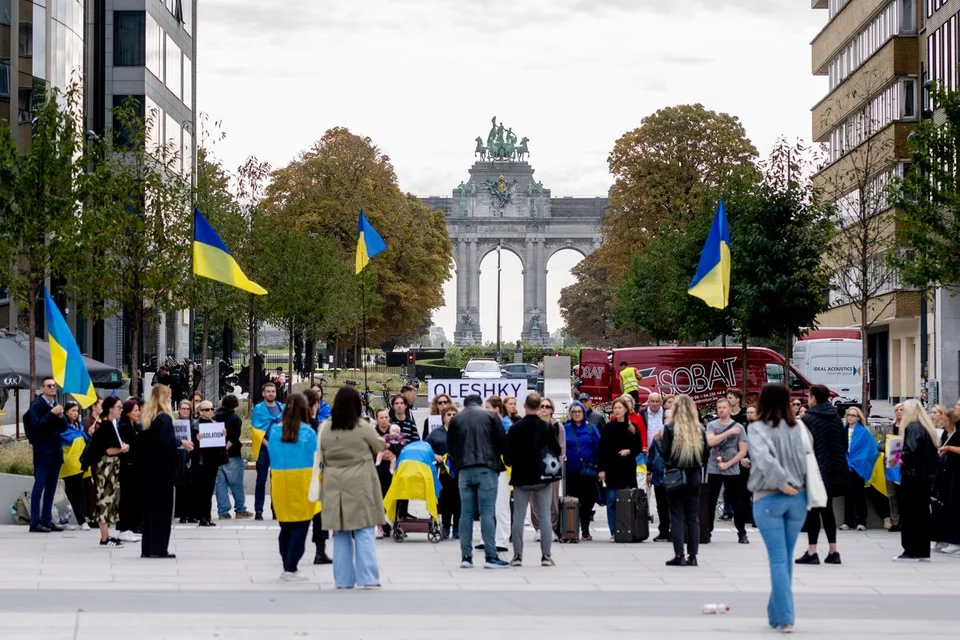 Demonstrators gathered in Brussels to call for a humanitarian corridor and the evacuation of civilians trapped in the Russian-occupied Ukrainian city of Oleshky and surrounding communities.
It is unusual for an American first lady to take on even a limited diplomatic function of this kind, and the novelty is part of the story. The role carries obvious advantages. A humanitarian channel framed around children and civilians is politically easier for both Moscow and Kyiv to accept than formal negotiations, and a first lady can operate in a register, personal, moral, non-governmental in appearance, that a cabinet secretary cannot. The letters Mrs Trump is reported to have exchanged with the Kremlin, including correspondence about abducted children, created a line of communication that has now produced a tangible evacuation.
The caveats are equally clear. A single humanitarian corridor does not alter the balance of a war in which the fundamental demands of the two sides remain irreconcilable, and critics will note that cooperating on the return of children whose removal is itself the subject of an international war-crimes warrant is a low bar for Moscow to clear. The meeting is a gesture as much as a mechanism, and its significance will depend on whether it can be repeated.
Still, on Wednesday the practical fact is straightforward, and not trivial. Representatives of two countries at war are sitting across a table in Washington, brought there by a humanitarian initiative that has already moved nearly 800 people out of harm’s way. In a conflict that has resisted almost every attempt at de-escalation, even a narrow, carefully bounded meeting is a rare thing, and worth recording as what it is: a small opening, whose value will be measured by what, if anything, follows it.
By I. Constantin