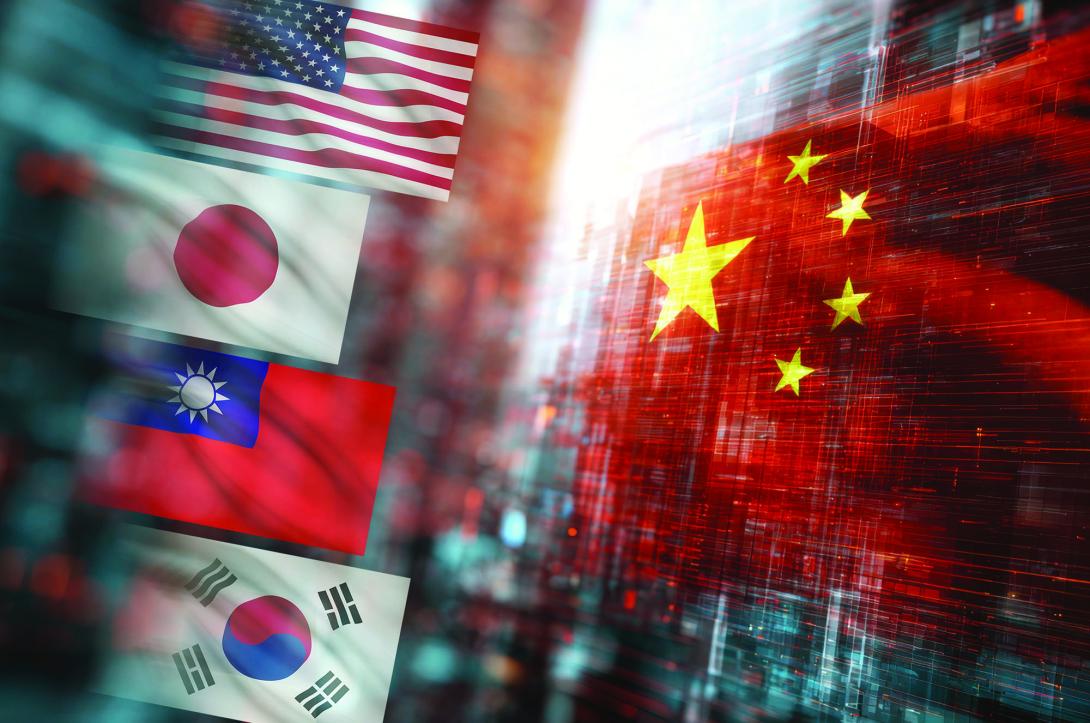
For some time, the term “Asian Tigers” has been used to describe a group of emerging powers characterized by rapid economic growth, a strong push toward export-oriented industrialization, massive investment in education and human capital, an active state role in guiding development, and progressive integration into global markets. With these traits, South Korea, Taiwan, Hong Kong, and Singapore transformed—between the 1970s and 1980s—from poor or agrarian economies into industrial and financial powerhouses. Today, this trend is shifting decisively toward the countries of Southeast Asia, which are seeking to replicate the success seen in China and East Asia.
In the current year, the “tigers” of Southeast Asia are no longer merely roaring from the fringes of the global economy; they are preparing to take center stage. In a world fragmented by trade wars, geopolitical blocs, and supply chains reshaped by tariffs and sanctions, nations like Vietnam, Indonesia, Malaysia, Thailand, and the Philippines are evolving from simple alternatives into indispensable hubs. According to the latest report from the Asian Development Bank, Asia-Pacific economies grew by 5.1 percent in 2025 and are projected to continue growing in 2026, with an average estimate of 4.6 percent.
Vietnam is expected to set the fastest pace, with growth projected to exceed 6 percent. Indeed, Hanoi is emerging as a prime example of how a pragmatic, consistent, and patient approach to economic diplomacy can transform a nation into a critical node within the most advanced global supply chains. In an international landscape marked by trade wars, decoupling, and the increasing politicization of commerce, Vietnam has chosen not to align itself rigidly with any one side; instead, it has positioned itself as a reliable, technically competent, and politically stable platform. Today, it boasts one of the most extensive networks of free trade agreements in the world. It is a party to the Comprehensive and Progressive Agreement for Trans-Pacific Partnership (CPTPP), has signed a free trade agreement with the European Union, and has strengthened economic ties with the United Kingdom, Japan, South Korea, and Australia. At the same time, it maintains deep economic relations with China, which remains one of its primary trading partners and a vital source of intermediate inputs for manufacturing. This framework of agreements allows companies producing in Vietnam to access diverse markets with reduced tariffs and clear, predictable rules—making the country highly attractive to multinational corporations looking to redesign their supply chains as part of a “de-risking” strategy.
Vietnam’s diplomatic capability is well-renowned. Several countries are adapting their economic diplomacy to a fragmented world, seeking to transform geopolitical competition into industrial and commercial opportunities. Indonesia, Thailand, and Malaysia are following different paths—consistent with their respective economic and political structures—yet they share a pragmatic approach that makes them increasingly central to global supply chains, while simultaneously enabling them to engage with all major power centers. Indonesia plays a game based on scale and resources. With a population of over 270 million and an extraordinary natural endowment, Jakarta has built its economic diplomacy around a key principle: leveraging the weight of its domestic market and its control over strategic raw materials. In recent years, the country has opted to restrict the export of unprocessed resources—particularly in the mining sector—to compel foreign investors to locate a portion of their production within Indonesia. While often criticized for its interventionist nature, this strategy has transformed Indonesia into an essential node in supply chains linked to the energy transition, ranging from electric vehicle batteries to components for the green industry.
Thailand occupies a different position. Bolstered by a long-standing manufacturing tradition and a relatively advanced infrastructure network, Bangkok has established its economic centrality by focusing on the adaptability of its established industries—most notably automotive, electronics, and agribusiness. In an environment of growing global fragmentation, Thailand’s economic diplomacy seeks to preserve the country’s role as a production and logistics hub for the Mekong region and mainland Asia. The transition toward electric vehicles is emblematic of this approach: while Thailand has long hosted Japanese investments, in recent years it has also decisively opened its doors to Chinese manufacturers, offering incentives and regulatory flexibility. This multipolar openness allows Bangkok to avoid dependence on a single partner and remain attractive to companies seeking a stable production base in Southeast Asia. In terms of trade, Thailand leverages regional agreements and its geographical location to position itself as a connecting point between maritime and land-based markets, while maintaining robust economic relations with China, the United States, the European Union, and ASEAN countries.
Malaysia has also become a crucial link in advanced electronics supply chains—specifically in the assembly and testing of semiconductors—sectors where precision, regulatory stability, and workforce quality matter more than mere cost. Kuala Lumpur’s economic diplomacy is firmly rooted in multilateralism and neutrality, avoiding ideological stances that could jeopardize access to markets or technologies. This approach allows Malaysia to integrate into Western “de-risking” strategies without alienating Beijing, thereby reinforcing its position as a reliable technical hub amid intensifying technological competition.
Nevertheless, the region’s growth faces numerous risks.
More broadly, the region is overshadowed by active crises—not only the tensions between Thailand and Cambodia, but, most significantly, the civil war in Myanmar, which in February will enter its fifth, harrowing year. The military junta that seized power has called for elections—a process many observers view as a complete farce, given that Aung San Suu Kyi and leaders of the ousted government remain imprisoned, while large swaths of Burmese territory are held by rebel groups.
Will the tigers manage to overcome their crises and establish themselves on the global economic and political stage?
On September 27, Swiss voters decide whether to write a stricter neutrality into their constitution, one that would bar the country from joining or cooperating with military alliances in peacetime.
The President of Belarus, Aleksandr Lukashenko, will pay an official visit to China between February 28 and March 2, the Ministry of Foreign Affairs in Beijing announced on Saturday.
The German Foreign Minister responds to Macron’s address: “Europeans are united against Beijing. ” The EU “cannot be indifferent” to the Chinese escalation around Taiwan, according to German Foreign Minister Annalena Baerbock.
The Romanian MEP, Mr. Rares Bogdan, reports to the international media a rather serious case that happened the other day in the Romanian judicial system.
From the ancient hill where Athenians invented democracy, America’s top diplomat told a weary continent it stands at a crossroads between renewal and decline.
The relationship between Hungary and Ukraine has experienced its fair share of strain, largely due to disagreements over minority rights and geopolitical orientations.
Global warming, a phenomenon that has been at the forefront of scientific discussions for the past few decades, has profound implications for our planet’s ecosystems.