On the Brink Again: A Warning of Renewed War With Iran, and Why Romania Is Now on Tehran’s Target List
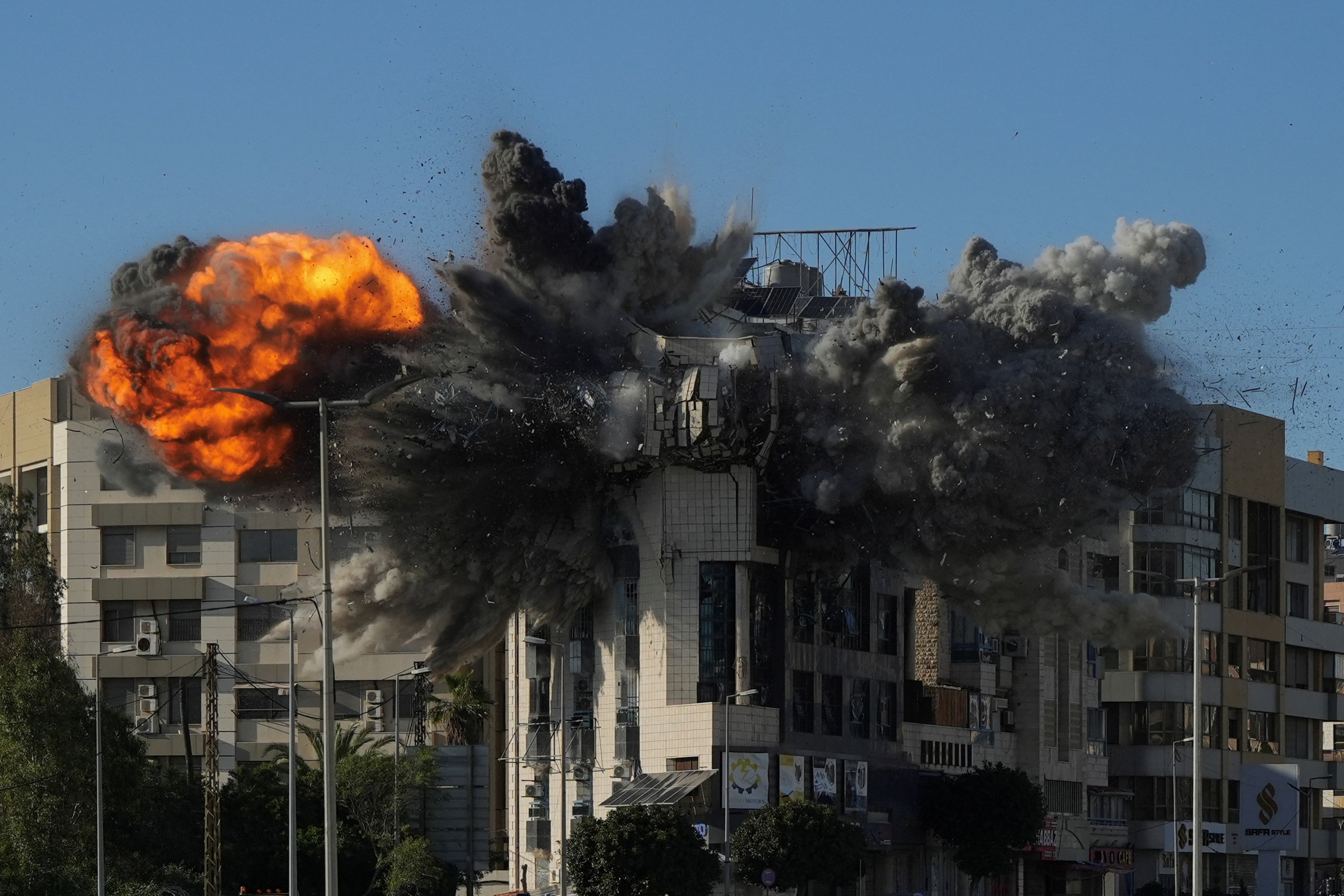
For months the war between the United States, Israel and Iran has flickered between open fighting and halting negotiation, a conflict that resumed in the summer and has never cleanly stopped. This week two things happened that, placed side by side, should concentrate Romanian minds. An experienced American military voice warned that a far larger war may be imminent, and that Iran is prepared to retaliate without geographic limit. And it became unmistakably clear that, in Tehran’s own propaganda, the territory Iran means when it says “without limit” includes Romania.
On November 12, the program Judging Freedom, hosted by the former judge Andrew Napolitano, featured retired Colonel Lawrence Wilkerson, once chief of staff to US Secretary of State Colin Powell and for years one of Washington’s most outspoken critics of American military adventurism. His assessment was bleak, and it should be read for what it is: the analysis of a single, strongly anti-interventionist former official on an opinion program, not an intelligence finding. But Wilkerson’s track record and bluntness give his warnings weight, and much of what he described is consistent with the documented state of the conflict.
His central claim was that the odds of the United States walking away from the war, which he had recently put at roughly even, have collapsed. He attributed the reversal above all to the Israeli prime minister, Benjamin Netanyahu, whom he called “that maniac in Jerusalem,” asserting that Netanyahu telephones the White House daily still pressing for war and intends to drag the United States in behind him. President Donald Trump, in Wilkerson’s telling, has so far resisted, and part of Trump’s visible anger at Netanyahu stems from seeing him as an obstacle to the president’s own preference to “declare victory and leave.”
Wilkerson’s gravest warning concerned escalation. He argued that Iran, having twice been probed and declined to respond, will treat the next major Israeli or American strike as the real attack and will preempt, firing on US assets across the region. He claimed Iran has the missiles to threaten American aircraft carriers and capital ships and could, if pushed, strike the US-British base at Diego Garcia in the Indian Ocean, crippling American logistics, and that a full exchange could “throw the globe into depression” and set parts of the region back years. He added a striking political observation: that Iran has so far held back from killing large numbers of Americans precisely because it read the November 3 midterm elections, in which roughly two-thirds of Americans registered opposition to the war, as a reason not to hand Washington a casus belli.
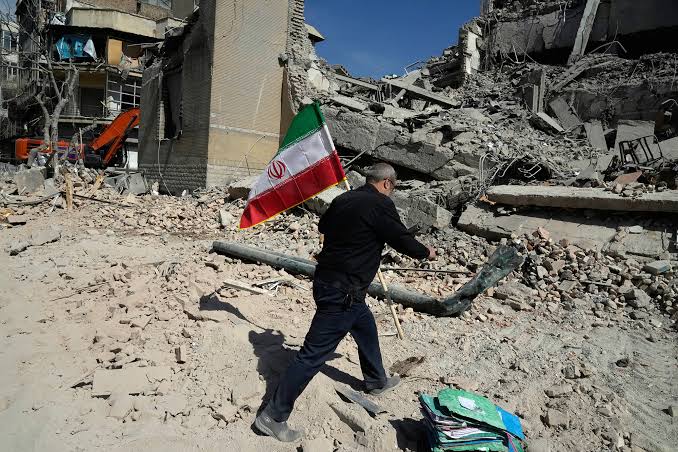
These are predictions and several rest on contested judgements about intentions no outsider can verify. But they are not fringe. Al Jazeera and others have reported continuing US strikes on Iranian air defences, including on Qeshm Island, ships attacked and sunk in and around the Strait of Hormuz, transits down roughly two thirds from pre-war levels, and, most ominously, an announcement by Iran’s Revolutionary Guard that its self-imposed missile range limit “has been lifted,” together with an order from the Supreme Leader, Mojtaba Khamenei, for retaliation without geographic limits. It is that last phrase, “without geographic limits,” that brings the story home to Bucharest.
In the days around these threats, two newspapers close to the Iranian regime spelled out what the phrase might mean in practice. Kayhan, an ultraconservative daily, warned that US and NATO installations in “the heart of Europe” could become targets of Iranian missiles if Washington and Israel resumed their attacks, and it listed Romania by name, alongside the United Kingdom, Italy, Greece, Albania, Cyprus and Diego Garcia. Hamshahri, a paper affiliated with the Tehran municipality, went further and published a front-page map of US bases in nine European countries, Romania among them, with their approximate distances from Iran and the argument that such bases are legitimate targets because they support American operations in the Middle East.
The Romanian facilities named are not obscure. They include the 57th Air Base at Mihail Kogălniceanu near Constanța, a principal support point for US forces in the Black Sea region; the site at Deveselu, home to the American Aegis Ashore missile-defence system that forms part of NATO’s architecture; and the 71st Air Base at Câmpia Turzii, included in US military support plans approved earlier in the year.
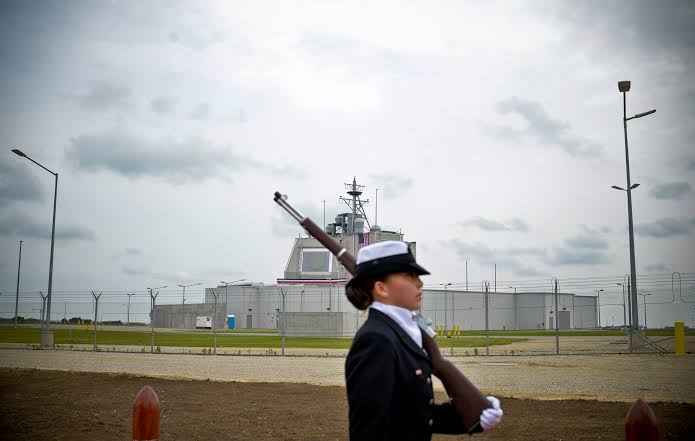
This did not come from nowhere. In March, after Romania’s parliament approved the temporary deployment of US forces and equipment, including refuelling aircraft, surveillance and monitoring gear and satellite communications equipment described by President Nicușor Dan as strictly defensive and carrying no munitions, Iran’s foreign ministry spokesman Esmaeil Baghaei warned that making Romanian bases available to the United States would amount to “participating in military aggression” against Iran. Romania’s foreign ministry rejected that interpretation, insisting the country is not a party to the conflict, that it prioritises de-escalation through diplomacy, and that the missile shield is purely defensive. Around a thousand US troops remain in Romania, part of roughly 3,500 NATO personnel stationed there.
The threats are real in the sense that they were issued, repeatedly and officially enough to matter. They are also, in large part, instruments of deterrence and signalling, designed to raise the perceived cost of further Western strikes by reminding European governments that they are not safely offstage.
Whether Iran could actually strike Romania is a separate and genuinely disputed question. For years Iran observed a self-imposed ceiling of around 2,000 kilometres on its ballistic missiles, a range that places much of Romania at or beyond the edge of what most of its arsenal can reach. The Revolutionary Guard’s declaration that this ceiling has been “lifted,” together with Iran’s expanding drone and cruise-missile programmes, is precisely what makes the new rhetoric more serious than past bluster, but a stated intention to remove a limit is not the same as a demonstrated capability to hit a target two and a half thousand kilometres away through NATO air defences. The prudent reading is that a direct, effective Iranian strike on Romanian soil remains unlikely in the near term, while the risk is no longer one that can be dismissed, especially if the war widens as Wilkerson fears.
The more plausible near-term danger to a country like Romania is not a ballistic warhead over Deveselu but the quieter repertoire Iran has used in Europe for years: operations run through the Quds Force and allied networks, and increasingly through criminal proxies hired at arm’s length, against soft targets rather than hardened bases. European security services have documented a steady pattern of alleged Iranian-linked plots across the continent, from surveillance of dissidents and attempts on the lives of exiles to planning against Israeli and Jewish sites, and governments have expelled diplomats and broken up cells on several occasions. A widening war would raise the incentive for exactly this kind of asymmetric response, because it carries deniability a missile never could, and because it does not require crossing two and a half thousand kilometres of NATO airspace. The realistic Romanian concern, in other words, is less the image of a rocket streaking toward the Black Sea coast than the prospect of an attack on a diplomatic mission, a cultural or religious site, visiting personnel or critical infrastructure, carried out by people who may never have set foot in Iran, and perhaps accompanied by the cyber intrusions and sabotage that have become a routine feature of this shadow conflict. Those threats demand a different kind of vigilance than air defence, and they are the ones Romanian institutions are most likely to face if the war does not end.
There is also a domestic political echo. The naming of Deveselu has been seized upon by Romania’s nationalist and sovereigntist opposition, with figures associated with that camp recycling long-standing complaints that the missile shield makes Romania a target rather than protecting it. That argument deserves a direct answer rather than a nervous silence: a defensive installation embedded in NATO’s collective architecture is covered by the Alliance’s mutual-defence guarantee, and an attack on it would be an attack on NATO, with all that implies for Tehran. The deterrent runs in both directions.
A conflict that Romania did not choose, and in which its government insists it is not a belligerent, has nonetheless placed Romanian soil inside the rhetorical, and potentially the physical, radius of a war between the United States, Israel and Iran. Wilkerson may be too pessimistic; the pendulum between war and negotiation that Iranian and Western analysts describe may yet swing back toward a deal. But the appearance of Mihail Kogălniceanu, Deveselu and Câmpia Turzii on Tehran’s published target lists is a reminder that the hosting of allied forces carries obligations and exposure as well as protection, and that the question of what Romania would do, and what NATO would owe it, if those threats ever moved from newsprint to the air is no longer purely hypothetical.
It is a question the country’s leaders should be seen to have answered before the moment arrives, not after.
Sources: “Judging Freedom” interview with Col. Lawrence Wilkerson, hosted by Andrew Napolitano (November 12, 2026); Al Jazeera; Mediafax, citing the Iranian dailies Kayhan and Hamshahri.
By I. Constantin