Three Dictators Out, Three Hopes In: 2026, The Year the Ballot Box Fought Back
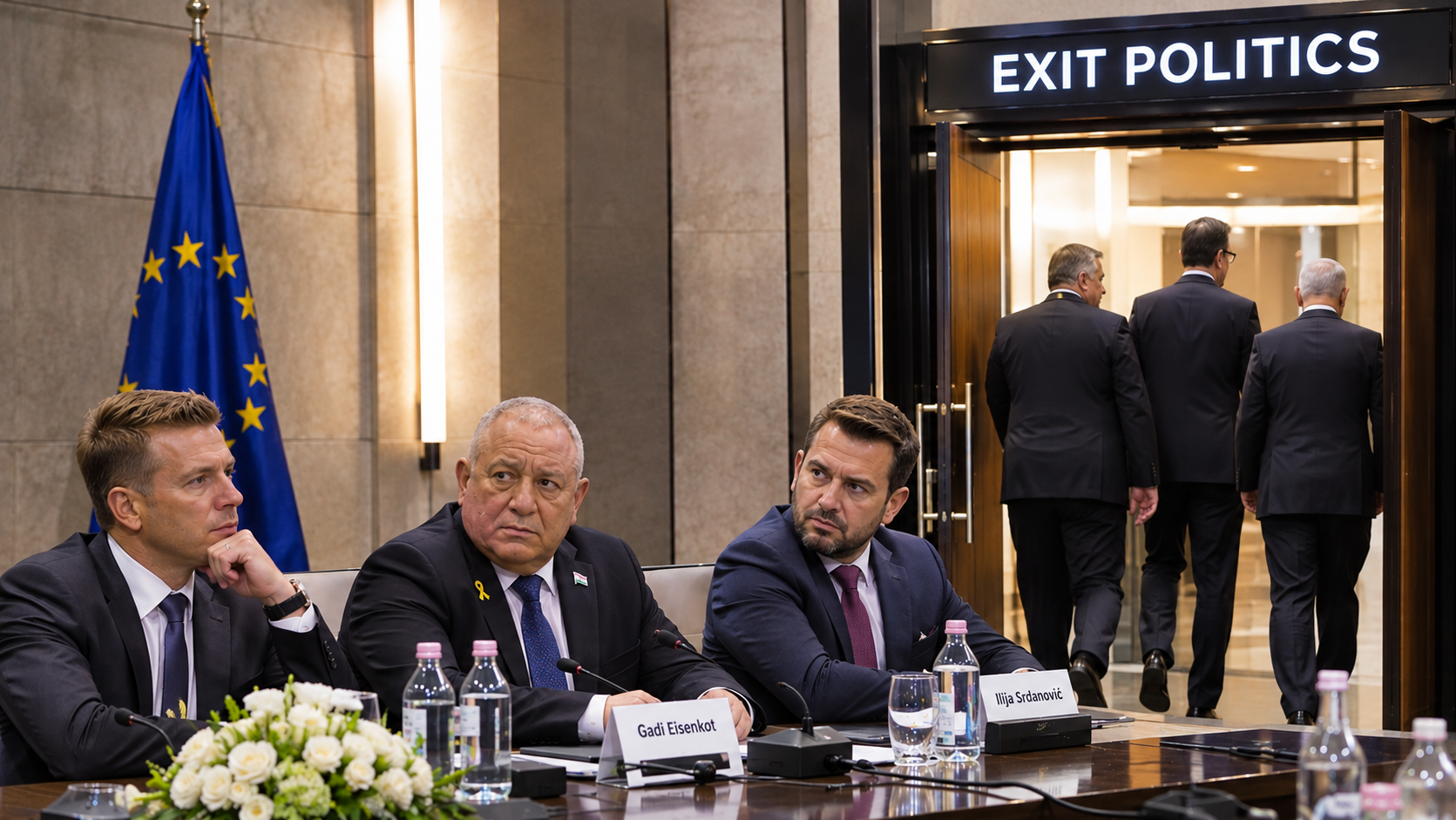
There are years that rearrange the furniture of a continent, and 2026 has turned out to be one of them. Within the span of seven months, three men who had each made himself the center of his country’s political life, who had each been written about as permanent, as unbeatable, as the weather itself, were removed from power. Viktor Orbán fell to a ballot in April, Aleksandar Vučić conceded to a student movement in October and Benjamin Netanyahu was pushed aside by his own electorate in November. Three dictators out, three hopes in. It is worth pausing on how rare and how instructive, that sequence is.
None of the three was defeated by a coup, a court or a foreign power. Each was defeated by his own citizens, using the ordinary, unglamorous instruments of democracy: a vote, a protest, a coalition. That is the first thing to say, and the most important: the lesson of 2026 is that strongmen are not invincible.
Hungary: the end of a dictator
Viktor Orbán did not merely govern Hungary for sixteen years; he built a system, and he was proud enough of it to give it a name:”illiberal democracy”. He claimed the name was not an insult hurled by his enemies, but his description of his vision , delivered as a boast to his supporters. Over those years the machinery of the Hungarian state was slowly fused with the machinery of his party: courts filled, public media turned into a megaphone, universities harried, electoral rules redrawn to favor the incumbent, and a vast ecosystem of loyal oligarchs enriched while European funds were frozen in Brussels over corruption and the collapse of the rule of law. Abroad, Orbán made Hungary useful to Moscow, diluting European support for Ukraine and binding his country to Russian energy through the Paks nuclear project.
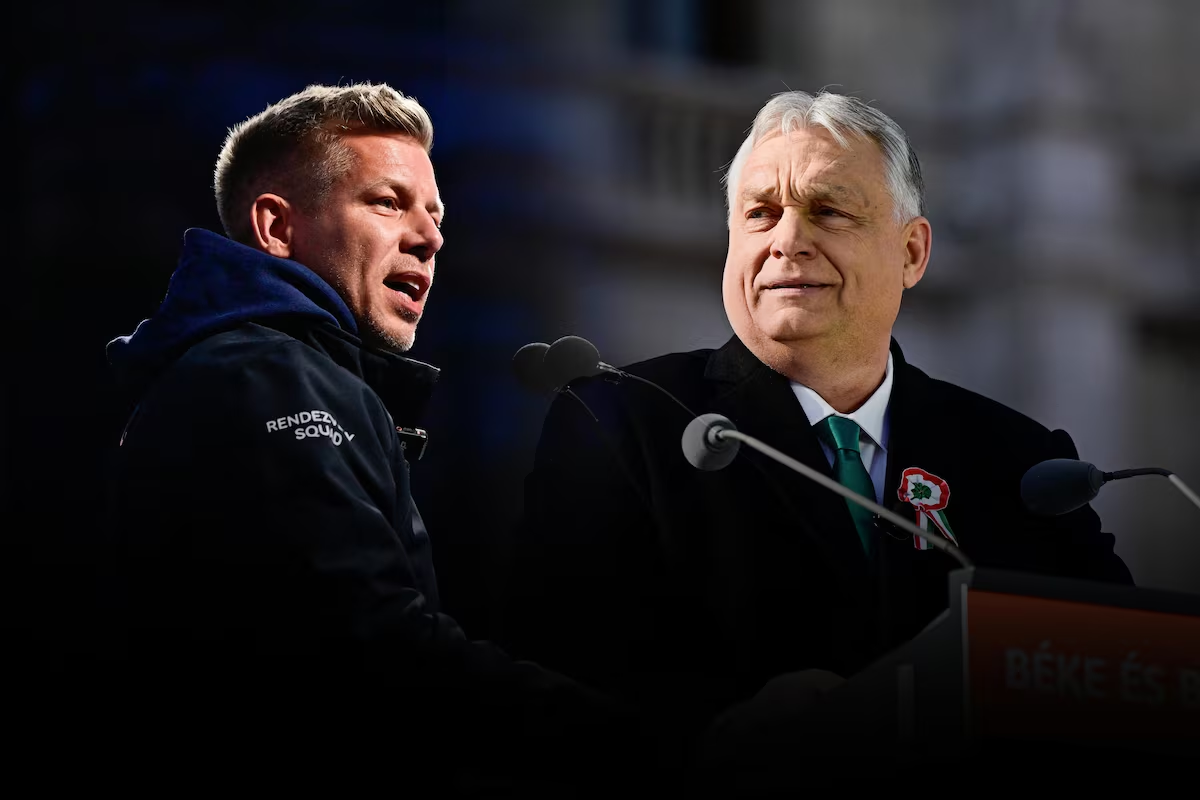
And yet, in the end, Hungarians did not remove him over any of the grand geopolitical arguments. They removed him over the price of bread, economic stagnation, inflation and falling living standards, all having achieved a level of dissatisfaction a decade of rule-of-law lectures from Brussels could not. In April, Péter Magyar’s Tisza party won close to seventy percent of the seats in parliament, and Orbán conceded a landmark defeat.
Magyar is no romantic outsider, and honesty requires saying so. He is an insider who turned on the system that made him, and the system he inherits will not be dismantled overnight: Fidesz still controls local networks, institutions and media, and Orbán has risen from the political dead before. The hope invested in Magyar is specific and sober: that he will unfreeze Hungary’s relationship with Europe, restore the independence of courts and press, act on corruption, and return Hungary to the democratic mainstream of the Union it never actually left. Whether he rejects Orbánism or merely replaces Orbán is the question the next few years will answer.
Serbia: the canopy that broke a strongman
Aleksandar Vučić’s fall began when the roof of the newly renovated railway station in Novi Sad collapsed in November 2024, killing more than a dozen people, Serbs did not see an accident; they saw the physical embodiment of everything they had come to loathe about his rule: the corruption, the shoddy deals, the capture of institutions, the sense that the state had been hollowed out and sold for parts while its leaders posed for cameras.
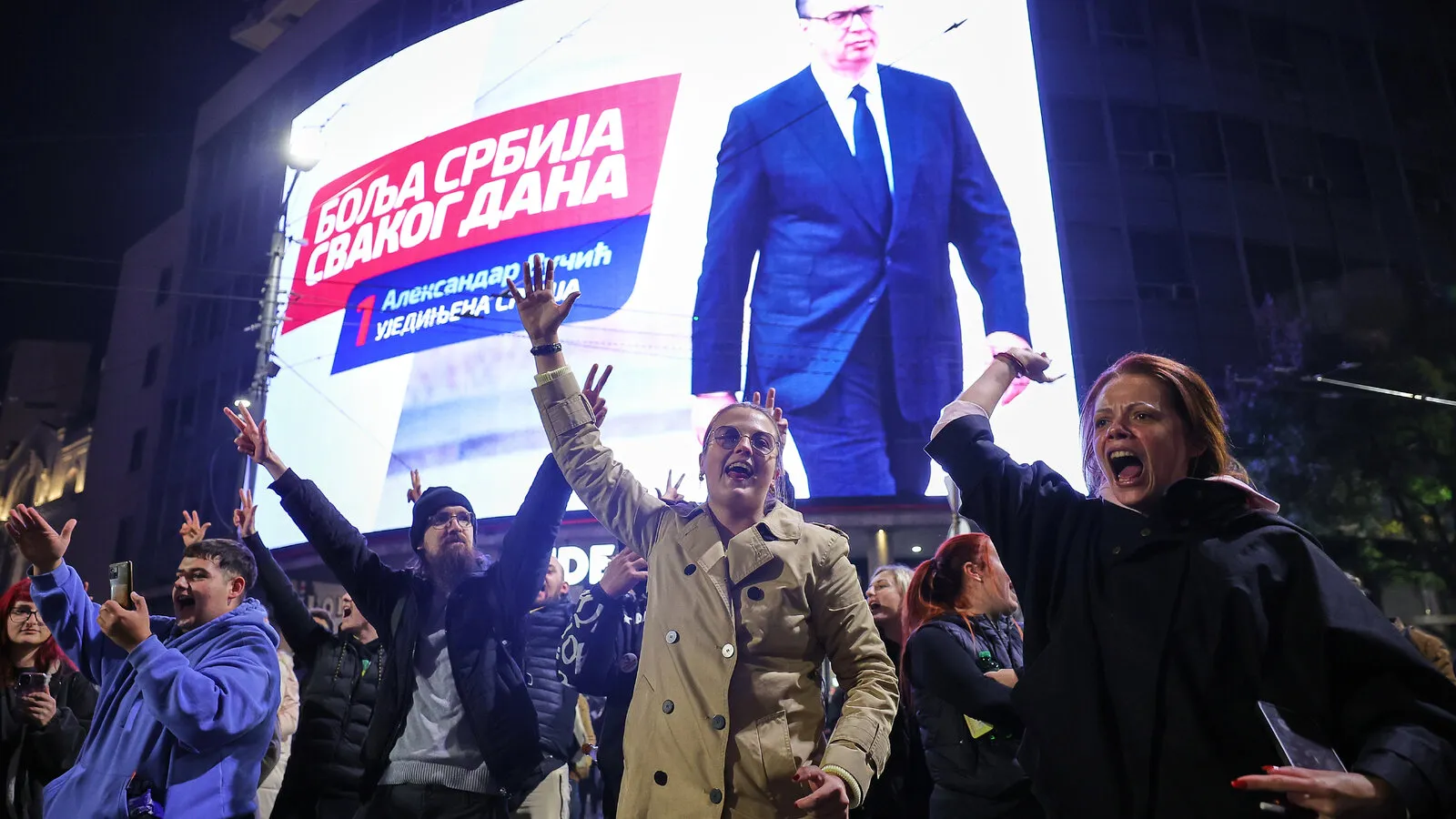
What followed was one of the most remarkable civic mobilizations in modern European history. Students, not parties, led it. For nearly two years they marched, blockaded and organized, demanding something as simple and as radical as accountability, the release of the documents, the naming of the responsible, the holding of elections. They were met with smears, pressure and violence, and they did not stop. By May 2026, single demonstrations were drawing figures approaching 190,000 people. In October, the movement did what Serbia’s fractured opposition parties had failed to do for over a decade: it beat Aleksandar Vučić at the ballot box, and the strongman conceded.
The hope here is the purest of the three, and also the most fragile. Ilija Srdanović, the ballot holder of the Student List, is not a career politician, and that is precisely the point; the movement’s strength was that it belonged to no one and owed nothing. But governing is harder than protesting, inexperience is a real liability, and a leaderless movement must now learn to lead. The expectation Serbs have placed on these young people is almost unbearable in its weight: to prove that a country can be cleaned without simply installing a new set of masters. If they succeed, they will have written a manual for the entire region.
Israel: a different case, and a fair word about it
Benjamin Netanyahu belongs in a separate category, and an honest editorial should not pretend otherwise. He is not Orbán, and he is not Vučić. Israel’s institutions, its courts, its press, its fierce and noisy opposition, never ceased to function, and that is partly why he could be removed. To call him a dictator is to flatten real and important distinctions. But it is no insult to the man to say that his final years in power did profound damage to the democratic fabric of his country.

The attempt to neuter the Israeli judiciary in 2023 brought hundreds of thousands into the streets and split the nation against itself. The catastrophe of October 7 happened on his watch, under a government that had assured Israelis they were safe. The war in Gaza that followed was prosecuted, in the judgment of a growing share of his own public, for too long and at a humanitarian cost that stained Israel’s name in the world. All the while he governed in dependence on the most extreme elements of Israeli politics, and all the while he stood trial for corruption. In November, Israelis delivered their verdict, and President Herzog handed the task of forming a government not to Netanyahu but to Gadi Eisenkot, the former army chief of staff whose own son was killed in Gaza.
The hope attached to Eisenkot is not that he is a dove bringing peace, because he is not. It is that he is a credible and honest man who might make Israel governable again, stabilize the catastrophe in Gaza, repair the rule of law, and restore the idea that the state belongs to all its citizens. That is a narrower hope than Europe sometimes imagines, and it is the realistic one.
The thread running through Budapest, Belgrade and Jerusalem is not ideology. Orbán, Vučić and Netanyahu are not interchangeable, and their countries are not the same. The thread is a method of rule, the steady concentration of power in one man and his circle, the treatment of the state as private property, the conviction that he alone was indispensable, and the thread is the answer their citizens finally gave: no one is indispensable.
But an editorial that ended on triumph would be dishonest, and would do the three new beginnings no favors. Péter Magyar may disappoint, or may be swallowed by the machine he inherited. Serbia’s students may fracture the moment they have to govern rather than oppose. Gadi Eisenkot may find that a fragile coalition and a hard neighborhood defeat his best intentions. Each of the fallen leaders still commands real support from citizens who did not vote against him and who feel, this morning, that something of theirs was taken. Democratic backsliding has been reversed before and has returned before, and the strongman or dictator if you will is, sadly a recurring character, not a vanquished one.
And yet, what a year. Because this is what remains, beneath all the caution: in a single year, in three countries that had been written off as lost, ordinary people looked at three men who believed themselves irreplaceable and told them, calmly and at the ballot box, that they were wrong. They did it without tanks, without blood, without help from outside, armed with nothing more than a vote, a crowded street and the patience not to give up.
That is the very heart of democracy, rediscovered in precisely the places where it was presumed dead. A student in Novi Sad who marched for two years, a Hungarian voter exhausted by lies, an Israeli who refused to accept chaos as the natural order, each of them proved that the apparent power of the dictator is, in the end, borrowed from the very people he holds in contempt.
History does not move in a straight line, and not one of these hopes is guaranteed. But 2026 has left Europe and the world a lesson no propaganda can erase: no regime is eternal, no leader is inevitable, and every time people remembers this, the future becomes, all at once, ours again.
By I. Constantin