Scroll Top

John Mearsheimer says the First Bomb Ends the Script
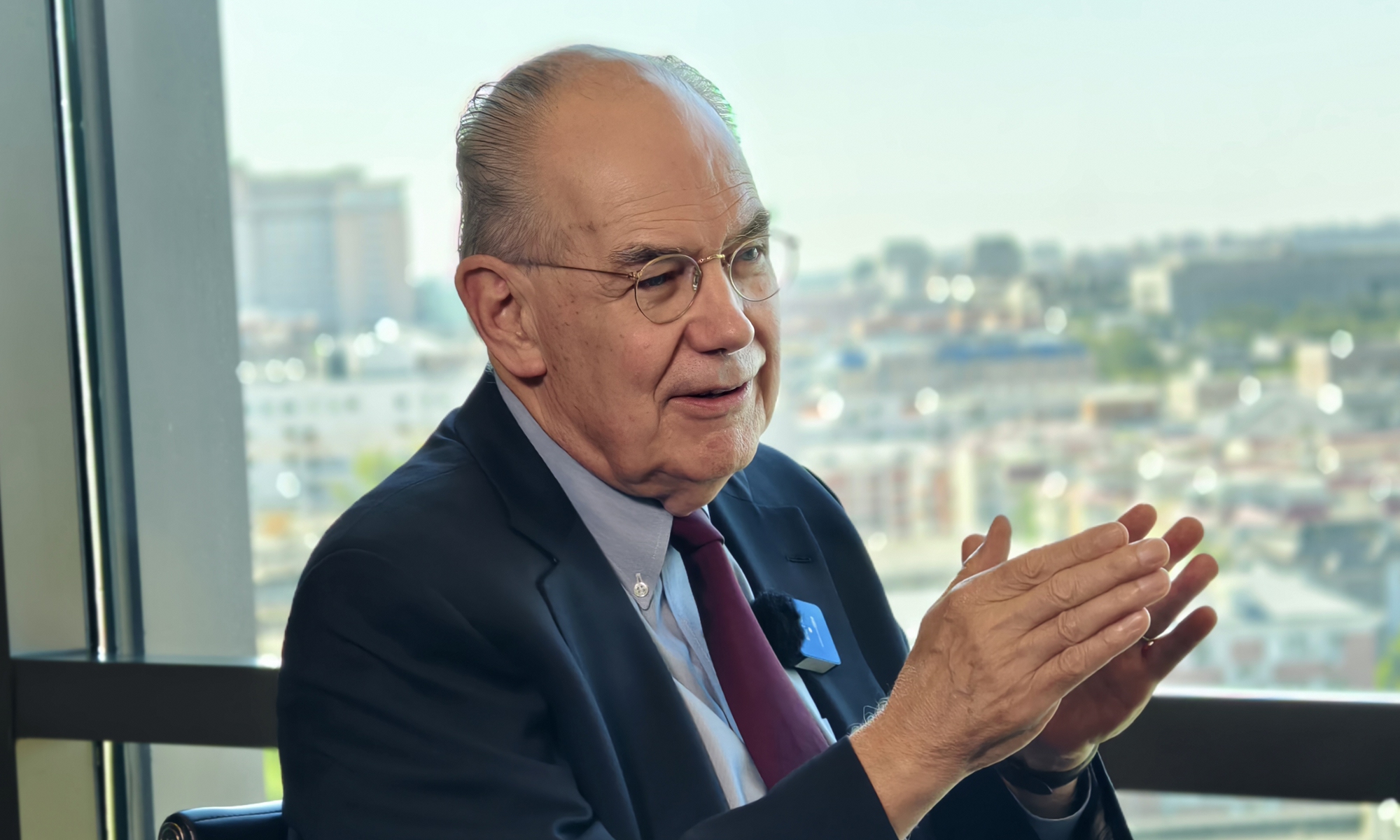
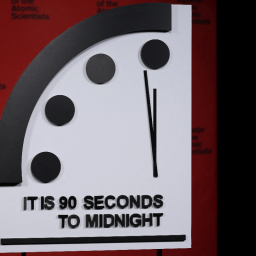
John Mearsheimer’s warning is not that nuclear war is likely. It is that nobody serious can say how it would unfold once the first weapon is used—and that Western policy is behaving as if that uncertainty were a detail rather than the whole problem.
The realist scholar has returned, again and again, to a blunt claim: there is no clear understanding of nuclear escalation. Deterrence theory offers ladders, thresholds, and elegant distinctions between tactical and strategic use. History offers almost nothing comparable. The only nuclear weapons ever used in war were dropped by a state that faced no nuclear reply. Everything since—Cuba, the Able Archer scare, the various false alarms—was a crisis that stopped short. The moment both sides are armed, and one of them has already broken the taboo, the script runs out.
Mearsheimer doubts that the West would answer a limited Russian strike with an immediate nuclear reply. Capitals would scramble for options that looked forceful without inviting annihilation: conventional punishment, cyber operations, economic rupture, a frantic search for an off-ramp dressed up as resolve. That hesitation, he argues, is not the same thing as safety. It is the opening move in a scenario where both sides can be pushed into a corner, and corners are where rational calculation thins out. Once leaders believe their credibility, their regime, or their survival is on the line, the careful distinctions drawn in peacetime seminars stop governing events.
Part of the danger, in his telling, is generational. From roughly 1992 to 2017, the United States sat at the center of a unipolar order. For leaders and officials who came of age in that stretch, great-power war was a chapter that had closed. Nuclear weapons remained in the arsenal, but they receded as a daily constraint on policy. The Cold War habit—of treating certain acts as unthinkable because they might start a process nobody could stop—atrophied.
Mearsheimer sees the result as a cavalier attitude dressed up as moral clarity. Caution is recast as appeasement. Escalation risk is treated as a talking point deployed by the other side, not as a structural fact that binds both. Younger cohorts, he suggests, inherited the confidence of the unipolar moment without inheriting the fear that once disciplined it. The existential threat did not disappear. The instinct to organize policy around it did.
That is the backdrop against which Mearsheimer discusses Sergey Karaganov. The Russian strategist’s argument is stark: the West has grown too bold precisely because it no longer believes Moscow will ever cross the nuclear line. Limited nuclear use, Karaganov has contended, might be required as a signal—violent enough to restore fear, limited enough, in his hope, to force a more stable relationship rather than a general war.
Mearsheimer does not endorse the proposal. He treats it as evidence of how badly the signaling environment has degraded. A state that believes conventional pressure and nuclear threats are being ignored may reach for a demonstration it cannot fully control. The logic is circular and terrifying. Boldness invites a signal; the signal invites retaliation; retaliation invites the next rung. Nobody in that chain needs to want a thermonuclear exchange for one to become plausible. They only need to keep choosing the option that looks, in the moment, like the one that preserves strength.
The charge becomes concrete in the actions Mearsheimer flags as crossings that Cold War Washington and Moscow would have treated as reckless. Ukraine’s 2024 push into Russian territory, and later strikes associated with Russia’s strategic nuclear forces in 2025, sit at the center of his indictment. Not because a sovereign state under invasion lacks a right to strike the power attacking it, but because attacks that touch the territory and the nuclear arsenal of a peer adversary were, for decades, the sort of move both superpowers declined to underwrite.
Western support for those policies, in his phrase, has been “remarkably dangerous.” The danger is not abstract. Strategic systems exist to guarantee retaliation. When they are hit, the targeted state must decide whether the strike was a conventional blow in a regional war or the opening of a disarming campaign against its deterrent. That decision is made under time pressure, incomplete information, and domestic demands for an answer. Misreading it is not a footnote. It is a pathway.
Here the argument turns from doctrine to politics, and it is the grimmest part. Suppose a nuclear weapon is used—a single low-yield detonation, framed by its user as a signal, not a war-winning blow. Mearsheimer’s point is that the retaliatory logic available to the American president would not be clear, and the political pressure would be overwhelming. Allies would ask what the guarantee is worth. Opponents at home would demand proof that weakness had not been met with weakness. Commentators would discover, overnight, a vocabulary of credibility that left little room for pause.
“Show strength” is not a strategy. It is a demand. Meeting it in kind—answering a nuclear use with a nuclear use—would be the most legible way to satisfy it, and also the way most likely to start the climb. Each reply redefines the last threshold as already crossed. Each side then faces the same unbearable choice: absorb the blow and look broken, or hit back and move one step closer to a general exchange that neither capital set out to fight. The ladder is not climbed by grand design. It is climbed by successive refusals to be the side that blinked.
Mearsheimer’s doubt that the first Western response would be nuclear does not dissolve that pressure. It relocates it. A conventional answer can look insufficient by the following morning. A nuclear answer can look, by the following evening, like the only language the other side still understands. Between those two readings sits no settled rule, no rehearsed off-ramp both sides have agreed to honor, and no generation of officials trained to treat “unthinkable” as a serious category rather than a relic.
The defence debate does not have to accept his policy conclusions to take the structure of the warning seriously. Escalation is not a menu. It is a process under political heat, conducted by people who cannot see the next move clearly, in a strategic culture that spent a quarter-century acting as though the old restraints were optional. The uncertainty is the point. Entering the corner in order to find out how the other side climbs out is not a strategy. It is a bet with no historical sample large enough to price.
By Paul Bumman

Related Posts