Skip to main contentScroll Top

European leaders are acting skittish when it comes to negotiations with Russia. What did you expect after provoking the Russians?!
Since its Saturday, I’ll start by explaining the meaning of the expressions I’ve used in the title—though many of you are likely already familiar with them, it’s always good to refresh our memory, based on how they are defined in various online sources.
The phrase “fanning oneself with one’s own tail” implies being highly self-satisfied—whether or not that satisfaction is actually justified—or perhaps trying to bolster one’s own courage. It suggests a foolish vanity, arrogance, or the conceit of someone who considers themselves very important, boasting or admiring themselves without any real reason. Alternatively, it can mean doing nothing of any actual use. It may also refer to exerting effort in vain, or taking credit for some trivial action—much like an animal fanning itself with its own tail, under the delusion that it is cooling itself down or impressing someone else. In certain political or social contexts, the expression is used to describe a figure who gets all worked up, concocts grand plans, or portrays themselves as a brilliant strategist, yet whose actions are entirely devoid of substance. This is precisely what is happening with EU leaders.
The other expression—”Take heart, chicken, I’m about to slaughter you!”—is, of course, a quintessentially Romanian, ironic turn of phrase. It is typically used when someone is being “encouraged” in a situation where the outcome will inevitably be unfavorable to them. In other words, you might say, “Take heart, chicken, I’m about to slaughter you!”—ostensibly meaning “Be brave!”—while simultaneously inflicting harm upon the person or trapping them in a situation from which there is no escape. It also highlights the futility of courage in a hopeless situation. The expression underscores the absurdity of asking someone to be brave when their fate is already sealed—much like asking a chicken to remain calm just before it is slaughtered. This, incidentally, reflects the attitude of the Russians toward EU leaders.
But what are we actually discussing today? The fact that Russia is categorically rejecting the presence of Europeans at the peace negotiations regarding the war in Ukraine—negotiations that saw a two-day round take place this week in Abu Dhabi between Russia and Ukraine, with the U.S. acting as mediator. As I previously explained—and to refresh your memory—Putin’s advisor, Medinsky, stated that EU leaders have no business being there, as they have failed to present any peace plan and are instead focused solely on war; he suggested they might as well just stay at the hotel bar. Yesterday, Putin upped the ante, stating that EU leaders cannot be invited to peace negotiations because they have declared that, immediately following the signing of a potential peace treaty, their countries would send troops to Ukraine. In that scenario, according to Putin, a genuine war between Russia and the EU would effectively begin, with the military personnel from EU nations becoming legitimate targets—that is, targets to be destroyed.
Compelled by pressures from Europe exerted upon America, Trump’s envoys stated—following discussions with Putin—that they had managed to persuade the Kremlin’s “tsar” to accept a single European envoy at the negotiations. I mentioned pressures on America; indeed, such pressures exist. But what are these pressures, and where do they originate? It’s simple: they come from Global High Finance—or “Global Big Finance” (GBF), as I’ve taken to calling it—centered on the Rothschild axis, specifically the London-Frankfurt axis, two of the world’s major financial hubs. This Global Big Finance has the capacity to inflict significant damage on the American economy through stock market maneuvers—a threat that poses far less, if any, risk to Russia or China. The NVIDIA scandal is a telling example. I won’t delve into it—or the broader controversy surrounding it—just yet, but it’s a topic worth discussing, perhaps next week.
However, yesterday, Maria Zakharova—Lavrov’s spokesperson—threw a wrench in the works for the American envoys, declaring that the potential presence of EU representatives at the negotiations was never even discussed during the meeting between Kushner, Witkoff, and Putin. Well, isn’t that a mess! It’s clear, though, that Trump’s two men thought they could resolve the issue “Trump-style”—by simply making a false claim. It didn’t work; the Russians wouldn’t let them get away with it.
Now comes the tragicomic part. Gathered in Dublin, Ireland, for a European Council meeting, EU leaders also held a special informal session yesterday, during which they intended to discuss who exactly, should represent the European Union in the peace negotiations. However, as we can see today, there has been no invitation from Russia— neither for the EU as a whole, nor for its individual member states, or for its leadership. As for America, it is in no position to issue such invitations, because in these peace negotiations concerning Ukraine, America acts merely as a mediator. A mediator is not in a position to invite other parties.
Rarely have I witnessed the weakness and stupidity of EU leaders—in all their full, unadulterated glory—as clearly as I did yesterday. This weakness and stupidity explain, with crystal clarity, the current decline of the EU—a union of which we, too, are a part. There is no point in even detailing the flurry of statements from various European sources; it would be laughable, were it not so pathetic. Suffice it to say that, after hours of deliberation—and after a series of “leaked” (and false) reports regarding who might represent the EU in these negotiations—the EU’s top brass ultimately decided, last night, to dispatch a small army of officials to talks to which they hadn’t even been invited. It is clear that there is neither solidarity nor consensus at the highest levels of the Union—and, as is now painfully obvious, there is no intelligence, either. The plan is as follows: EU leaders—from both the European Commission and the European Council—are set to attend. It remains unclear exactly how many, or which specific individuals, will go. A large contingent is expected, joined by representatives from the so-called “major” European powers—Germany, France, Italy, and Poland—as well as the United Kingdom (which is no longer an EU member). As if this embarrassing spectacle—sending such an extensive delegation to a meeting where one wasn’t even invited—weren’t enough, the host, Irish Prime Minister Micheál Martin, ultimately rejected the proposed delegation, arguing that it must also include representatives from Norway, Canada, and other non-EU nations. At this point, no one can make heads or tails of it—except for the fact that there is a great deal of stupidity at play.
The people who made such a foolish decision are the ones who have run—and continue to run—the European Union. But you, my fans, know that I believe they only run it in appearance. The real leaders hide behind them; I am referring, as I have always explained to you, to the “Global Financial Establishment”—the masters of international high finance. This establishment is currently so weak when it comes to geopolitical negotiations that it pushed their so-called “Foreign Minister” of the EU, Kaja Kallas, to nominate herself—just yesterday morning—as the sole representative for talks with Russia. The problem is that, for the past two years, all the other EU leaders have been laughing at Kaja Kallas—both openly at the table and behind the scenes. To be more precise, they laugh at her incompetence—or, to put it bluntly, at the sheer stupidity she has demonstrated time and again. Well, after being rejected—as was to be expected—Kaja Kallas played the victim in public, claiming she was turned down because she is a “tough” negotiator. “Tough!” This did not escape the notice of Dmitry Medvedev, the former President of Russia and current Deputy Chairman of the Russian Security Council. He didn’t bother with diplomatic niceties; he said it straight out. To quote him: “No one in the EU wants Kaja Kallas—not because she’s a ‘tough’ negotiator, but simply because she’s stupid; not to mention the fact that the EU wasn’t even invited in the first place.” A blunt and harsh statement, to be sure—but, unfortunately, one that happens to be true.
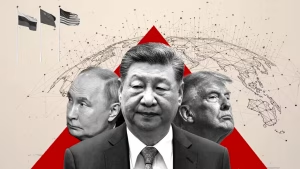
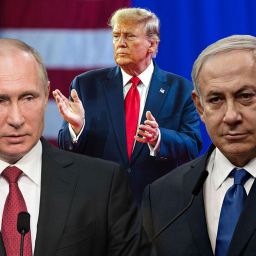
There are four days left until the meeting in Shenzhen, China—a venue where the new global geopolitical spheres of influence will be redrawn among Putin, Trump, and Xi Jinping. As I mentioned a few weeks ago—and as you are already aware—I will not dwell here on the specific topics to be discussed or my own expectations for the negotiations (not my wishes, but my expectations). Meanwhile, last night—with only four days remaining until Shenzhen—EU leaders made a “bold and efficient” (heaven help us!) decision: they will meet again, but not for another five days, to determine who will ultimately negotiate the new European security architecture with Russia and the United States. All this, based on the principle that nothing concerning Europe can be decided without Europe. To borrow an ironic Romanian expression, what the EU leaders have done is akin to “bringing a raincoat only after the rain has stopped.” In other words, it means arriving with a decision far, far too late—at a point when it is no longer needed, well after an unpleasant event has already taken place.
So, what do we know today?
1. It is confirmed that the EU has completely declined and that, geopolitically, it is no longer taken into account anywhere. Not only are the demands of European leaders disregarded, but—far more seriously, indeed, most gravely—the European Union and its leaders are being openly mocked. The fact that the European Union is being laughed at, even in public, speaks to the scale of the disaster.
2. We know that Russia, the US, and China are continuing to pursue their own agenda—one already agreed upon, perhaps even formalized—while Europe will merely be informed of the outcomes. This is, I reiterate, similar to what transpired at Yalta and Potsdam in 1945, and even at Malta in 1989.
Why is all this happening, and why in this particular way? Because today, my friends, weapons are once again the ones doing the talking; in other words, the world is dominated by what is known as a “geomilitary” doctrine. And in this regard, Europe is the least prepared. Without the US, Europe’s military potential is virtually zero. (Looking truly pathetic—much like a schoolboy who has memorized the wrong lesson—the leader of Lithuania [his name is beside the point] appeared last night, urging his counterparts—prime ministers and presidents, Nicușor Dan among them—to join a collective struggle against Russia, claiming that the EU is militarily far superior and bound to win.) Yet, in this same vein, let me remind you of the actual statistics—the ones never shown on the news: Russia’s current military potential, when compared to the combined current potential of all EU nations, is roughly eight to ten times greater—in Russia’s favor. This should help you grasp, once again, the dire nature of our situation.
I will not discuss today the so-called Russian proposals circulating via unofficial sources—such as “Finland out of NATO.” These are merely tactical trial balloons. The actual proposals are known only to the Chinese and American sides, and Russia’s demands are far harsher. You will soon realize this for yourselves.
Taking into account Russia’s stance and Medvedev’s remarks, it is as if the Putin regime is addressing Europe with the equivalent of: “Buck up, you silly hen—I’m about to slaughter you!” This brings us to the rhetorical question posed in the title: what did you expect, EU—weak as you are, both militarily and economically—after provoking the Russians, who have fortified their position through alliances with the regimes of Xi and Trump? As you may have noticed, powers with greater military and economic weight than any individual EU nation—such as India, Brazil, and even, to an extent, Turkey—have all wisely chosen to remain silent. They have been given assurances that their interests and demands will be taken into account at the table shared by the three “big players”: Putin, Trump, and Xi. In short, by acting wisely and positioning themselves discreetly well in advance, they have avoided becoming a global laughingstock—a fate that has befallen the EU nations, which are now frantically flapping about when it is already far too late.
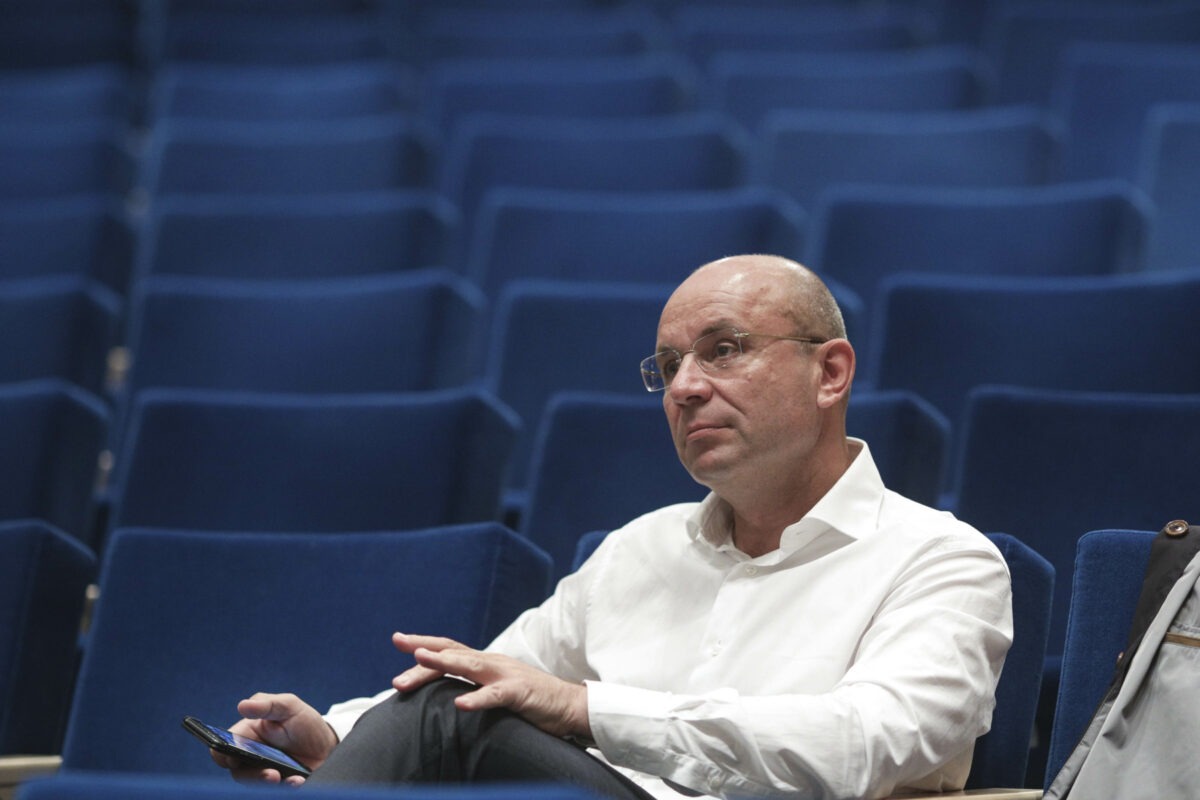
By Cozmin Gusa
www.solidnews.ro

Related Posts