Romania, a country of contrast
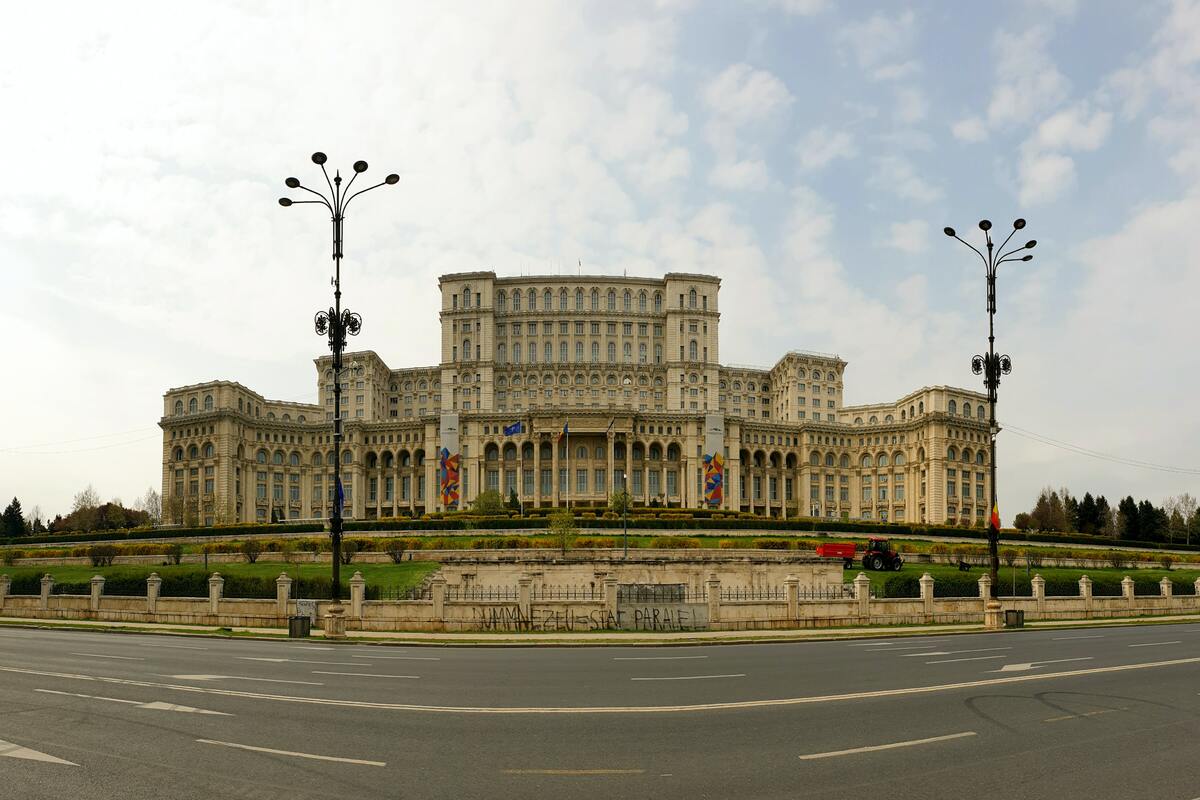
Romania, located in the in southeastern Europe, joined NATO in 2004 and the European Union in 2007. It is a very culturally diverse country: Its southern part is largely influenced by Balkan culture, while its central and western parts belong to Central European culture. Romania is rich in salt reserves, which are estimated to be enough for the country to use for about 700 thousand years or enough for the world to use for about 10 thousand years. On the border between Romania and Ukraine lies the largest and best-preserved delta in Europe: the Danube Delta. There are countless lakes and swamps, more than 300 species of birds, and 45 species of endemic fish. It is the base of migratory birds that migrate to the Mediterranean from central and northern Europe every year. In the past 20 years, generally, Romania’s economic development has grown steadily. According to World Bank data, Romania’s per capita GDP was US$1,659.9 in 2000 and US$14,861.9 in 2021, an increase of about 8.95 times. In comparison, the world’s average per capita GDP was US$5,491 in 2000 and US$12,517 in 2021, an increase of about 2.28 times. It can be seen that the economic growth rate in Romania is much higher than the world average. In 2009 and 2010, Romania’s economy was affected by the international financial crisis and experienced negative growth for a time. However, since 2011 its economy has gradually and steadily recovered. Romania’s economy is dominated by industry, developed textile industry, the horticultural industry such as relatively developed grapes and fruits and the increasingly modernized agriculture and livestock farms. The main export products of Romania are petrochemical products, petroleum equipment, tractors, trucks and agricultural products, and the import products are mainly industrial raw materials such as machinery and equipment, iron ore, natural rubber, coke and non-ferrous metals. Its main industrial sectors are metallurgy, petrochemical, and machine manufacturing, and the main industrial products are metal products, chemical products, machinery and mechanical equipment. Romania has the fourth largest oil reserves in Europe (excluding Russia) and is the largest oil producer in Central and Eastern Europe. Some believe that Romania, a country about the size of Oregon with
a population of 21 million, has the potential to become a regional energy powerhouse because Romania has not only strengthened drilling for natural gas energy near the Black Sea in recent years, but is also aggressively advancing nuclear power facilities construction. At a time when Europe’s energy supply situation is worsening, this undoubtedly created a new path for Romania’s economic development. Romania encourages investment and has introduced many policies and decrees to stimulate foreign and domestic investment. In June 2008, Romania promulgated a new “Investment Promotion Law”, which stipulates that: non-discriminatory and non-discriminatory treatment of domestic and foreign investment shall be implemented; national treatment shall be implemented for foreign-funded enterprises; domestic-funded enterprises shall be subject to the same preferential policies as foreign-funded enterprises. Romania’s investment incentives mainly take the form of state financial support, which covers not only large-scale investment enterprises, but also qualified medium and small-sized enterprises. However, due to the poor development of local industries in Romania, the lack of tourism resources, infrastructure supply and other endogenous factors have greatly restricted the domestic economic development. Therefore, I believe that Romania’s economic development should be addressed in two directions: the first one is that Romania will give full play to its advantages in energy supply and industrial exports, and the other one is that it should strengthen domestic economic construction, strive to cultivate local industries, and enhance international competitiveness.
By Tao Cheng