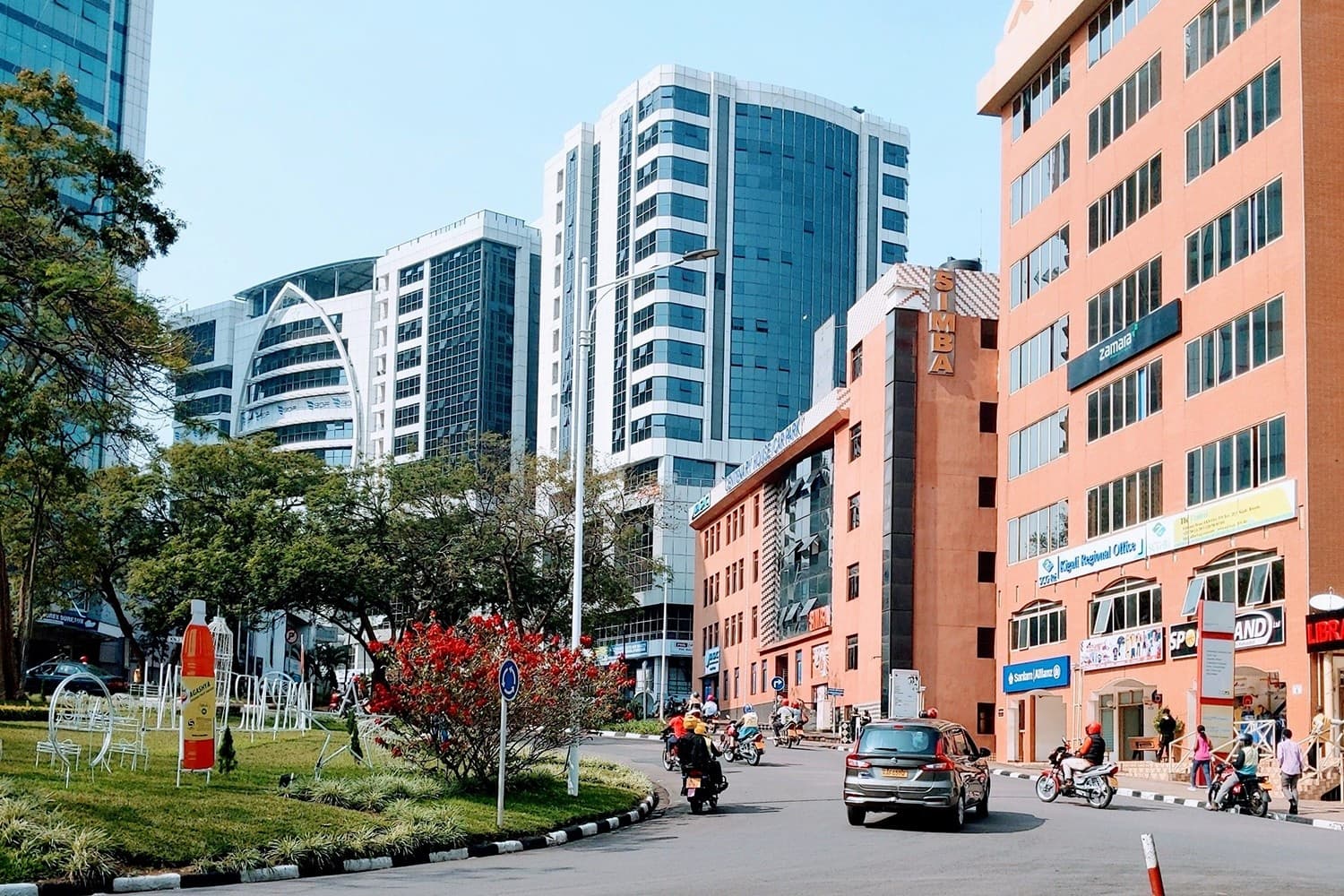
Among the ten smallest countries in Africa, Rwanda has long harbored the ambition to become a driving economic force in the Great Lakes region, leveraging international influence to build a genuine economic “hub” with a primary focus on the healthcare and aviation sectors. Although the friction with Paris (stemming from France’s role in the 1994 genocide) has been formally resolved, it prompted President Paul Kagame (in power since 2000) to move away from the French sphere of influence and toward the opportunities offered by the Anglosphere. This shift was cemented in 2009 when Rwanda joined the Commonwealth, the second nation, after Mozambique, to be admitted to the organization despite having no prior historical ties to the United Kingdom. With a small but growing market of nearly 13 million people and a Gross Domestic Product (GDP) of $10.3 billion, Rwanda has seen steady, robust growth since the late 1990s. In 2019, the country’s GDP surged by over 9 percent, driven by strong performance in the construction, agriculture, and service sectors. Rwanda also proved resilient in the face of the COVID-19 pandemic: following a 3.4 percent contraction in 2020, the economy rebounded by 10.9 percent in 2021 and has maintained a 6 percent growth rate this year.
This trajectory underscores the nation’s ambition to establish itself as a regional leader and to help Africa reduce its reliance on external powers—most notably in the healthcare sector. In the wake of the pandemic emergency, Kagame became one of the staunchest advocates for a policy of local vaccine production, aiming to overcome delays in shipments from the West and to establish a healthcare “hub” in preparation for future epidemics. His administration worked to secure Rwanda as the site for BioNTech’s first African facility for the production of Pfizer-BioNTech mRNA vaccines—a project the German company has since replicated in Senegal, Ghana, and South Africa—while also supporting the suspension of patent rights. At the groundbreaking ceremony, Kagame suggested that one solution to the global health crisis would be “the promotion and transfer of technology to African pharmaceutical industries,” enabling them to “produce their own medicines and vaccines.” This Rwandan vision is underpinned by a degree of optimism—regional experts predict that by 2040, Africa will be capable of producing 60 percent of its vaccines domestically—and has garnered encouragement from France (notably at the 2021 Paris Conference on Africa), as well as from the African Union, the World Health Organization (WHO), and the European Union. Looking toward the potential—albeit unlikely—revocation of intellectual property rights for vaccines, Kagame also noted that the African Union is working to establish the African Medicines Agency (AMA) to ensure shared standards across various regulatory authorities.
One more investment for Rwanda concerns its participation in the Single African Air Transport Market (SAATM)—an initiative promoted by the African Union, following the model of the African Continental Free Trade Area (AfCFTA), which has been in effect since January 2020 but has seen limited implementation at the national level. Rwanda is taking part in the SAATM pilot project alongside 17 other countries—Cape Verde, Cameroon, Ethiopia, Gabon, Ghana, Ivory Coast, Kenya, Morocco, Mozambique, Nigeria, Niger, Namibia, Senegal, South Africa, Togo, and Zambia—with the goal of facilitating the free movement of African airlines between nations. For landlocked Rwanda, this project represents a significant asset; until now, the small Great Lakes nation has had to share the management of its airspace with Tanzania, and it now aims to regain full control. By investing in the single air transport market, Rwanda is also bolstering its ambitions to become a regional aviation hub, with Qatar as a key ally—a partnership that has proven instrumental to the expansion of the national carrier, RwandAir. In this context, on October 5, 2021, RwandAir and Qatar Airways announced a comprehensive codeshare agreement, granting the Rwandan carrier access to more than 65 of Qatar Airways’ destinations across Africa and the rest of the world. This agreement led to the launch of direct flights between Kigali and Doha in December of that same year. According to the regional press, the Rwandan carrier is very much at the forefront of the single air transport market project, as its current route network already reaches 22 countries—17 of which are in Africa, with the others located in Europe, Asia, and the Middle East.
While RwandAir has become one of the fastest-growing airlines in Africa in recent years, the appointment of its CEO, Yvonne Makolo, as Chair of the International Air Transport Association (IATA) has provided a significant boost to the SAATM (Single African Air Transport Market) project and to the role Rwanda plays within it. Through a World Bank-funded initiative, Rwanda, Tanzania, and Uganda have recently announced plans to electronically link their stock exchanges, effectively allowing for cross-border operations as if a single market were already in place. Meanwhile, Makolo has confirmed that negotiations are underway between Rwanda and Qatar to strengthen ties between their respective flag carriers. According to reports, the Qatari airline is set to acquire a 49 percent stake in RwandAir—an investment valued by the U.S. Department of Transportation at no less than $28 million.
The African nation, still bearing the scars of the 1990s genocide, has promoted high-end tourism by featuring the “Visit Rwanda” campaign on the jerseys of major European football clubs. Revenue in the sector has climbed from 400 million to nearly 700 million.
Since the mid-2000s, the Central African country’s GDP has grown at a dizzying pace; however, its per capita income remains among the lowest on the continent—and indeed the world—currently ranking 131st globally, ahead of only about a dozen other African states and Yemen.
The local government is pursuing a strategy that began with sports sponsorships—appearing on the kits of top-tier European football clubs such as Atlético Madrid, Arsenal, and Paris Saint-Germain—and has continued with substantial investments in tourism. Thanks in part to the presence of major hotel chains from the United States and Europe, Rwanda has transformed into a luxury tourist destination.
Rwanda has also shown interest in the aerospace sector—a field typically far removed from the African market. During the recent U.S.-Africa Leaders Summit in Washington, Kigali joined the Artemis space exploration program. The program aims to foster bilateral and multilateral space cooperation among its signatories, who commit to adhering to a set of principles guiding their civil space activities. These include the public dissemination of scientific data, the responsible disposal of space debris, the registration of space objects, and the establishment and implementation of interoperability standards.
F1 has officially announced a historic milestone for the sport: the return of the championship to the African continent after an absence of more than thirty years (the last Grand Prix took place at Kyalami, in South Africa, in 1993). The ten-year agreement will see Rwanda emerge as a new host nation, with the African Grand Prix set to join the calendar in the early 2030s, following the construction of a new permanent circuit designed in the Kigali area.
Rwanda will forever be remembered for the largest genocide to have taken place in Africa in the modern era.
Few expected that Rwanda would be able to move past the ethnic divisions that led to the genocide and embark on a process of post-conflict reconstruction. Nevertheless, a remarkable transformation is underway. Rwandans are increasingly united, progress has been made in rebuilding trust in the country’s leadership, and the economy is also improving.
Rwanda’s rapid economic growth stands out as the country’s most significant achievement. In this regard, Rwanda has aligned itself with the successful economies of East Asia, which began their own development journeys by prioritizing high growth. Since 1994, Rwanda has secured a place among the world’s fastest-growing economies, with per capita income increasing 3.5-fold for its 12.3 million citizens. Furthermore, this growth has been inclusive, and substantial investments in social safety nets have significantly reduced poverty.
New Zealand Prime Minister Jacinda Ardern was widely expected to win a second term, buoyed by the compassionate and yet decisive leadership style under the crisis brought by the pandemic this year.
The first 31-member NATO meeting began in Brussels on Tuesday, after Finland was officially welcomed into the Alliance. Finland’s welcoming ceremony took place on April 4, 2023.
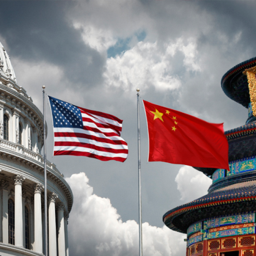
Recently, the cooperation and communication between China and the United States have gradually increased and deepened, will this be the beginning of the normalization of relations between China and the United States?
The concept of the “deep state” has gained considerable attention globally, and Romania is no exception. With its complex political landscape and a history marked by corruption
In today’s interconnected world, the Asia-Pacific and Oceania regions stand as dynamic hubs of economic activity, trade collaboration, and diplomatic engagement.
I’ve noticed that many of my listeners and acquaintances are all worried about the prospect of an EU–Russia war, one in which Romania might become the next proxy, following the tragic and fatal example of Ukraine.
On February 14–15, 2024, the Prime Minister of Romania, Mr Marcel Ciolacu, is set to embark on a significant political journey to Rome, marking a pivotal moment for Romanian-Italian relations.
The head of American diplomacy, Antony Blinken, arrived in Vietnam on Friday to emphasize the increasingly close relations with the communist country, which is in full tension with China.
In the intricate dance of global politics and economics, the narrative of the past few centuries has been heavily centered around the dominance of Western powers.
In August 1955, Life magazine published a large photo of a happy family. Father, mother, and daughter are all standing around a table, smiling with their hands thrown in the air. Around them, as if suspended in anti-gravity, fly dozens of disposables: plates, trays, utensils, and napkins. .
The distinguished head of Romania’s Foreign Intelligence Service (SIE), Petru Gabriel Vlase, has been the target of baseless press accusations concerning his doctoral thesis in recent days.