“Stop Trying to Humiliate Russia”: Jeffrey Sachs Delivers a Blistering Warning to the European Parliament
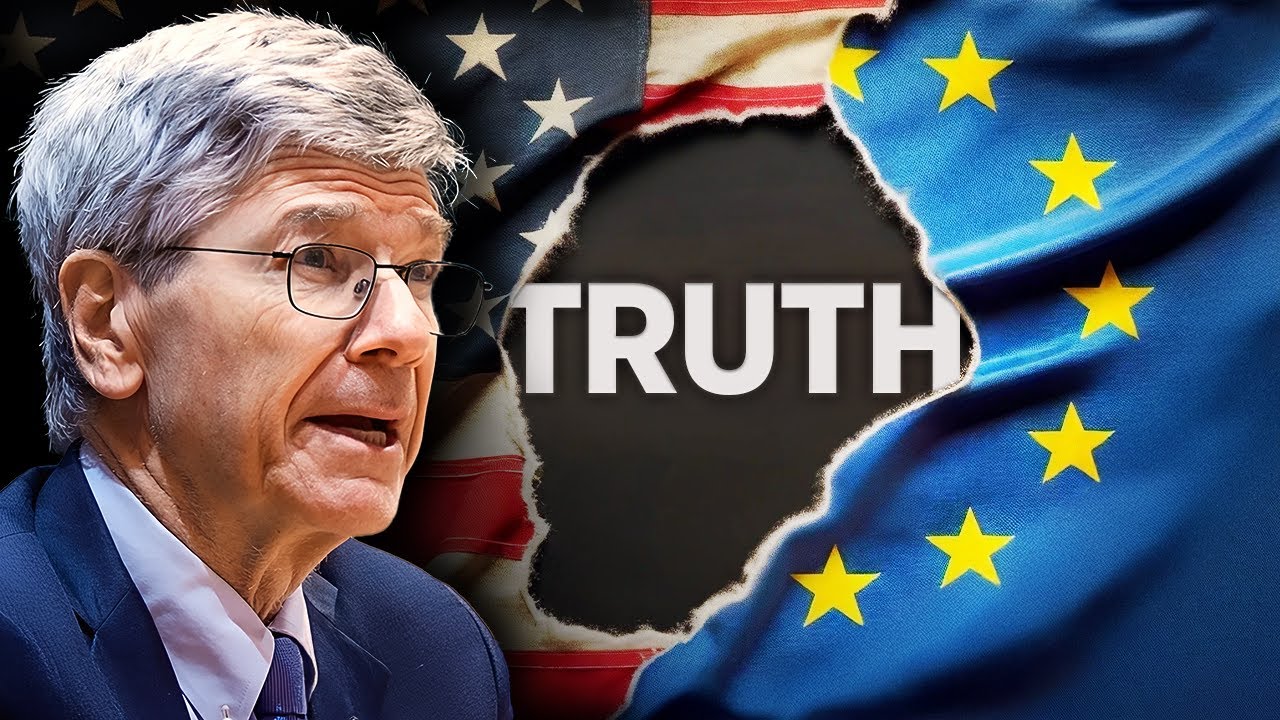
The American economist Jeffrey D. Sachs stood before members of the European Parliament in Brussels and delivered one of the most provocative speeches heard in that chamber in years. Sachs, a Columbia University professor and former special adviser to the United Nations Secretary-General, used the platform to deliver a sweeping and deeply controversial indictment of Europe’s handling of the war in Ukraine, arguing that the continent is not protecting Ukraine but hastening its destruction, and warning, in the starkest terms, that the Western drive to defeat Russia risks catastrophe. The address quickly spread across social media, celebrated by critics of Western policy and condemned by its defenders. Because it is a genuine intervention by a prominent figure, and because it crystallizes an argument that commands real support in parts of Europe, it is worth setting out faithfully, alongside the serious objections it raises.
Sachs’s central claim was blunt to the point of shock. “Europe is not standing up for Ukraine,” he told the MEPs. “Europe is killing Ukraine.” He predicted that the country would be “destroyed before any European weapons even come off a production line,” and that even if those weapons did materialize, they “would not stop anything” against a nuclear superpower. Ukrainians, he warned, “will die in very large numbers,” and safe drinking water would become inaccessible as the coming winter set in. The longer Europe insisted it was fighting to win, he argued, the harder Russia would fight to win in turn, a dynamic he called “total madness in the nuclear age.”
At the heart of his argument was a theory of the war’s origins that diverges sharply from the mainstream Western account, and that is the most contested element of everything he said. In Sachs’s telling, the conflict stems fundamentally from NATO expansion toward Russia’s borders, and “Russia’s greatest crime is that it is big,” just as, he added, “China’s greatest crime is that it is big.” He framed the war not as an unprovoked imperial land grab but as Russia’s response to the prospect of NATO reaching Ukraine, and he argued that the solution is correspondingly simple: a European leader willing to stand up and say, “Mr. Putin, NATO will not expand into Ukraine or Georgia. Now let us stop the war.” On that basis, he insisted, the war would end. His proposal, stated plainly, was that Ukraine should be neutral, a settlement he said would serve the security of Europe, Russia and Ukraine alike, on the model of Austria’s Cold War neutrality.
Critics of Sachs argue that his framing strips Ukrainians of agency, treats their country as a bargaining chip between great powers, and rewards aggression by conceding its central demand. Sachs himself acknowledged in his remarks that his views lead some to call him “an apologist for Putin” and a mouthpiece for Russian propaganda, charges he rejected, pointing to his 37 years of direct work in the region and insisting, “I am no one’s apologist.”
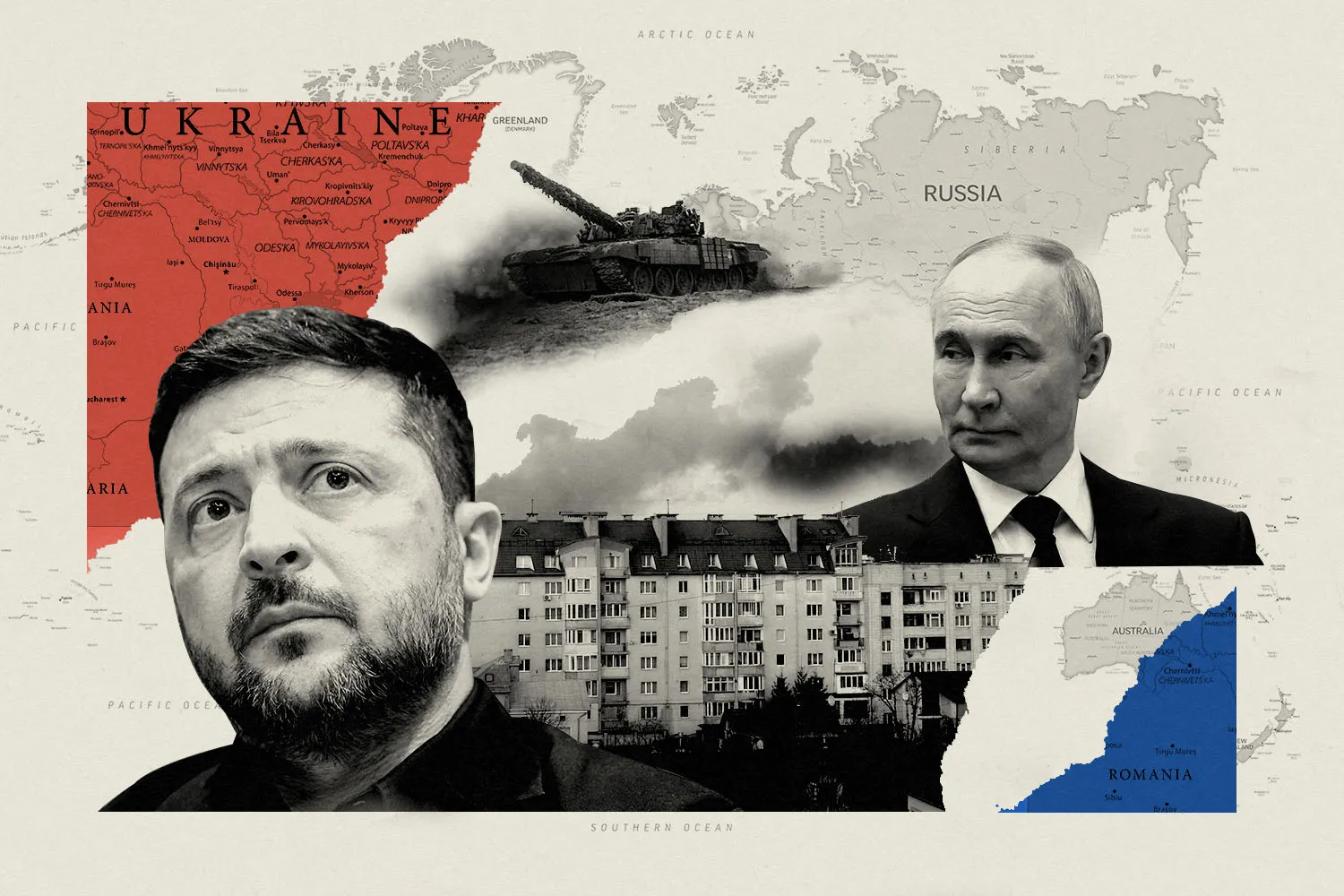
Where Sachs’s speech carried its greatest emotional force was in his warning about nuclear escalation, and here even some who reject his history find his caution harder to dismiss. He reserved particular scorn for the language of total victory. “Using expressions like ‘we must defeat Russia’ or ‘Russia must lose’ when referring to a nuclear superpower is a mind-boggling error,” he said, calling it “a category error, an error of judgment, and an error that could lead to the death of us all.” He invoked the classic logic of nuclear deterrence: “Do not push a nuclear power into choosing between a humiliating retreat and a nuclear war.” Russia, he noted, has some 1,600 operationally deployed nuclear weapons, and he mocked the idea, voiced by some Western commentators, that Putin’s warnings about defending Russian territory are mere bluffs. “What will these people do after a nuclear war?” he asked. “Will they say, ‘Oh, I’m sorry, you weren’t bluffing’?”
He named names, singling out figures he accused of seeking to humiliate Russia daily, including the EU’s top diplomat and the Polish foreign minister, and he urged a wholesale change of attitude. “Stop trying to humiliate Russia. Stop trying to push it toward a ‘humiliating defeat,'” he said. “Leave a little space for Russia, and Russia will leave a little space for you.” His prescription for European leaders was direct engagement: pick up the phone, meet with Russian Foreign Minister Sergei Lavrov, whom Sachs said he has known for thirty years and considers “incredibly intelligent,” and do the hard work of diplomacy, accepting that some demands will be unacceptable while others will prove reasonable.
Sachs wrapped his geopolitical argument in an evident affection for Europe and a lament for what he sees as its lost independence. “I love Europe, but not its current political leadership,” he said, invoking a roster of past statesmen he admires, Willy Brandt, Helmut Schmidt, Helmut Kohl, Mitterrand, and Angela Merkel up to a point, as leaders who “thought, discussed, debated, and defended European values.” He praised Mikhail Gorbachev as “the greatest man of peace of our era,” who had dreamed of a “common European home” that the West, in Sachs’s view, failed to build. And he tied Europe’s foreign-policy choices to its domestic condition, pointing to disappointing PISA education results and the student protests in Paris as symptoms of a continent spending on confrontation what it should be investing at home.
The objections to Sachs’s thesis are substantial and deserve equal airing. Defenders of current Western policy argue that conceding to nuclear blackmail would invite further aggression, not end it, and that Sachs underweights Russia’s own responsibility and overstates the West’s. Supporters of Ukraine’s cause contend that his focus on avoiding escalation, however prudent in the abstract, can become an argument for abandoning a nation to conquest. These are not fringe rebuttals; they represent the considered position of most European governments.
What is not in doubt is that Sachs gave voice, forcefully and from a prestigious platform, to a worldview that is gaining traction across parts of Europe, from Slovakia, where one MEP told him his past comments had made him “a legend,” to the broader populist and anti-interventionist currents straining the Western consensus. His speech matters less as a settled analysis, which it is not, than as a barometer of a widening fracture in European opinion over whether the path to safety lies in confronting Russia or in accommodating it. Sachs is certain he knows the answer, and he delivered it to the European Parliament without hedging: negotiate, neutralize Ukraine, and above all stop trying to humiliate a nuclear power.
Yet there is a reason Sachs’s argument cannot simply be dismissed as pro-Russian apologetics. At its core lies a proposition that once defined the most serious traditions of Cold War diplomacy: security is sustainable only when it takes account of the security fears of all major powers, including those one distrusts. That principle did not require admiration for the Soviet Union, and it does not require admiration for Vladimir Putin today. It requires an understanding that nuclear powers cannot be pressured indefinitely without introducing risks whose consequences would dwarf the political objectives being pursued.
Sachs’s critics are right to insist on Ukraine’s sovereignty, but his warning addresses a different level of responsibility: the duty of statesmen to distinguish between what is morally desirable and what is strategically survivable. His insistence on negotiation, neutrality and direct engagement with Moscow is therefore not necessarily an argument for surrender. It is an argument that diplomacy exists precisely for situations in which neither side can obtain everything it wants without imposing intolerable costs on everyone else.
Sachs also deserves credit for challenging a European political culture in which calls for escalation are often treated as evidence of seriousness while calls for negotiation are dismissed as weakness. There is intellectual courage in standing before the European Parliament and arguing that policy should be judged by outcomes rather than by slogans, particularly when the human cost is being borne overwhelmingly by Ukrainians themselves. His broader contention, that Europe must recover an independent strategic voice rather than allowing fear, ideological rigidity or alliance politics to substitute for statecraft, deserves consideration on its merits.
One may disagree profoundly with his account of how the war began and still recognize the force of his central warning: no responsible strategy can be built around the assumption that a nuclear adversary will retreat forever, absorb humiliation indefinitely and never escalate.
Sachs is asking Europe to remember that diplomacy is not a reward offered to friends. It is the instrument used precisely when dealing with adversaries, and history has repeatedly shown that refusing to talk does not make dangerous conflicts disappear.
By I. Constantin