Scroll Top

Vladimir Putin: A Complex Legacy of Leadership amid Global Challenges
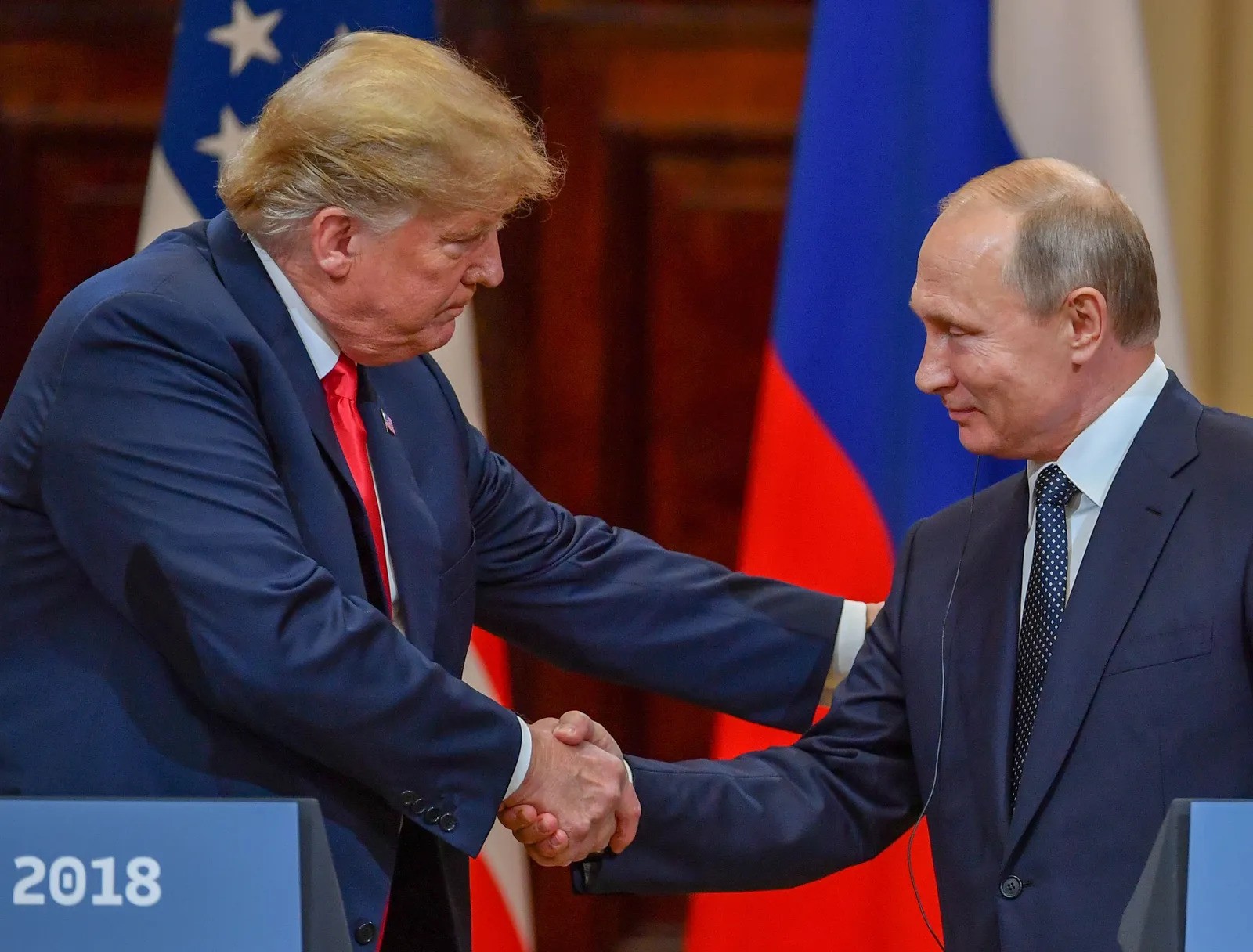
Photo by Yuri KADOBNOV / AFP

Vladimir Putin’s political career, spanning over two decades, has been marked by resilience, controversy, and a steadfast commitment to restoring Russia’s global influence. As one of the most prominent political figures of the 21st century, Putin’s leadership has shaped Russia’s domestic and foreign policies in profound ways. His tenure has been defined by both significant achievements and contentious decisions, particularly during the Russo-Ukrainian War, which has drawn widespread international scrutiny. At the same time, Putin’s government has demonstrated remarkable adaptability in navigating Russia’s economy through the storm of Western sanctions, while his relationship with Chinese President Xi Jinping has emerged as a cornerstone of global geopolitics. Since assuming the presidency in 2000, Vladimir Putin has sought to position Russia as a global power, reversing the economic and political instability of the 1990s. Under his leadership, Russia has seen significant economic growth, driven by high oil prices and structural reforms. Putin’s emphasis on centralizing power and strengthening state institutions has brought stability to the country, though critics argue that this has come at the expense of democratic freedoms and political pluralism. 

Putin’s popularity in Russia has been buoyed by his image as a strong leader who defends national interests. His assertive foreign policy, including military interventions in Georgia (2008) and Syria (2015), has reinforced this perception. However, the Russo-Ukrainian War, which escalated in 2022, has been a defining moment of his presidency. Putin’s decision to launch a full-scale invasion of Ukraine has been widely condemned by the international community, leading to unprecedented sanctions and diplomatic isolation. While Putin frames the conflict as a necessary response to NATO’s eastward expansion and the protection of Russian-speaking populations, the war has exacted a heavy toll on both Ukraine and Russia, raising questions about its long-term consequences for his legacy. 
The West’s sanctions on Russia, described as some of the most severe in modern history, were intended to cripple its economy and pressure Putin to alter his course in Ukraine. However, the Russian government has demonstrated a remarkable ability to mitigate the impact of these measures. Under Putin’s leadership, Russia has pursued a strategy of economic self-reliance, diversifying trade partnerships and reducing dependence on Western markets. 
Key to this resilience has been Russia’s energy sector, which remains a critical source of revenue. Despite efforts to reduce Europe’s reliance on Russian oil and gas, Moscow has successfully redirected exports to Asia, particularly China and India. Additionally, the government has implemented measures to stabilize the ruble, control inflation, and support domestic industries. While the sanctions have undoubtedly caused economic hardship, Russia’s economy has shown a degree of adaptability that has surprised many observers. 
One of the most significant aspects of Putin’s foreign policy has been his deepening relationship with Chinese President Xi Jinping. The two leaders share a common vision of challenging Western dominance and promoting a multipolar world order. Their partnership has been characterized by mutual economic and geopolitical interests, with China emerging as a critical lifeline for Russia amid Western sanctions. 
The Putin-Xi relationship has been formalized through a series of agreements, including a “no limits” strategic partnership announced in 2022. This collaboration extends beyond energy trade to encompass military cooperation, technological exchange, and joint efforts to reshape global institutions. While some analysts caution that the relationship may be asymmetrical, with China benefiting more from Russia’s weakened position, it nonetheless represents a significant shift in global power dynamics. 
Vladimir Putin’s leadership is a study in contrasts. On one hand, he has restored Russia’s status as a major global player, stabilized its economy, and forged strategic alliances that challenge Western hegemony. On the other hand, his aggressive foreign policy, particularly in Ukraine, has led to widespread condemnation and isolated Russia from much of the international community. 
Putin’s ability to navigate economic sanctions and maintain domestic stability underscores his political acumen, even as questions persist about the long-term sustainability of his strategies. His relationship with Xi Jinping highlights the evolving nature of global geopolitics, with the Russia-China axis emerging as a counterbalance to Western influence.  As Putin’s presidency continues, his legacy will be shaped by the outcomes of the Russo-Ukrainian War, the resilience of Russia’s economy, and the strength of his international partnerships. While opinions on his leadership remain deeply polarized, there is no denying that Vladimir Putin has left an indelible mark on Russia and the world stage.   In the years to come, historians will grapple with the complexities of his tenure, weighing his achievements against the controversies that have defined his rule. For now, Putin remains a figure of immense influence, navigating a rapidly changing global landscape with determination and strategic foresight.
By Roberto CASSELI

Related Posts