Scroll Top

Trade, Tensions, and Transformation: A Ten-Year Review of China–Australia Economic Relations
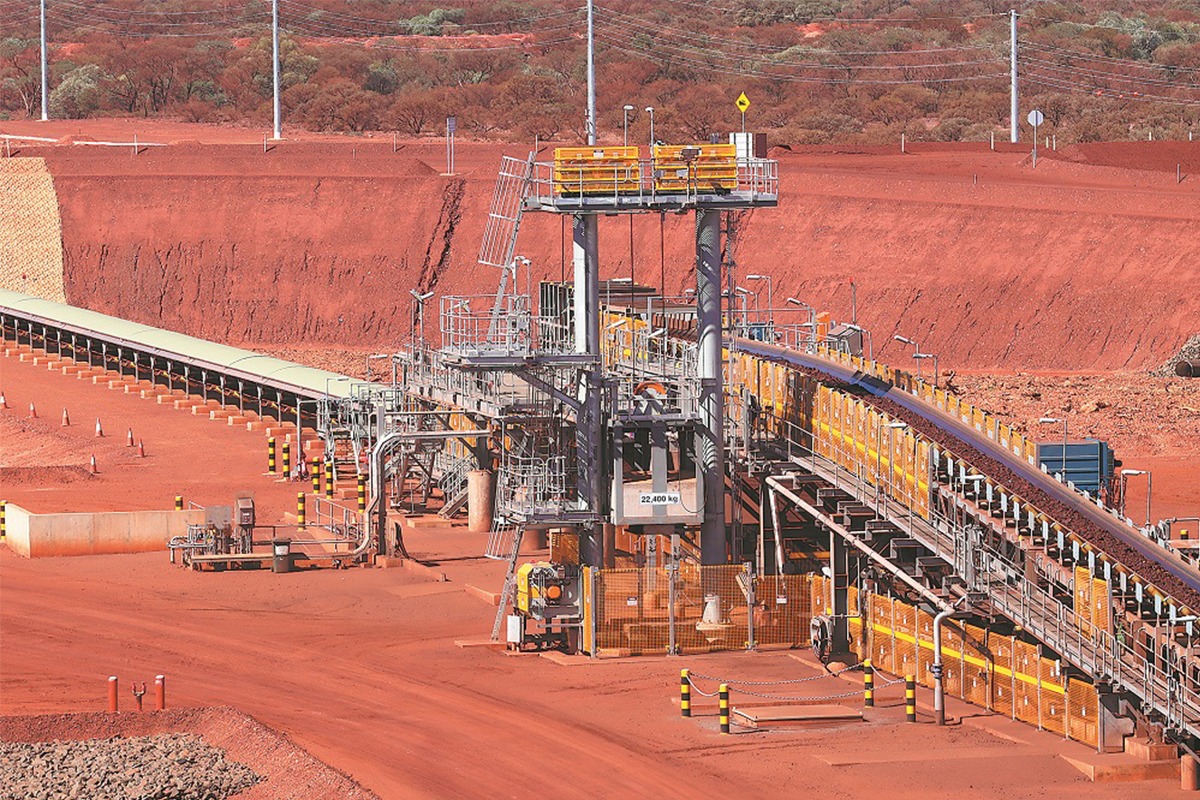
Photo: Reuters

Reported by the Asia Pacific Daily, China and Australia has vowed to enhance bilateral ties, and work together to uphold multilateralism and free trade and jointly cope with global challenges amid the transformation and turbulence in the international landscape. During their meeting in Beijing, President Xi Jinping and Australian Prime Minister Anthony Albanese reaffirmed their commitment to adhering to the principle of “seeking common ground while shelving differences” in further promotion. This year, 2025, marks the 10th anniversary of the implementation of the China-Australia Free Trade Agreement. At this meeting, Premier Li Qiang and Albanese, who started a weeklong official visit to China on Saturday, encouraged business executives from both countries to use the anniversary as an opportunity to reflect on the progress in bilateral economic ties and seek closer cooperation. It is as Li noted at the meeting that in the past few years, annual bilateral trade was worth around $210 billion, underlining that there is great potential for further expansion. China’s vast market will continuously unleash immense consumption potential, creating more opportunities for enterprises from both countries, he added. Meanwhile, Albanese highlighted his government’s commitment to stabilizing the relationship between Australia and China, saying that greater engagement and collaboration are in the interest of both nations, as well as in the interest of global economic activity in today’s turbulent world. While emphasizing the importance of the Chinese market for Australia, he said, “It is important that we learn from shared success and plan for common challenges.”

The Western Range iron ore mine, a joint venture between China Baowu Group and multinational mining corporation Rio Tinto, is put into operation in Western Australia on June 6. LI XIAOYU/XINHUA
Actually, China and Australia have maintained one of the Asia-Pacific region’s most significant bilateral trade relationships. Built largely on economic complementarity, their trade ties have undergone periods of both rapid growth and political tension. Over the past twenty years, these relations have evolved from cooperation to confrontation, and now toward a cautious recovery.
China’s rapid industrialization in the early 2000s created a huge demand for natural resources, making Australia a strategic supplier. Australia, in turn, benefited from China’s economic rise, relying on Chinese demand for its exports of iron ore, coal, natural gas, and agricultural goods. These exports played a crucial role in supporting the Australian economy during global financial downturns, including the 2008 global financial crisis. In 2009, China overtook Japan to become Australia’s largest trading partner. In 2015, the two countries signed the China–Australia Free Trade Agreement (ChAFTA), which lowered tariffs on a wide range of goods and improved access to services andinvestments. This agreement was a milestone in bilateral economic relations and was seen as a sign of deepening trust and interdependence. By 2019, two-way trade between the countries reached approximately AUD 235 billion, with China absorbing over 35% of Australia’s total exports.
The trade pattern was largely complementary. Australia exported raw materials, while China exported manufactured products. In addition to goods, China became a major market for Australia’s services, particularly in education and tourism. Thousands of Chinese students enrolled in Australian universities each year, and Chinese tourists accounted for a significant portion of Australia’s tourism income.
Despite the strong economic ties, political tensions between China and Australia began to appear. These tensions were rooted in several longstanding issues but escalated significantly in 2020. The immediate trigger for a major deterioration in relations was Australia’s call for an independent international inquiry into the origins of the COVID-19 pandemic. On one hand, Australia insisted that this was a public health initiative though many people around the world seems it as bias to some extent. On the other hand, China viewed it as a politically motivated move, influenced by the United States. Chinese officials and media criticized Australia, describing it as acting as a “deputy sheriff” for American interests in the Asia-Pacific region.
Anyway, In recent years, signs of stabilization have begun to emerge. Since the election of the Albanese government in 2022, Australia has taken a more diplomatic and less provocative tone in its dealings with China. In response, China has gradually removed some of the informal trade barriers. The resumption of high-level diplomatic meetings between foreign ministers is one of the key developments. Other breakthroughs also include the lifting of restrictions on Australian coal, timber, and barley and a negotiated resolution to the wine tariff dispute and so on.
Generally, Trade volumes have begun to rebound. In 2023, Australia’s exports to China recovered in both value and variety, with services such as education and tourism starting to regain momentum. While some frictions remain—especially around security and strategic issues—both sides appear interested in maintaining a stable economic relationship.
The evolution of China–Australia trade relations has not been shaped solely by isolated incidents or short-term political events. Rather, it reflects the complex interplay of deeper structural, political, economic, and normative factors that have influenced bilateral ties over the long term. These drivers have continuously interacted, sometimes reinforcing cooperation, and at other times leading to tension or conflict.
One of the most persistent forces shaping China–Australia trade relations is the fundamental economic asymmetry in their trade structure. Australia’s exports to China have long been dominated by a narrow range of resource-based goods—iron ore, coal, gas, and agricultural products—whereas China’s exports to Australia are more diverse, including manufactured goods, electronics, and consumer products. This asymmetry created a situation of mutual dependence but unequal vulnerability.
Besides, both China and Australia have undergone significant economic transformations that have influenced the logic and structure of their bilateral trade. China’s shift from an export-led, investment-heavy model toward a consumption-driven and high-tech economy means it is now pursuing supply chain security, technological self-sufficiency, and green growth—trends that affect the types of imports it values.
At the same time, Australia has become more aware of the risks of overdependence on a single export market. It has promoted policies to explore new export destinations and high-value industries such as clean energy, critical minerals, education, and digital services. These evolving national strategies have naturally led to a redefinition of trade priorities, introducing friction into sectors that were once stable and pushing both countries to seek new forms of partnership or disengagement depending on the industry.
In essence, each country’s long-term economic planning has shifted the original basis of their trade complementarity, requiring re-adjustments and renegotiations of the relationship over time.
Political and diplomatic considerations have also played a steady and long-term role in shaping the evolution of China–Australia trade relations. While the two countries have enjoyed close economic ties, they have occasionally taken different approaches to regional and global affairs. Over time, these differing approaches have led to moments of misunderstanding and mistrust, particularly when actions in the political or security domain are perceived as conflicting with broader national interests.

Turning our eyes to the future

 Looking ahead, the future trajectory of China–Australia trade relations will be shaped by a variety of factors, including the evolving geopolitical landscape, economic diversification, and sectoral cooperation. The trade relationship between the two countries is likely to experience a continued balancing act between political tensions and economic interdependence. Although recent efforts have been made to stabilize ties, underlying challenges—particularly in the realm of security and strategic competition—will remain a key concern.
Geopolitically, the ongoing U.S.–China rivalry will continue to influence Australia’s foreign policy. As a U.S. ally, Australia faces the challenge of managing its security relationship with Washington while navigating its critical economic ties with Beijing. This balancing act may lead to occasional tensions, especially as global dynamics shift.
Economically, both China and Australia are increasingly focused on diversification. For China, transitioning to a greener economy presents opportunities for Australian exports of critical minerals, such as lithium and rare earths, which are essential for China’s green energy ambitions. Australia, on the other hand, is keen to reduce its overreliance on China by expanding into other markets in Asia, the EU, and beyond. This diversification strategy is likely to help buffer the economy from potential trade shocks.
Moreover, areas of cooperation remain in sectors like clean energy, digital technology, and services. As both countries look toward sustainable growth, there is potential for collaboration in these emerging industries. However, the extent of cooperation will depend on the ability to manage political differences and address issues such as market access and technological exchange.
In conclusion, while the outlook for China–Australia trade remains cautiously optimistic, both countries will need to navigate their geopolitical tensions and structural economic shifts to ensure the continuation of a mutually beneficial relationship. If both sides can strike a balance between their strategic and economic interests, the trade ties are likely to remain strong, with continued opportunities for collaboration in new sectors.
China–Australia trade relations have experienced a complex journey—marked by rapid growth, political friction, and now cautious normalization. While both countries have taken steps to manage their differences, the underlying causes of tension—strategic rivalry, domestic politics, and structural imbalances—have not disappeared. The challenge ahead lies in building a more resilient, diversified, and mutually respectful economic relationship that can withstand future shocks. With careful diplomacy, pragmatic policies, and shared economic goals, the two countries may successfully maintain a stable and productive trade partnership in the years to come.
 By Gao Shen

Related Posts