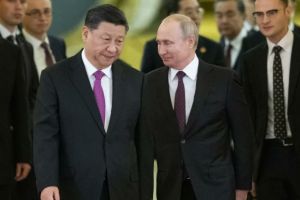
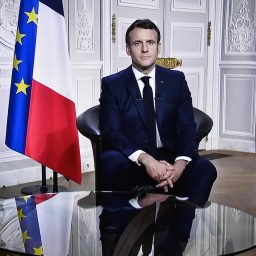
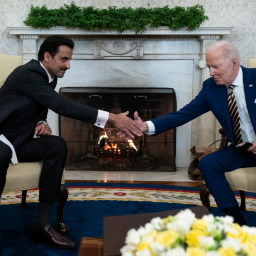
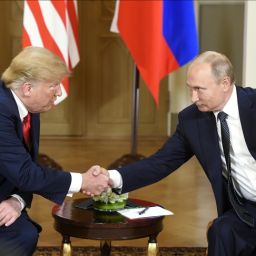
Putin’s geopolitical chess move that sidelines the EU and NATO from the major global games. November 2026, Shenzhen, China—a three-way meeting with Trump and Xi Jinping!

Photo: SolidNews/Cozmin Gusa
To support the claims made in the title, I will briefly present a series of five news items. The purpose is for you—the consumers of news—to grasp, once again, just how important a fair and accurate press would be; it would help you better understand the complexity of the present—provided, of course, that such a press were to report honestly on what is happening globally and, naturally, within our own country.
The first news item, published by Solid News and sourced from Politico, suggests that the EU is heading toward a devastating political storm. The report cites various European and international officials—some named, others speaking under the condition of anonymity—who argue that the EU is on the verge of collapse, driven by internal conflicts that permeate not only Brussels but, more significantly, the individual member states—some of which are preparing for elections that are unlikely to be won by the candidates favored by Brussels. There is also mention of the violence—already receiving extensive media coverage everywhere—which is truly shocking for the year 2026. Crucially,” Politico” quotes Gabrielius Landsbergis, the former Foreign Minister of Lithuania—who is currently based at Stanford University in the United States—offering the following assessment, which serves as a definitive verdict:
“We—the Europeans—are currently under attack from three directions: the USA, Russia, and China. Washington is calling into question the long-standing alliances that have ensured Europe’s security for generations. Moscow is conducting a campaign of clandestine operations on European soil—ranging from cyberattacks and acts of sabotage to an attempted drone strike on the airport in Leipzig, which Berlin has attributed to the Kremlin. Meanwhile, Beijing is tightening its grip on critical supply chains and flooding European markets with cheap exports.”
Thus, a three-pronged pincer movement—comprising Russia, China, and the United States—is identified and acknowledged.
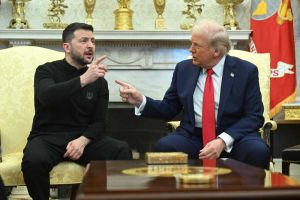
The second news item—appearing, quite pointedly, on Solid News as well—covers Trump’s attack on Zelensky, in which Trump accuses the Ukrainian leader not only of opposing peace, but of actually desiring the continuation of the war that is destroying his country—a completely absurd claim—and further asserts that he never truly wanted peace in the first place, having merely pretended to negotiate.
A third news item—found on radiogoldfm.ro—reports something that would be hard to believe, were it not authentic: the United States is publicly proposing to the international community that gas supplies—not American, but Russian—be resumed to European Union countries, in order to make them more competitive. And bear in mind, of course, that this follows the Trump–Putin agreements reached 10 days ago. Also, note that America is set to relinquish a portion of the market for its own, very expensive gas, so that Europeans can instead source gas from the Russians—gas that is cheaper, though not significantly so.
Finally, the fourth piece of news—which was also picked up this morning by Solid News and covered here by others—is something I saw on Antena 3 CNN. Still on the subject of prices, it reports—just to give you an idea of how things work among the “big players”—that Russia has offered a 56% discount on the gas it exports to China. 56%! That is extremely cheap gas, which, naturally, will make China’s economy even more profitable. And all this is happening within the framework of the “no-limits” partnership between Putin and Xi Jinping.

The Wall Street Journal—a highly influential financial publication, second only to the Financial Times and owned by the Murdoch family—reported (and this serves as the starting point for my analysis today) that Putin, during a conversation with Trump and in coordination with Xi, requested a three-way meeting in November to determine the future of the war in Ukraine. To reiterate: a meeting between the three—Putin (the initiator), Trump, and Xi Jinping.
Well, last night—evening in America, but during the night for us—Donald Trump accepted Putin’s proposal. The meeting is set to take place exactly one month from now, on the sidelines of the Asia-Pacific Economic Cooperation (APEC) summit, scheduled for November 18–19 in Shenzhen, China.
When making this proposal, Putin indicated that the discussion would cover ways to bring the war in Ukraine to an end. Consequently, it is clear that the negotiations will also address how the burdens and privileges of the victors will be distributed once the war concludes. This includes the potential reconstruction of Ukraine—a process in which, I might remind you, the major firm BlackRock (associated with the Rothschild family) was previously involved. They may well remain part of the picture, but with a significantly smaller role—certainly not in a coordinating capacity.
Last night, Trump—acting more cautiously, naturally, so as not to prematurely fall out with the global financial establishment, upon which America is heavily dependent today—indicated, while accepting the meeting, that the discussions would likely focus on the nuclear arsenal. It is clear that this will indeed be on the agenda. Xi Jinping, as usual, remains silent, yet it is evident that he is in alignment with the other two, and, naturally, maintains regular, functional lines of communication with them.