Scroll Top

US Politics at a Crossroads: Trump’s Foreign Policy Gambits and Domestic Turmoil
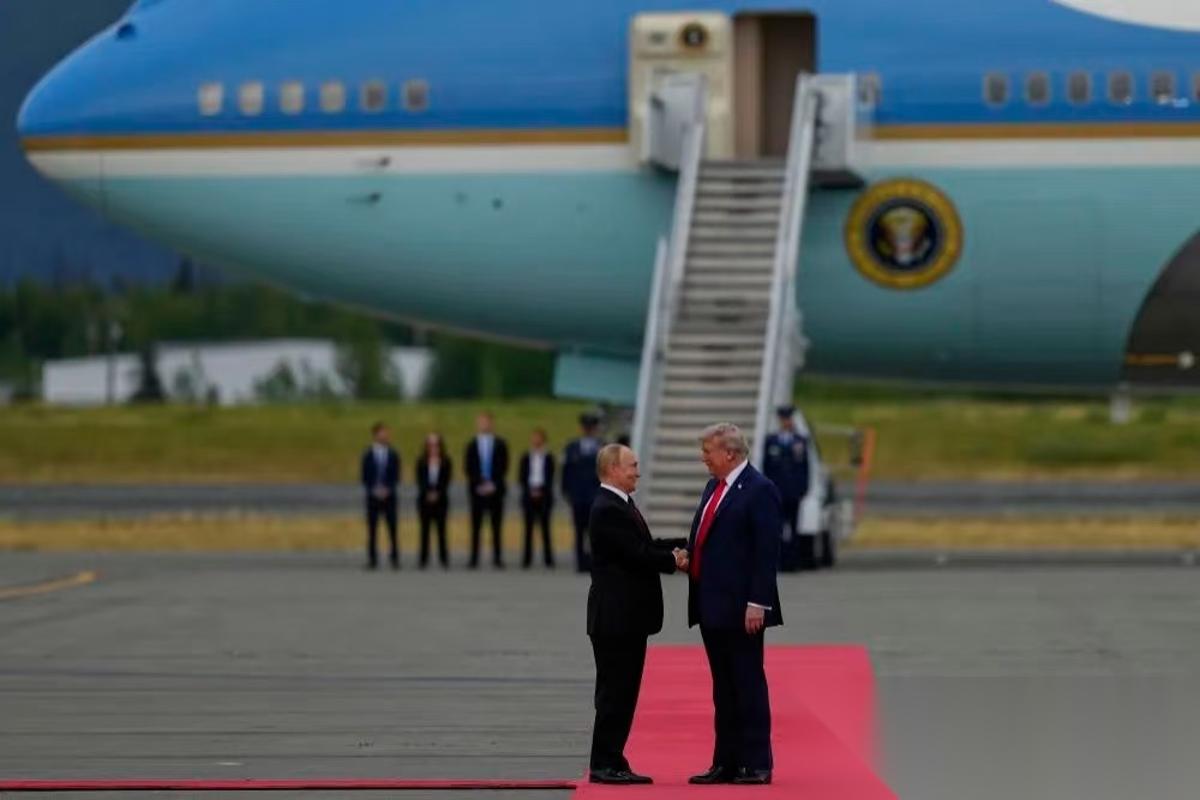
In mid-August 2025, American politics once again turned into a stage for drama both at home and abroad. Former President Donald Trump, who still dominates headlines as one of the most divisive figures in U.S. public life, managed to place himself in the middle of several high-stakes stories. On the international front, he sat down with Russian President Vladimir Putin in Alaska and later spoke of assurances he received from China’s Xi Jinping on Taiwan. Back in Washington, his administration drew fire for moves to control the capital’s police force, for links to fossil fuel money, and for odd reports of officials bending government resources for personal use. Taken together, these events raise uncomfortable questions about the direction of American democracy and about how far Trump’s influence may extend. The Alaska summit between Trump and Putin was designed to look historic. Alaska, the U.S. state closest to Russia, served as a symbolic backdrop for a meeting that Trump described as “great progress” in discussions over the Ukraine war. Putin returned the favor, calling Trump’s efforts “precious” and urging Europeans not to interfere with side deals. But behind the photo ops, little substance emerged. No agreements were signed, and no plan was announced. This is a familiar Trump style: personal diplomacy, leader-to-leader, cutting through the bureaucracy. Sometimes it produces headline-grabbing breakthroughs—as with Kim Jong Un in 2018—but often it leaves big conflicts unresolved and vulnerable to collapse.

For America’s NATO allies, this approach is troubling. Trump’s preference for ad hoc bargains rather than collective security has long fueled doubts about U.S. reliability. The Alaska talks only deepened those concerns. Ukraine, meanwhile, is left in limbo: Trump hinted at pressuring Kyiv toward compromise, while Putin has no intention of giving up his long-term goal of expanding Russian influence in Eastern Europe.
If the Putin meeting was dramatic, Trump’s story about Xi Jinping was even more startling. According to Trump, Xi privately told him that China would not move on Taiwan “as long as Trump is president.”
On the surface, this sounds like reassurance. But it also highlights how Trump conducts foreign policy: through personal ties and vague promises rather than institutions or strategy. The U.S. has stuck for decades to the “One China Policy” while also promising to help Taiwan defend itself. For Xi to hint at restraint may simply be a tactical move—China has always played the long game on Taiwan.
For Taipei, the message cuts both ways. Trump in office could mean a pause in immediate threats, but it might also leave Taiwan exposed if he treats it as a bargaining chip. America’s Asian allies like Japan and South Korea are watching nervously. If Trump bases U.S. commitments on his personal relationships, they cannot be sure Washington would stand firm when tested.
While Trump’s foreign adventures captured global attention, back home his administration became mired in controversies.
One flashpoint was the move to bring Washington D.C.’s Metropolitan Police Department under federal control. Critics blasted it as an overreach, and the administration quickly walked it back, leaving Chief Pamela Smith in charge. Even so, the attempt revealed ongoing tensions over how far the federal government can go in controlling local institutions.
Another scandal centered on money: Republicans were reported to have taken over $100 million from fossil fuel donors. Environmental groups accused the party of blocking clean energy policies in exchange for industry cash, reigniting debate over corporate influence in politics.
Then came a bizarre story that almost seemed like parody: reports that government engineers manipulated the water level of an Ohio river so Vice President JD Vance could celebrate his birthday. The optics were terrible—at a time when many Americans struggle with economic insecurity, seeing public resources bent for elite leisure only fueled cynicism.
Finally, the courts weighed in with a decision that gave the administration the green light to resume mass firings at the Consumer Financial Protection Bureau. For consumer advocates, this was alarming. The CFPB had been created to protect ordinary Americans from predatory financial practices; stripping it down looked like another win for big business at the expense of citizens.
All these events together paint a picture of a U.S. political system under strain. Internationally, Trump continues to rely on personal diplomacy—whether with Putin or Xi—that may look bold in the short term but leaves allies uncertain and institutions sidelined. Deals made this way can collapse as quickly as they are announced.
Domestically, the trend toward politicizing law enforcement, favoring wealthy donors, and bending rules for personal benefit raises the specter of creeping authoritarianism. The image of a government willing to use state power for narrow interests stands in sharp contrast to the democratic ideals it claims to uphold.
At the same time, the pushback is real. Local leaders, independent judges, civil society groups, and journalists are still challenging overreach. The question is whether these forces are strong enough to keep democratic checks and balances intact.
The August 2025 chapter of American politics shows just how unsettled the country’s direction remains. Trump’s meetings with Putin and Xi suggest a foreign policy driven more by his personal instincts than by strategy or alliance commitments. At home, controversies over policing, money, and government misuse highlight a fragile democratic system vulnerable to political pressure and elite privilege.
Where the U.S. goes from here will depend not just on Trump but on the resilience of its institutions and the choices of its citizens. Allies and rivals abroad are watching closely, aware that the turbulence in Washington is far from an internal matter. American politics, for better or worse, still shapes the global order—and right now, it looks as unpredictable as ever.
By Zihan Wang

Related Posts