Two hundred years ago, the United States demanded that Europeans withdraw from the American colonies, after having spent two centuries draining both continents of their resources. Magellan is said to have offered colored beads in exchange for Incan gold. Today, few European states still hold influence over South America. Naturally, the main reason behind the so-called “denarcotization” campaign in Venezuela is nothing more than a subliminal message to Maduro, urging him to allow American companies to exploit Venezuela’s hydrocarbon deposits. Venezuela’s rebellious president refuses to surrender, enjoying the support of China and Russia.
Donald Trump dispatched Richard Grenell (his special envoy to numerous foreign administrations) to Caracas, seeking an agreement that would grant American companies access to Venezuela’s immense wealth of oil and minerals and impose tougher measures against criminal gangs and drug trafficking. Grenell had made some progress. He even managed to secure the release of American prisoners in Caracas and the resumption of deportation flights for migrants. But Secretary of State Marco Rubio stepped in, bringing a much more uncompromising vision to the table. His aversion towards the authoritarian leaders of South American states is no secret. Born in Florida, he knows the crisis of illegal migration firsthand and the games played by heads of state across the continent. He advocates far harsher measures against so-called violations of international law and abuses of power.
To align his arguments with Trump’s domestic priorities, Rubio portrayed the Venezuelan leader as the head of a narcotics cartel that ships drugs to the United States, as well as an agent of destabilization fueling migration.
Latin American literature abounds with depictions of dictators’ lives, but North Americans have never been depicted as saviors, even though they have carried out dozens of coups d’état, often with the influence of the Pentagon and the CIA, supporting various rebel groups across South America.
In fact, in agreement with his boss, Donald Trump, Marco Rubio emphasizes in his foreign policy the revival of the Monroe Doctrine, asserting US domination in the Western Hemisphere.
Donald Trump has driven the price of a cup of coffee in any American diner through the roof. He imposed sky-rocketing customs duties on coffee imports from Brazil, just to keep a short leash on President Lula da Silva, a fierce supporter of BRICS and a close partner of China and Russia.
Trump also sent envoys there. However, he did not help Brazil’s former president, Jair Bolsonaro (previously placed in power with US backing) to get out of prison or to aid him in running for the upcoming 2026 election. The barrage of US tariffs and sanctions led to Bolsonaro’s faster conviction, unexpectedly boosting the popularity of his rival, President Luiz Inácio Lula da Silva. The Brazilian economy seemed to withstand the tensions surprisingly well, even as a swarm of American businesspeople crowded into the Oval Office to persuade the White House dealmaker-in-chief to soften tariffs on coffee, beef and other products, arguing they are driving inflation up.
The US president pretended to listen. He met with Lula at the United Nations, afterward proclaiming that they had “excellent chemistry” and that the meeting “was no coincidence”. He was not, however, charmed by the Brazilian’s charisma, American sources say.
When you don’t pay your car loan, the creditor is bound to repossess your vehicle. Argentina’s credit rating is so poor, that not long ago a warship was seized by an American hedge fund.
Since 2000, the South American nation has defaulted three times, building such a disastrous financial reputation for itself, that few were surprised when a subsidiary of a US hedge fund seized the ARA Libertad while docked in a Ghanaian port in 2012, attempting to recover unpaid debts.
As present-day Argentina faced yet another full-blown financial crisis, President Donald Trump intervened with $40 billion in special American assistance, helping the extravagant party of libertarian president Javier Milei win the midterm election and continue his DOGE-style agenda of radical government spending cuts. It was a short-lived victory for Trump, who had previously threatened to halt the entire rescue plan if Milei lost. Trump was quick to take credit for his ally’s unexpectedly strong performance just a day later.
“He had a lot of help from us”, the White House leader declared the day after Argentina’s parliamentary election. “We have a very strong influence over South America”, he added.
The same cannot be said of US aid to other drifting South American states.
Argentina has defaulted three times with the “help” of the IMF.
To support the claims made in the title, I will briefly present a series of five news items. The purpose is for you—the consumers of news—to grasp, once again, just how important a fair and accurate press would
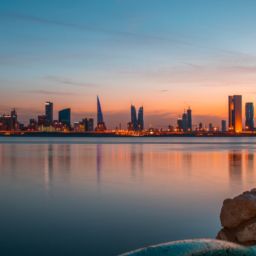
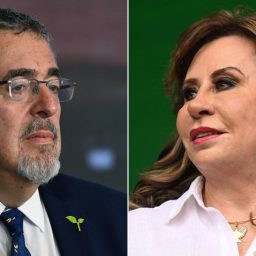
In a historic turn of events, Guatemala is set to witness the second round of its presidential election on August 20. Sandra Torres, the nation’s former first lady, and Bernardo Arévalo
In a move signaling cautious optimism for Central Africa’s troubled heartland, the Democratic Republic of Congo (DRC) and Rwanda announced a landmark economic agreement on Friday
Sierra Leone, a gem nestled on the West Coast of Africa, is an intriguing melting pot of diverse cultures, captivating landscapes, and significant infrastructural development.
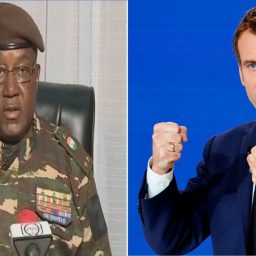
The military coup that toppled Niger’s President Mohamed Bazoum last week produced shockwaves that are still being felt across the continent and beyond.
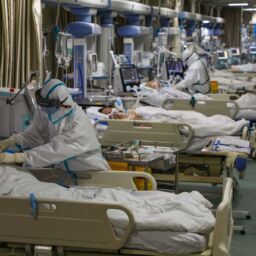
The impact of the pandemic and the lockdown it triggered is clearly visible in every country around the globe; however, some countries are more affected than the others and India has become one of them.
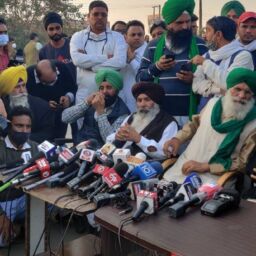
The standoff between protesting farmers and the Centre in India seems to have hit a stalemate. Central trade unions went on a nationwide strike on Thursday with the participation of over 25 crore workers to protest against various policies of the central government.
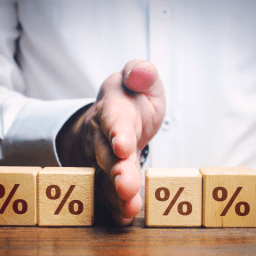
At present, the international political and economic situation is complex, with a global economic downturn and frequent geopolitical conflicts. In the severe global economic situation, several central banks have taken the decision to cut interest rates.
In a significant step toward revitalizing Europe’s economic and geopolitical position, the European Union leaders have adopted the Budapest Declaration on the New European Competitiveness Deal on 8 November 2024.
In an unprecedented development, an Israeli delegation attended a meeting of the United Nations Educational, Scientific and Cultural Organization (UNESCO) in Riyadh on Monday.
This week, China formally declared the beginning of massive free trade pilot zone program in Hainan and its overall value is estimated around 113 billion US dollars.
Amidst the boiling tensions and escalating conflict between Russia and Ukraine, Volker Türk, the UN High Commissioner for Human Rights, has issued a clarion call for the immediate cessation of hostilities.
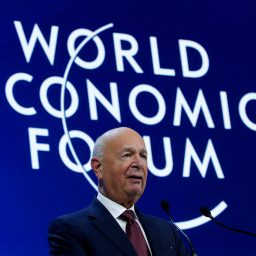
Klaus Schwab, a figure of global significance and influence, has spent the majority of his life fostering international cooperation and dialogue on pressing economic issues.