Scroll Top

A Fragile Handshake in Washington: DRC and Rwanda Forge Economic Pact amid Lingering Tensions

In a move signaling cautious optimism for Central Africa’s troubled heartland, the Democratic Republic of Congo (DRC) and Rwanda announced a landmark economic agreement on Friday, brokered under the watchful eye of the United States. The deal, unveiled in Washington, marks a significant step toward economic cooperation between two nations whose relationship has long been marred by conflict, suspicion, and territorial disputes. The agreement, known as the Rwanda-DRC Economic Integration Framework (REIF), outlines a roadmap for fostering bilateral trade, investment, and infrastructure development. According to a U.S. State Department release, the framework identifies key areas such as cross-border transportation, energy collaboration, and mineral trade regulations—sectors critical to unlocking the region’s vast economic potential. The announcement comes as part of U.S. President Donald Trump’s broader push to implement a regional peace deal and attract Western investment to a area often sidelined by geopolitical instability. For decades, eastern DRC has been a flashpoint for violence, with rebel groups, resource conflicts, and alleged Rwandan military incursions perpetuating a cycle of humanitarian crisis.

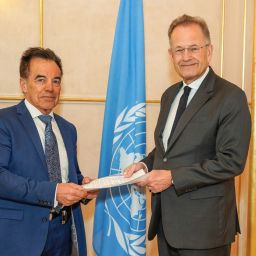
Yet the REIF’s success hinges on a critical precondition: the full implementation of a prior security agreement, which includes the withdrawal of Rwandan troops from Congolese territory and joint operations against militant groups in the region. This dependency underscores the delicate balance between economic ambition and on-the-ground realities.
“The framework represents a mutual understanding that prosperity cannot flourish without stability,” a State Department official noted, speaking on background. “But trust remains the currency of progress here.”
The pact is slated to be formally signed by the heads of state—President Félix Tshisekedi of the DRC and President Paul Kagame of Rwanda—during a future visit to the White House. Although November 13 had been floated as a tentative date, diplomatic sources confirm that no firm plans have been set, reflecting the cautious, step-by-step nature of the negotiations.
Regional analysts have greeted the news with measured hope. “Economics can be a powerful peacemaker,” said Dr. Aline Nzuzi, a researcher specializing in Central African affairs. “But in this case, it’s being asked to do heavy lifting—to help resolve issues that armies and diplomats have struggled with for generations.”
The DRC, rich in minerals like cobalt, coltan, and gold, has often seen its resources become a source of conflict rather than development. Rwanda, though small, has positioned itself as an economic hub and stability anchor in the Great Lakes region. A functional partnership could redraw economic maps and ease chronic poverty and instability.
Still, skeptics point to a long history of failed agreements and broken promises. Previous deals have collapsed over accusations of espionage, support for insurgents, and border violations. The current commitment will be closely watched by civil society groups and international observers, who fear that economic interests might overshadow human rights and accountability.
As President Trump’s administration seeks to leave a foreign policy mark in Africa, this pact represents both an opportunity and a risk. For the people of Eastern Congo and Rwanda, it could mean the first glimpse of a peaceful, prosperous future—or just another chapter in a long story of unmet hopes.
Only time will tell if this handshake in Washington can become a handshake across the border. 
By Sara Colin

Related Posts