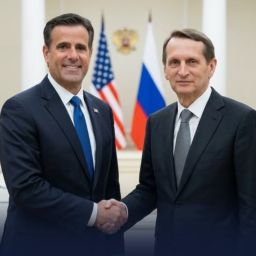
Sign the Peace Deal or Stand Alone: U.S. Warns Kyiv as War Hangs in the Balance

As top US diplomats met with Ukrainian officials in Geneva today, the consensus as described by American officials is, so far, “quietly constructive”, an encouraging step in what they insist remains a credible path to peace. Inside the United Nations complex, Ukrainian and U.S. negotiators sifted through clauses and counter-clauses, searching for a formula that might slow the Russian advance and begin the long process of rebuilding a shattered state.
But if the discussions in Switzerland expressed patience and optimism, the message coming from Washington was something far more blunt. From the other side of the Atlantic, President Donald Trump publicly scolded Kyiv, accusing Ukraine of showing “zero gratitude” for America’s efforts.
“UKRAINE ‘LEADERSHIP’ HAS EXPRESSED ZERO GRATITUDE FOR OUR EFFORTS, AND EUROPE CONTINUES TO BUY OIL FROM RUSSIA,” Trump wrote in a post on Truth Social.
For weeks, the Trump Administration has been pressuring Kyiv to accept a 28-point settlement drafted with Russian participation. The document, circulated to European governments a few days earlier, presents a future in which Ukraine would surrender the territories currently held by Moscow’s forces, abandon its bid to join NATO, and accept limits on the size and reach of its own military. In return, it offers promises of American protection that are deliberately undefined and an assumption that Russia, having once agreed to restrain itself, would do so indefinitely. It is framed as a peace treaty, but, to many in Europe, it resembles a demand that Ukraine negotiate terms under occupation.
Trump has not attempted to soften expectations. He has suggested that President Volodymyr Zelensky should simply approve the plan, hinting that if Kyiv refuses, the United States may withdraw support entirely. Asked about Ukrainian objections, he shrugged, saying Zelensky could “continue to fight his little heart out” if he preferred.
Trump has set a Thursday deadline for an agreement on the plan, though he said yesterday that the proposal is not his “final offer,” indicating it remains open to negotiation as top diplomats meet in Geneva.
But, his comments, today, were not a negotiating tactic whispered through intermediaries; they were broadcast to the world. The message landed in Kyiv like a warning: accept Washington’s vision of peace, or learn how quickly a superpower can redefine the word “ally.”
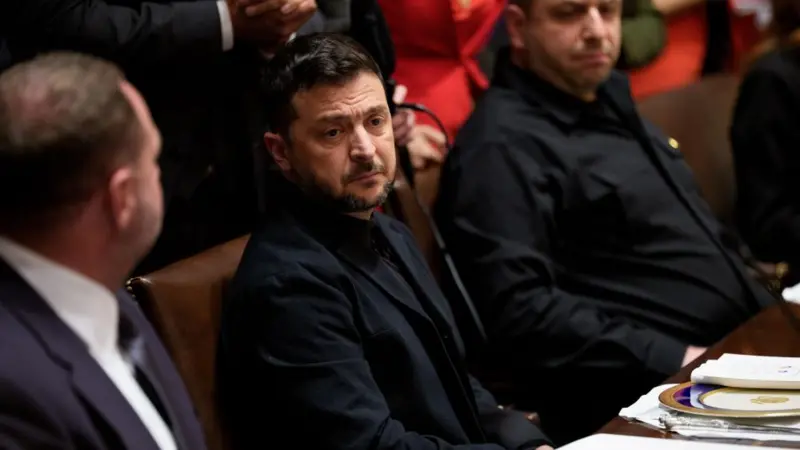
Zelensky’s response has been restrained, at least publicly, though the weight of the predicament is already shaping his posture. In an unusually sombre address this week, he acknowledged that rejecting the plan could cost Ukraine the very tools that allow it to survive: American-supplied air defence missiles, battlefield intelligence that tracks Russian movements in real time, emergency financing that keeps the Ukrainian state functioning day to day.
A complete break with Washington would reverberate far beyond the front lines. It would not only weaken Ukraine’s military, but also signal to Moscow that the West is fragmenting, that Europe and America are no longer united, and that Kyiv might soon be left to bargain alone. For a country fighting a larger, wealthier, nuclear-armed invader, even the hint of abandonment can be as destabilising as a missile strike.

European governments, meanwhile, are experiencing their own reckoning. For decades, European security has rested on the implicit assumption that the United States would defend the continent in moments of crisis. Now they must contemplate a future in which Washington becomes merely an arbiter, not a protector. Diplomats contrast the steady tone of Geneva with the impatience radiating from Washington and worry that the United States may be prepared to reward Russia’s territorial aggression while expecting Europe to help enforce the bargain. Several officials admitted privately that this moment has long been feared, the day the U.S. begins to behave as a distant power choosing which conflicts merit its engagement.
That Russia stands to benefit from such a shift is obvious, even to those designing the plan. If Ukraine signs the American proposal, Russia gains territory, limits Ukraine’s defences, and faces no meaningful punishment. If Ukraine refuses and Washington withdraws, Russia gains something potentially more valuable: the collapse of Western unity. Either outcome pushes Kyiv closer to disadvantage and leaves Europe struggling to contain the reverberations of a war that has already redrawn parts of the map.
In the official briefings, American diplomats emphasise progress, refinement, and “meaningful dialogue.” They insist the plan remains adjustable and that only final approval from both presidents will determine its fate. But the reality beneath those phrases is stark.
One conversation is unfolding in Geneva, slow and diplomatic. Another conversation is being delivered from Washington, fast and transactional. One seeks compromise, the other delivers consequences. Between them, sits Ukraine, a country fighting to survive while its most powerful supporter tests the limits of its desperation.
Peace may eventually come, but it is no longer clear whose interests that peace is meant to protect.
by I. Constantin