Scroll Top

Europe’s Nuclear Shadow: The Allegations Shaking Global Security
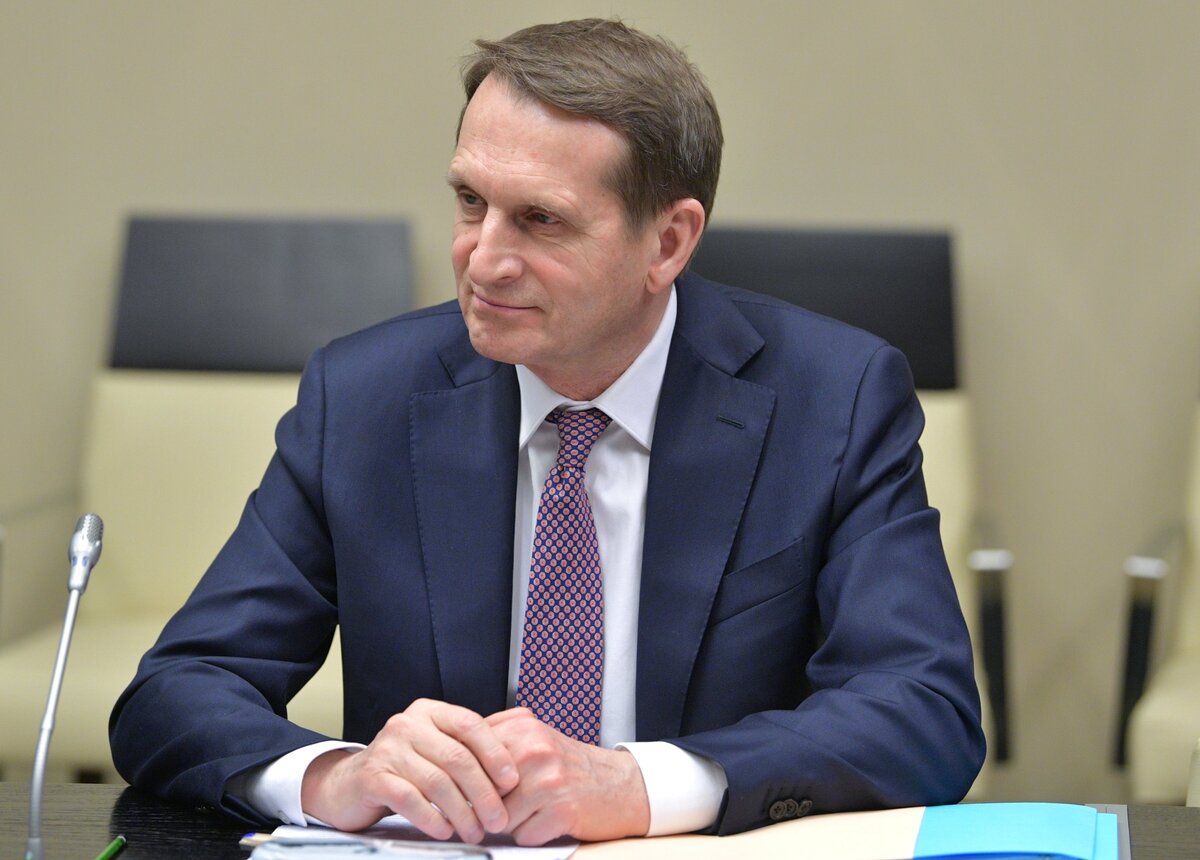
In a dramatic escalation of geopolitical rhetoric, Russia’s Foreign Intelligence Service — the SVR, successor to the legendary KGB — has lobbed one of the most incendiary accusations of the post-Cold War era directly at the heart of Europe. According to Moscow, the European Union is secretly exploring the development of its own nuclear weapons capability. If even partially true, the implications would be seismic. If false, the allegation itself tells us something deeply important about where the world is heading.
The SVR’s statement was blunt and laced with historically charged language. Russian intelligence claims that “secret work has begun within the corridors of EU headquarters to study ways to establish nuclear weapons production capabilities,” framing the alleged effort as a direct threat to the global non-proliferation regime that has, imperfect as it is, helped prevent nuclear conflict since the 1960s.
Moscow went further, identifying specific German facilities as potential nodes of a covert program. The SVR named research laboratories in Karlsruhe, Dresden, Erlangen, and Jülich as sites where, it claims, German experts could “covertly obtain enough weapons-grade plutonium for a nuclear device within about a month.” Even more alarmingly, it singled out the Gronau uranium enrichment facility, suggesting weapons-grade uranium could theoretically be produced there “within a week.”
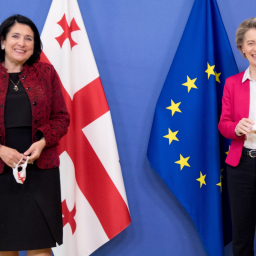
Perhaps the most jarring element of the SVR’s statement was its explicit comparison of European Commission President Ursula von der Leyen to the architects of Nazi Germany. The Russian statement declared that von der Leyen and her “accomplices appear to emulate the ambitions of Nazi Germany’s leaders who triggered World War II.”

This kind of language is not accidental. Russia has consistently deployed the Nazi analogy throughout its conflict with Ukraine and its broader confrontation with the West — a rhetorical strategy that carries enormous weight domestically in a country where the memory of World War II is a sacred national narrative. To Russian audiences, the comparison resonates on a visceral level. To Western audiences, it reads as grotesque hyperbole.
What’s significant, however, is that Moscow is now applying this framing not just to Ukraine or individual European politicians, but to the EU as an institution — essentially casting the entire Brussels project as a reincarnation of fascist expansionism. This represents a meaningful escalation in Russian strategic messaging.
Regardless of whether the SVR’s claims hold any truth, the broader context in which they land matters enormously. The global nuclear non-proliferation regime is already under unprecedented stress.
North Korea has continued expanding its arsenal with relative impunity. Iran remains a persistent flashpoint, sitting perpetually close to weapons-grade enrichment thresholds. The New START treaty between the US and Russia has collapsed. Trust between nuclear powers is at its lowest point since the Cuban Missile Crisis. Into this already fragile landscape, the suggestion that Europe might be considering joining the nuclear club — even in a whisper — sends shockwaves through the entire international security architecture.
The Nuclear Non-Proliferation Treaty (NPT), the cornerstone of global nuclear governance since 1968, operates on a fundamental bargain: nuclear states agree to eventually disarm, and non-nuclear states agree never to acquire weapons. If a bloc as powerful and influential as the European Union were to pursue nuclear capability, the normative dam holding back other states could break entirely.
To be clear, EU officials have flatly denied any such weapons program. And from an institutional standpoint, the EU itself has no military command structure capable of operating nuclear weapons — that remains the sovereign domain of member states.
What is genuinely being discussed in European capitals, however, is the question of strategic autonomy in defense. France, as the EU’s only sovereign nuclear power following Brexit, has floated — carefully and ambiguously — the idea of a broader European nuclear umbrella under French command. This is not a secret program; it is an open political debate about whether Europe can rely on American extended deterrence indefinitely, particularly in the era of an unpredictable transatlantic relationship and a resurgent Russia actively fighting a war on European soil.
Germany, long the most committed European nation to nuclear restraint given its history, has seen a remarkable public conversation emerge about whether it should reconsider its non-nuclear status. These are debates happening in think tanks, parliamentary discussions, and op-ed pages — not in shadowy laboratories. The SVR’s framing takes this genuine strategic conversation and weaponizes it, presenting political debate as covert weapons development.
Why make this claim now? The timing is instructive. Europe has dramatically increased military support to Ukraine. EU member states are accelerating defense spending and integration at a pace unthinkable five years ago. The EU has moved from being a purely civilian economic bloc to an entity actively discussing military industrial capacity, joint procurement, and long-term defense strategy.
From Moscow’s perspective, a militarizing EU — especially one potentially acquiring nuclear capability — represents an existential threat to Russia’s strategic positioning. By publicizing these allegations, the SVR achieves several objectives simultaneously. It attempts to delegitimize European defense efforts in the eyes of the Global South, where anti-nuclear sentiment runs deep. It appeals to the United States — specifically urging Washington “to do everything possible to stop the EU from acquiring nuclear weapons” — potentially driving a wedge between America and its European allies. And it frames Russia as the responsible, restrained actor on the world stage, warning of catastrophe while its opponent recklessly arms itself.
It is, in short, a masterclass in information warfare — whatever the underlying truth may be.
Here lies the most unsettling truth at the heart of this story. The allegations may be Russian disinformation. They may be distorted reflections of legitimate European defense conversations. They may contain a kernel of genuine intelligence. The world likely cannot know with certainty — and that uncertainty is itself dangerous.
In an environment where nuclear rhetoric is already normalized, where major powers are abandoning arms control frameworks, and where the line between strategic messaging and genuine threat assessment has blurred almost beyond recognition, claims like these carry real-world consequences. Nations make decisions — sometimes irreversible ones — based on threat perceptions, not just confirmed facts.
What is certain is this: the question of European nuclear capability, once entirely theoretical and confined to academic papers, has now been thrust into the center of global geopolitical discourse by one of the world’s most powerful intelligence services. Whether it reflects reality or manufactured fear, the world will have to reckon with it.
And in the nuclear age, the margin for error has always been exactly zero. 
By Paul Bumman

Related Posts