“We Have Weeks, Not Months”: IEA Chief Warns a Re-Closed Strait of Hormuz Could Tip the Global Economy Into Crisis
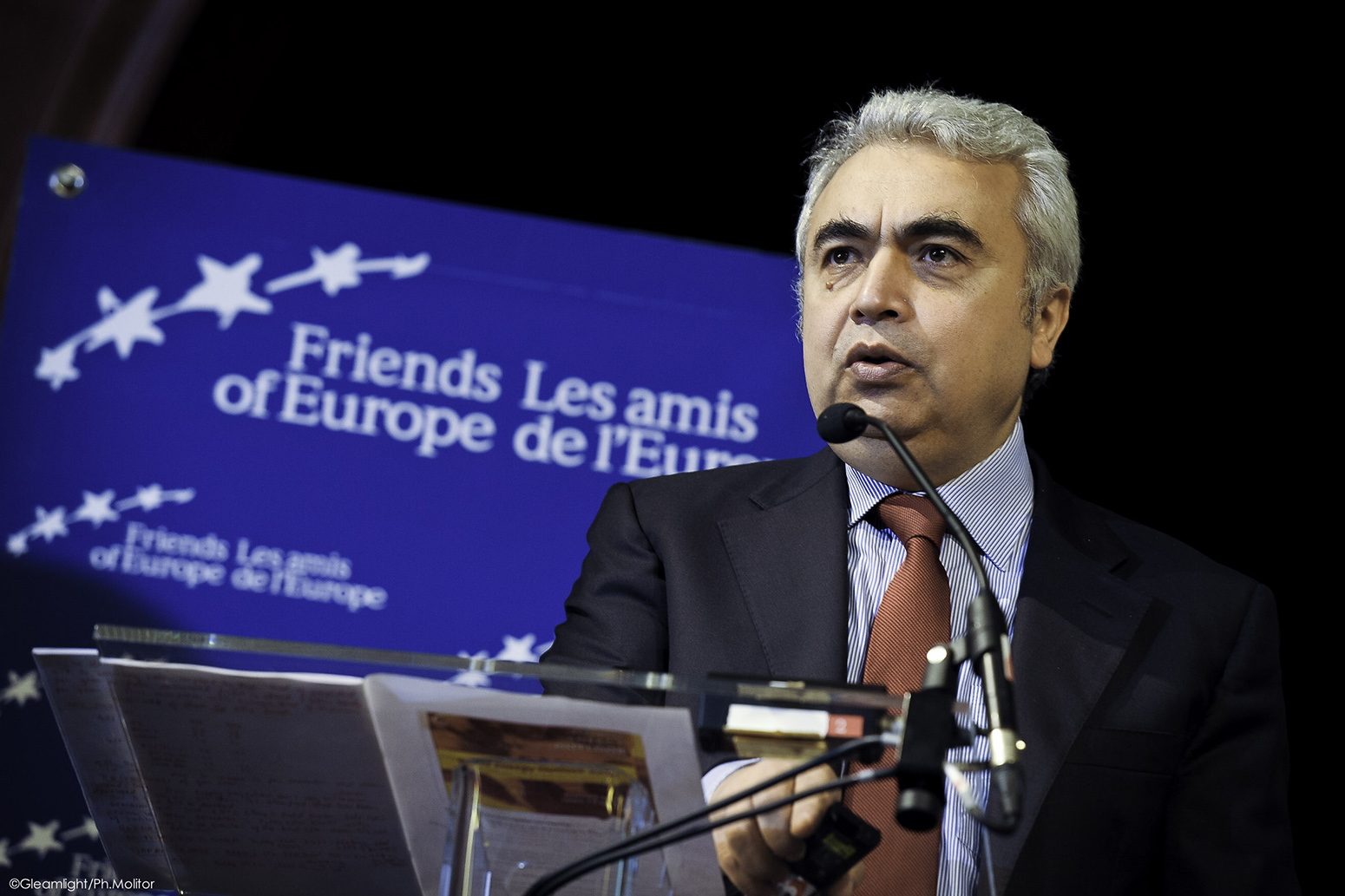
When the head of the International Energy Agency starts measuring the world economy’s endurance in weeks, it is worth listening. Speaking on the sidelines of the Aspen Security Forum in Colorado on Wednesday, IEA executive director Fatih Birol warned that if the conflict now blocking the Strait of Hormuz is not resolved within weeks, the global economy faces a fresh test it may not pass unscathed. “We are not talking about months, but weeks,” he said, after which the strait must be “completely open, unconditionally open.”
Markets, Birol told Bloomberg, are “nervous” and gripped by “great uncertainty” as attacks from both sides escalate, threatening shipments of oil, natural gas, fertilizers and other commodities through the waterway that, before the war, carried roughly a fifth of the world’s seaborne oil and a fifth of its liquefied natural gas.
The warning lands at a dangerous moment. Traffic through the strait has fallen sharply over the past week as vessels have come under attack and the United States has reimposed a blockade on Iranian shipping. Saudi oil loadings inside the Persian Gulf have dropped following strikes on tankers, and the International Maritime Organization has declared the strait too dangerous for commercial transit. The world, in other words, is watching the second closure of Hormuz in five months, and this time the shock absorbers that cushioned the first one are badly depleted.
The strait was first effectively shut on February 28, when the outbreak of war between the United States and Israel on one side and Iran on the other prompted Tehran to bar passage, attack merchant vessels and mine the waterway. What followed was, by the World Bank’s assessment, the largest disruption in the history of the oil market: global supply crashed by some 10 million barrels a day in March, Brent recorded its steepest monthly rise ever – peaking above $114 – and at one point roughly 2,000 ships and 20,000 seafarers were stranded in the Gulf.

Yet catastrophe was postponed, not cancelled, as the big three buffers did the work. Saudi Arabia and the UAE rerouted several million barrels a day through pipelines to the Red Sea and the Gulf of Oman. Strategic reserves in the US and other OECD countries were released to plug the gap. And demand simply collapsed, especially in Asia, where the IEA and national data showed consumption falling hard as prices bit, with some countries rationing fuel outright.
A US–Iran memorandum of understanding signed in mid-June appeared to end the acute phase: tankers began moving again, Brent slid back below $70 by early July, and banks started warning of a glut rather than a shortage. But the deal was fragile by design; a 60-day negotiating window, contested wording over who controls the strait, and an American naval blockade that Tehran regards as a casus belli. Last week’s exchange of strikes, triggered by an attack on a commercial vessel, has now shredded that fragile normal. Birol’s “weeks, not weeks-to-months” framing is a diplomat’s way of saying the truce’s grace period is spent.
The first closure was survived on borrowed resources, and the loan has not been repaid. Global oil inventories fell at a rate of roughly 5 million barrels a day through the second quarter; strategic reserves sit well below their pre-crisis levels; and the tanker fleet remains dislocated, with much of the recent traffic consisting of previously stranded cargoes rather than fresh supply. Analysts at Brookings framed the crisis from the start as a race between temporary buffers and the duration of the blockage. In February, the buffers were full. In July, they are not.
That is why a prolonged second closure carries genuine systemic risk. The channels are well mapped:
During the spring, Wall Street analysts and government officials openly discussed scenarios of $170 to $200 oil in the event of an extended shutdown, levels at which, by Bloomberg’s estimate, the hit to inflation and growth roughly doubles, producing a classic stagflationary shock: rising prices and falling output at the same time. Central banks that spent 2023–2025 wrestling inflation down would face an impossible choice between defending price stability and cushioning a downturn. Even the World Bank’s more conservative escalation scenario put Brent in a $95–115 range for 2026.
Crude gets the headlines, but diesel, jet fuel and LNG are where shortages hurt first. Europe was warned in the spring of looming diesel deficits; Qatar’s LNG infrastructure sustained missile damage that its owner says will take years to repair; and natural gas and fertilizer flows through Hormuz feed directly into food production costs worldwide. A second prolonged closure would revive all of these pressures simultaneously, with winter approaching in the northern hemisphere.

Birol was explicit about who suffers most. Wealthy importers such as South Korea and Japan have been hurt, but countries like Bangladesh, Pakistan and India are far more vulnerable: thinner reserves, weaker currencies, less fiscal room to subsidize fuel, and populations for whom energy and fertilizer prices translate quickly into food insecurity and social unrest. A Hormuz crisis is, in distributional terms, a tax collected disproportionately from the developing world. Europe sits in between: partially insulated by Atlantic supply, fully exposed to the global price.
War-risk insurance premiums that multiply per transit, rerouted voyages, hoarding, and the compounding effect of a Red Sea that remains hazardous mean the two great chokepoints of Eurasian trade are impaired at once. If the strait stays shut as buffers drain, the Brookings framework points to exactly the outcome markets fear: an energy price spike consistent with a global recession.
The deeper problem Birol’s warning exposes is political. Hormuz is no longer merely a waterway at risk; it has become an instrument of negotiation. Iran has demonstrated both the will and the means to close it, has extracted “tolls” from vessels seeking safe passage, and treats reopening as leverage against the American blockade. Washington, for its part, treats the blockade as leverage over Tehran. Each side’s pressure tactic is the other’s justification for escalation, the dynamic Birol politely calls “escalating attacks from both sides.”
The precedent should alarm every trading nation. If passage through the world’s most important energy corridor can be conditioned, priced and weaponized, the principle of freedom of navigation, already battered in the Red Sea, begins to unravel globally, with implications for every strategic strait from Malacca to Gibraltar. This is why Birol insists the strait must reopen not merely soon but unconditionally: an opening negotiated as a favor, revocable at will, leaves the global economy permanently hostage.
There are, it must be said, countervailing forces. The speed of June’s reopening surprised most forecasters; both Washington and Tehran have strong incentives to avoid the economic consequences of a long closure; demand has already proven more elastic than expected; and some analysts still see oversupply, not shortage, as the story of 2027 once flows normalize. A major crisis is a scenario, not a certainty.
But scenarios are precisely what the IEA was built for. The agency was founded in response to the 1973–74 oil shock, to coordinate emergency stocks among what are now 29 advanced economies, and its director has just signaled that the emergency toolkit is approaching its limits. When the institution created to manage oil crises says the clock is running in weeks, the message to chancelleries and central banks is not subtle: the window for diplomacy over the Strait of Hormuz is the same window standing between the world economy and its most serious test since the pandemic.
By I. Constantin
Sources: Agerpres/Bloomberg interview with Fatih Birol (Aspen Security Forum, July 15, 2026); US Energy Information Administration Short-Term Energy Outlook (July 2026); World Bank Commodity Markets Outlook (April 2026); Brookings Institution analyses (May–June 2026); Al Jazeera; International Maritime Organization statements.