Scroll Top

Ion Cristoiu: “The President should be suspended and dismissed.”
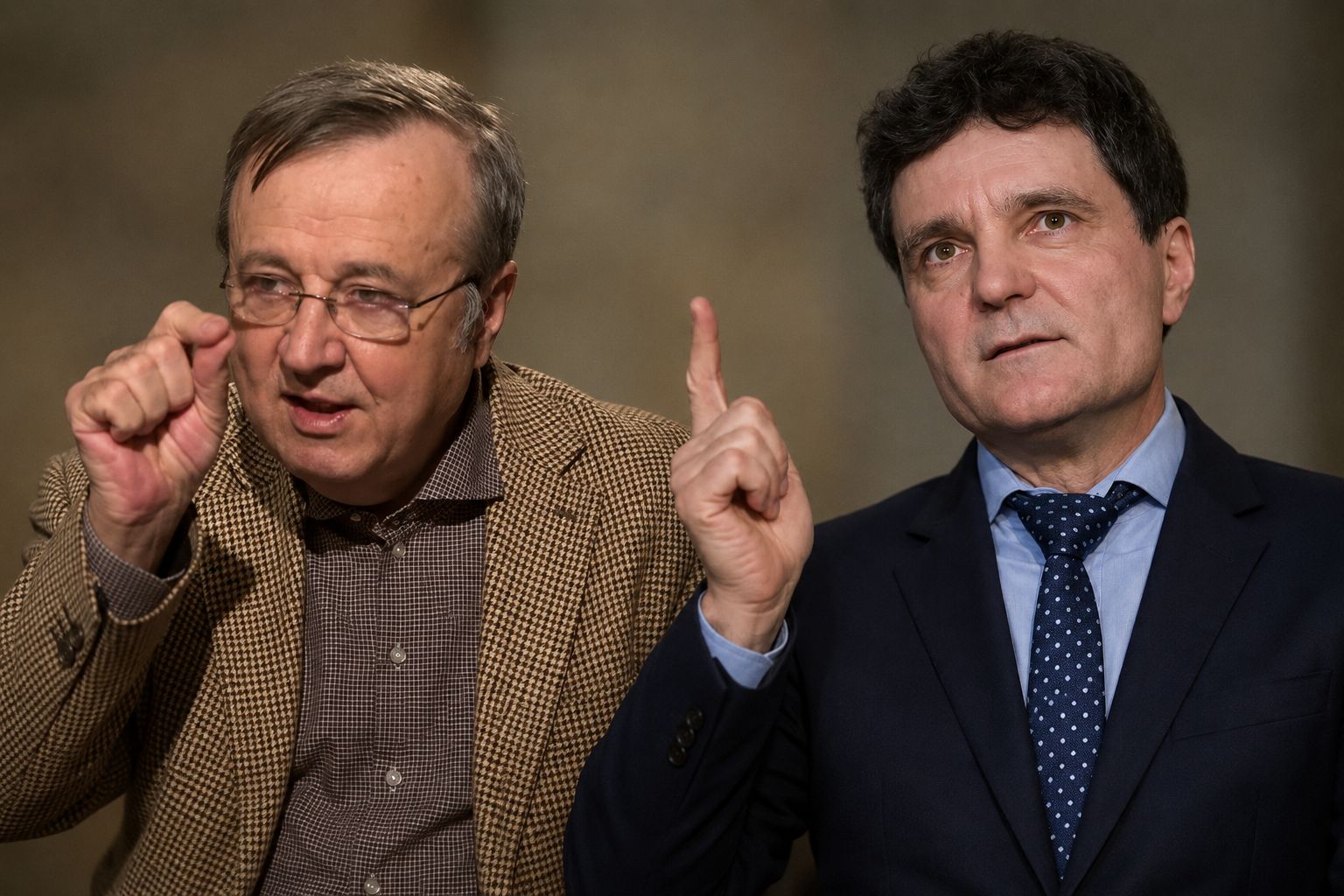
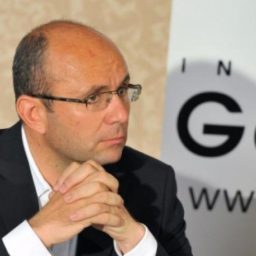
In the turbulent arena of Romanian politics, few voices carry the weight of Ion Cristoiu, the veteran journalist whose sharp analyses have shaped public discourse for decades. Now, Cristoiu has ignited a firestorm with his uncompromising call: Parliament must immediately suspend and ultimately dismiss President Nicușor Dan. His argument, delivered with characteristic precision and backed by direct evidence, centers on a single, explosive statement the president made during a Pro TV interview—one that Cristoiu believes reveals a dangerous overreach of executive power and a betrayal of democratic norms.
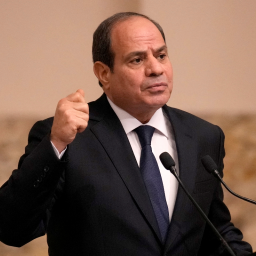
The controversy erupted when Nicușor Dan was pressed on why he had categorically ruled out the far-right Alliance for the Union of Romanians (AUR) from any future governing coalition. Rather than offering a measured defense of pluralism or coalition-building, Dan responded with a nervous laugh and a telling pivot. “And… haha… being here—that is, at the ‘Coalition of Will’—given the recent discussions regarding the 21st package of EU sanctions against Russia amidst the war in Ukraine… What would it be like if Romania, out of the blue, had a government where some ministers opposed the sanctions package against Russia?” He went on to frame the exclusion of AUR as essential to preserving Euro-Atlantic confidence in Romania’s pro-Western path, warning that any deviation would be “disastrous.”

Cristoiu sees this not as prudent statesmanship but as a presidential intrusion into parliamentary territory. By explicitly tying the exclusion of a major opposition party to yesterday’s closed-door talks on EU sanctions, Dan effectively signaled that domestic political decisions must be subordinated to maintaining favor with Brussels and Washington. For Cristoiu, this crosses a constitutional line. The president, he contends, has no business dictating the composition of future governments based on foreign-policy litmus tests—especially when doing so publicly undermines the very democratic process Romanians elected him to uphold.
The journalist’s evidence-based case rests on the transcript itself. Dan did not merely express general concerns about stability; he directly connected the “Coalition of Will” discussions on the 21st sanctions package to the permanent sidelining of AUR. In Cristoiu’s view, this transforms a legitimate policy debate into an instrument of exclusion, eroding public trust and inviting accusations that Romania’s sovereignty is being outsourced to external actors. Parliament, Cristoiu insists, possesses both the constitutional tools and the moral duty to act decisively—suspending the president to protect the integrity of the political system before further damage occurs.
Beyond the legal arguments, Cristoiu warns of deeper risks. Romania already faces economic pressures, energy challenges, and regional tensions. Treating the exclusion of an entire political force as a non-negotiable requirement for maintaining “confidence” abroad risks alienating large segments of the electorate who feel their voices are being silenced in the name of geopolitical alignment. The president’s candid admission, Cristoiu argues, has handed Parliament the clearest possible justification for intervention.
Whether lawmakers will heed this call remains uncertain, but Cristoiu’s intervention has reframed the conversation. In a moment when Romania’s place in Europe is being tested daily, the veteran commentator’s stark prescription—“Suspend and dismiss”—serves as both a warning and a challenge to those who hold the keys to constitutional accountability. 
By Roberto Casseli

Related Posts