The Islands Behind the Fairytale: A Portrait of Cabo Verde, the Small Nation Who Won the Hearts of Millions
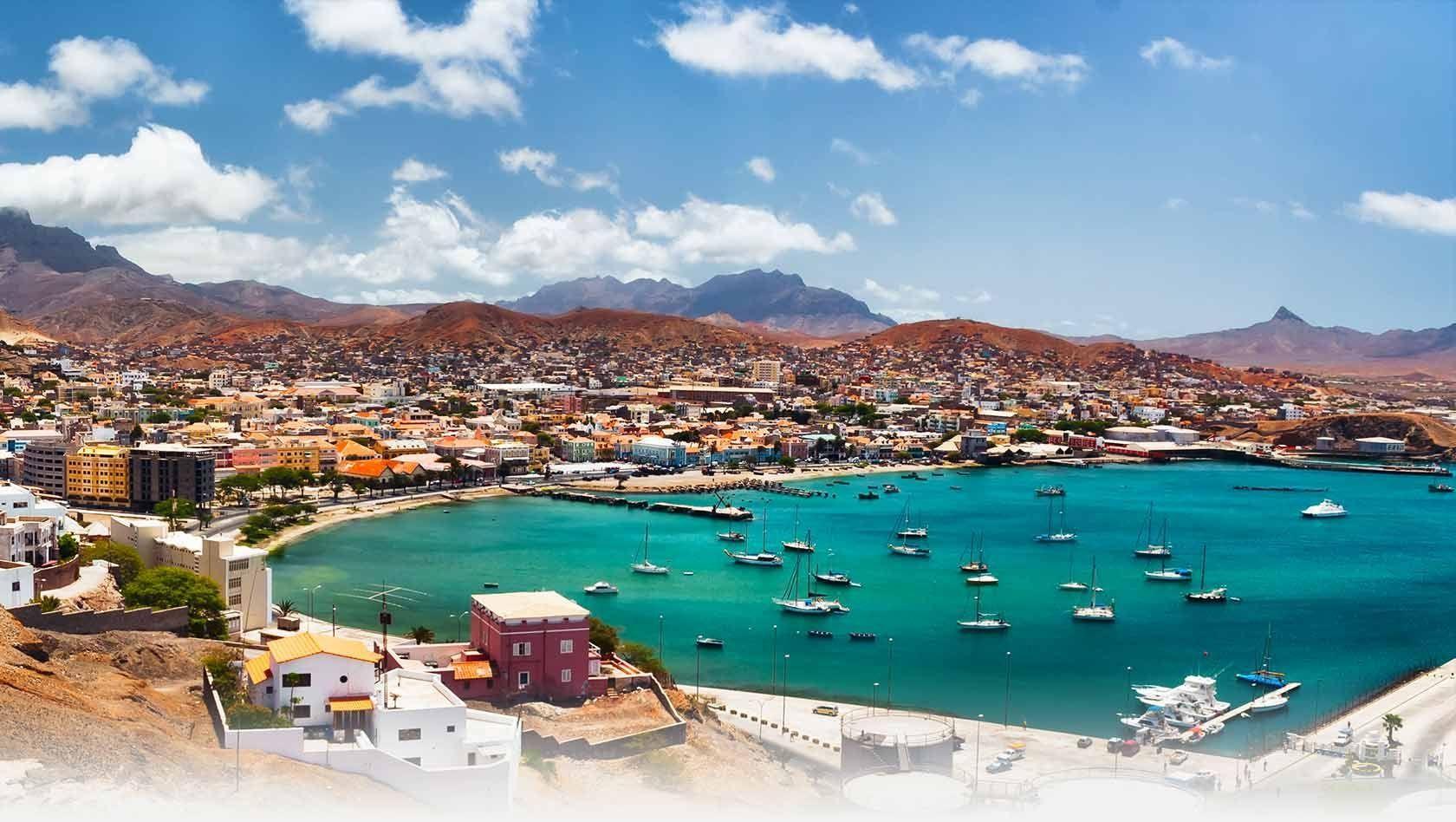
Half a million people, ten volcanic islands, no fresh water rivers and no natural resources to speak of . Yet, it has recently made headlines by being the country that pushed Argentina to the brink in the World Cup knockouts. Cabo Verde is one of Africa’s quietest success stories. This is a profile of the archipelago the world suddenly wants to know.
For 120-plus minutes on July 3rd in Miami, the smallest footballing nation ever to reach a World Cup knockout stage twice pulled level with the reigning world champions, before an extra-time goal finally gave Argentina a 3–2 escape that broadcasters called the narrowest brush with the biggest upset in tournament history. The Blue Sharks went home unbeaten in regulation time against three former world champions, a scoreless draw with Spain, a 2–2 thriller against Uruguay, and that unforgettable night against Lionel Messi’s side.
The world fell for the fairytale. Fewer people could find the country on a map. So here it is: the history, geography, politics and economy of the Republic of Cabo Verde, a nation whose real story is, if anything, more improbable than its football.
Cabo Verde is an archipelago of ten volcanic islands (nine inhabited) scattered across the Atlantic roughly 570 kilometers off the coast of Senegal, at the latitude where the Sahara’s dry winds blow out to sea. The name – “Green Cape” – is one of history’s small ironies: the islands are mostly arid and mountainous, chronically short of rainfall, with no permanent rivers and a constant struggle for fresh water. Pico do Fogo, an active volcano rising nearly 2,900 meters on the island of Fogo, last erupted in 2014–15, burying two villages.
The land, in other words, gave its people almost nothing: no oil, no minerals, precious little arable soil. What geography did give Cabo Verde was position: a crossroads in the mid-Atlantic, on the sea lanes between Europe, Africa and the Americas. That position made its fortune, and its tragedy.
The islands were uninhabited when Portuguese navigators arrived in 1456–1462, and the settlement they founded on Santiago – Ribeira Grande, today’s Cidade Velha, a UNESCO World Heritage site – became the first permanent European town in the tropics. It also became one of the busiest marketplaces of the transatlantic slave trade. For centuries, Africans captured on the mainland were brought to the islands, baptized with Portuguese names to fetch higher prices, and shipped onward to the Americas. Out of that brutal encounter emerged the Creole society that defines Cabo Verde to this day: a mixed population, a distinct language (Kriolu, spoken alongside official Portuguese), and the melancholic morna music that Cesária Évora, the “Barefoot Diva,” carried to global fame.
Portuguese rule lasted more than five hundred years, and its final act was among its darkest: at Tarrafal, on Santiago, the Salazar dictatorship operated a notorious concentration camp, first for Portuguese communists (1936–1954), then for anti-colonial prisoners from the African territories (1961–1974). The camp’s Resistance Museum is now itself a candidate for UNESCO recognition.
Independence came in 1975, won not on the islands but through the guerrilla war waged in Guinea-Bissau by the PAIGC, the movement founded by Amílcar Cabral, an agronomist, poet and revolutionary theorist assassinated in 1973, two years before the flag he fought for was raised. Cabral remains one of Africa’s most influential political thinkers, quoted from Cape Town to academic seminars worldwide, and his portrait still watches over Praia’s streets.
Here the story turns genuinely exceptional. After fifteen years of single-party rule, Cabo Verde held free elections in 1991 and handed power peacefully to the opposition, one of the first such transitions in Africa. It has never looked back. Power has alternated regularly between the two main parties, the African Party for the Independence of Cabo Verde (PAICV) and the Movement for Democracy (MpD); elections are competitive and credible; the press is free.
The result is that this half-million-person republic routinely ranks among the top two or three African countries, and above several EU members, in indices of democracy, press freedom and good governance compiled by Freedom House, the Mo Ibrahim Foundation and others. The current president, José Maria Neves, and prime minister, Ulisses Correia e Silva, come from opposing parties and cohabit without institutional crisis, a sentence that cannot be written about many countries anywhere.
Its foreign policy matches its geography: a bridge. Cabo Verde maintains a special partnership with the European Union, deep ties to Portugal and the Lusophone world, membership in the African Union and ECOWAS, and warm relations with the United States, home to one of its largest diaspora communities. On the continent’s great emerging debate, reparations for slavery and colonialism, Praia aligns with the African Union’s push, and its culture minister has personally endorsed reparations, even as a 2023 €12 million debt-for-climate swap with Portugal struck some critics as a substitute for the harder conversation.
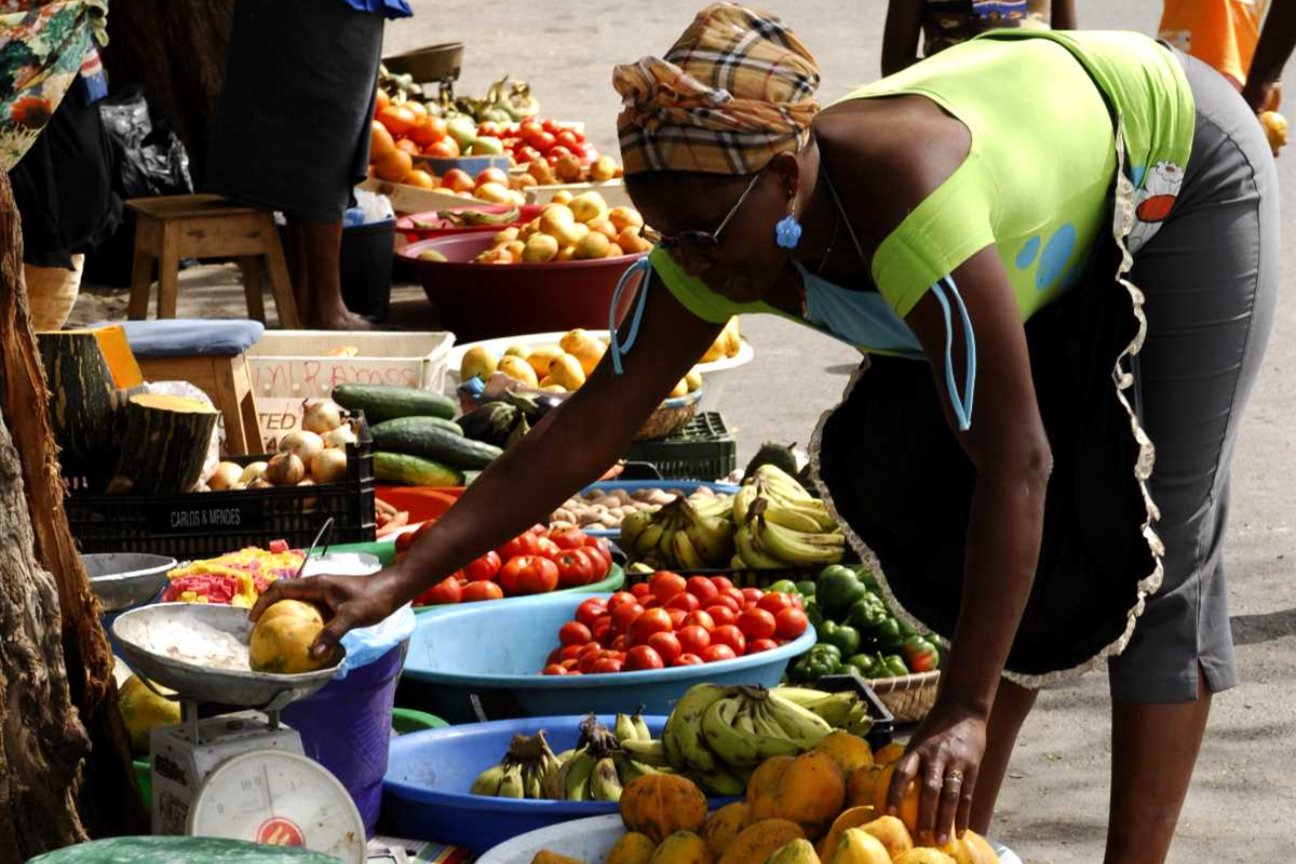
Cabo Verde’s economic story can be told in one statistic: the diaspora, at roughly a million people, is nearly twice the resident population. Drought, famine and the barrenness of the islands drove emigration for two centuries, to New England’s whaling ports, to Lisbon and Rotterdam, to Dakar and Luanda. Today, more Cabo Verdeans live in the United States, Portugal, the Netherlands, France, Brazil, Senegal and Angola than at home, and their remittances, consistently above 10 percent of GDP, are a structural pillar of the economy. Even the World Cup squad embodied this: six of the eleven who started the final group game were born abroad, and one defender was famously recruited via LinkedIn.

With no commodities to sell, the country sells services and stability. Tourism, the beaches of Sal and Boa Vista draw sun-seeking Europeans year-round, accounts for around a quarter of GDP and drove growth that made Cabo Verde one of Africa’s development stars: in 2007 it became only the second country ever to graduate from the UN’s “least developed” category. The escudo is pegged to the euro, inflation is low by regional standards, and human-development indicators: literacy, life expectancy, child health, lead continental rankings.
The vulnerabilities are the mirror image of the strengths. An economy built on tourism and remittances is hostage to other people’s business cycles, as the pandemic proved brutally when visitor numbers collapsed and public debt soared toward 150 percent of GDP before easing. Unemployment, especially among the young, remains stubborn; the islands import most of their food and all of their fuel; and climate change threatens a state whose existence is defined by scarce water. The government’s bet for the next decade is the “blue economy” – fisheries, port services, ocean renewable energy – plus digital services and its perennial asset: a stable, educated, globally connected population.
“We represent our island, but we also represent Africa,” coach Pedro “Bubista” Brito said before the Argentina match, and across the continent and diaspora, the Blue Sharks were embraced exactly that way. Yet at home, as reporting from the islands has shown, the relationship with African identity is layered and sometimes uneasy. Five centuries as Portugal’s “laboratory,” in one sociologist’s phrase, left behind colorism, Portuguese names imposed on African ancestors, a school curriculum long tilted toward European history, and a segment of society that identifies more readily with Lisbon than with Dakar. Cultural figures argue the country must “decolonise its soul” and recover stolen memories; others point out that the Creole synthesis, neither simply African nor simply European, but something new, is the identity, and its greatest cultural export.
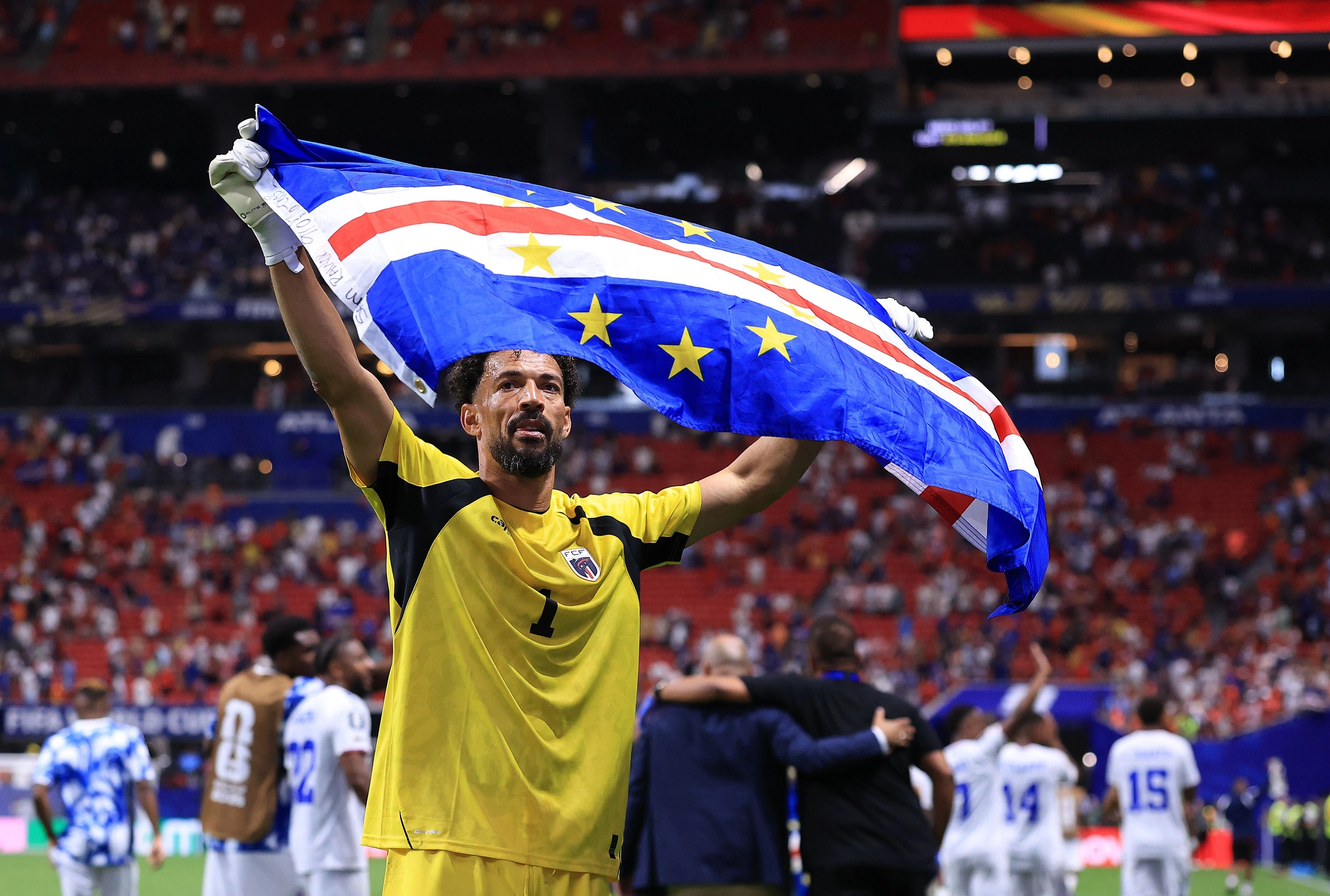
What is not in dispute is what the summer of 2026 did. For a few extraordinary weeks, a nation smaller than a mid-sized European city held the attention of billions, its 40-year-old goalkeeper Vozinha became a global star, and the name Cabo Verde stopped being a footnote. The football team was built the way the country was built: from scarcity, from the diaspora, from discipline and improbable belief.
The fairytale, it turns out, was never just about football. It was the national biography, compressed into ninety minutes…plus extra time.
By I. Constantin
Sources: Sky Sports, ESPN, NPR (World Cup coverage, June–July 2026); The Guardian reporting from Tarrafal and Mindelo; World Bank and UN development data; Freedom House and Mo Ibrahim Foundation governance indices.