Scroll Top

The US midterm elections are coming. Who will win?
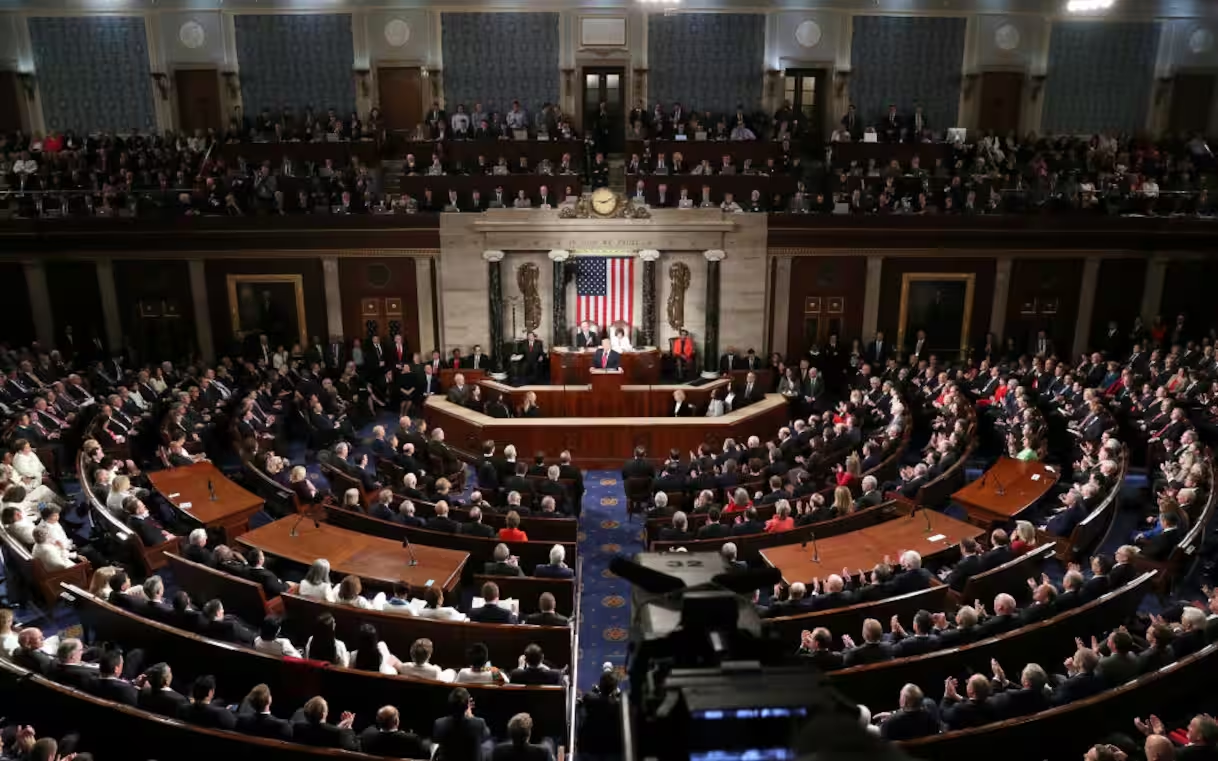
The most anticipated event of 2026 is drawing ever closer: the midterm elections. While Democrats are attempting to challenge control of Congress, the Trump administration appears focused on historic battles involving the Middle East and foreign tariffs. Three months before the elections, the political landscape appears rapidly evolving and increasingly complex to decipher. Data from major opinion polls indicate a trend that is attracting the attention of analysts, international media, and political strategists: Donald Trump’s support for him is showing signs of slowing, while uncertainty about the Republican Party’s ability to maintain control of Congress is growing.
The cost of living, starting with the price of gasoline rising above $4 a gallon, and the unpopular war against Iran, which has prompted the US administration to change the system for counting American deaths and injuries, amid controversy from the media and lawmakers. This is a way to muddy the waters regarding the true course of the conflict against Tehran, given that the casualties among US forces are a source of further discontent with the administration. But above all, President Donald Trump’s approval rating has plummeted to 30% and is also in crisis among his supporters and the Maga people. All these factors are increasing the White House’s concerns about the midterm elections of November 3, 2026, where polls now show Democrats ahead in voter preference for both houses of Congress.

The contest will see the entire House of Representatives (435 elected representatives) and a third of the Senate (33 out of 100) renewed, while many states—including Texas, considered unusually contestable and no longer a sure bet for the GOP—will choose their governors. However, while winning the House is likely, the Democrats’ task is more difficult in the Senate, having to snatch at least four seats and retain those already held. Looking beyond the midterms, for the 2028 presidential election, Representative Alexandria Ocasio-Cortez, close to Bernie Sanders, is soaring in the polls and is leading the party in the key state of New Hampshire. However, she has not yet resolved her doubts about a possible candidacy. Behind her is California Governor Gavin Newsom, whom Trump has said he would like to see “in handcuffs.” On the other side of the divide, Trump recently announced, at the White House Correspondents’ Gala, his intention to run for a third term. This option, however, is prohibited under the 22nd Amendment to the Constitution. Also in the Republican camp, Vice President J.D. Vance has not officially announced his candidacy, despite consistent rumors in recent months that he is in the running for the White House.
Polls from Emerson College and Fox News indicate the trends for the midterm elections. Compared to last month’s poll, Democrats have gained three points and Republicans two. The women’s vote is crucial to the Democrats’ lead, as it rises to 27 points among female voters, while it drops to 5 points among male voters. The Emerson College Polling poll isn’t the only one showing Democrats ahead in the November elections, but it is the one with the largest, double-digit lead. Decision Desk HQ gives Democrats a 4-point advantage, the You Gov/The Economist poll gives them a 5-point lead, and the Morning Consult poll gives them a 3-point lead. Finally, pollster Nate Silver’s average shows Democrats leading by 6 points. The midterm elections, a traditional referendum on the incumbent president’s performance, bring losses to the party occupying the White House. During his first term, Trump saw the Democrats win 47 House seats at the halfway point of the 2018 midterms.
Republicans are hoping to paint their opponents as too progressive, given the left-wing advance in the recent Democratic primaries, the vanguard of the “communist threat” in Trump’s narrative. While winning the House is likely, the Democrats’ task is more difficult in the Senate, where they must snatch at least four seats and retain those already held. The fight is focused on individual challenges: for example, Jon Ossoff, a Democratic star who distinguished himself in the recent Senate clash with Pete Hegseth over the Iran war, against Mike Collins in Georgia. Or James Talarico against Ken Paxton in Texas, and Troy Jackson, set to replace Graham Platner, who retired after sexual assault allegations, against incumbent GOP Senator Susan Collins in Maine.
The most significant development is the growing fragmentation of the independent electorate, historically decisive in midterm elections. This segment, often oscillating between the two major parties, now appears more critical of the Republican leadership, and particularly Donald Trump.
According to political analysts, the key factor is not only the former president’s personal popularity, but also the general perception of his economic stability, institutional governance, and legislative priorities.
In this context, polls don’t just represent numbers, but a dynamic snapshot of a country preparing for a new phase of high-intensity political confrontation.
By Domenico Greco

Related Posts