Scroll Top

Romania will achieve political and administrative stability only after the “great division” of its valuable assets among foreign entities takes place. Who will decide on the DIVISION?
To explain coherently yet concisely what I stated in the title—even if it strikes you as incredibly dramatic—I will take a brief look at actual recent history, not the version taught in schools. Let me remind you that the Cold War—during which we, Romania, belonged to the Soviet camp—lasted over forty years. It began shortly after World War II; the events of 1989 were, of course, a turning point, and the USSR dissolved in 1991. This Cold War ended in an unconventional manner, without a peace treaty. In a way, this mirrored the aftermath of World War II—which determined the post-1945 world order yet lacked a solid, comprehensive peace treaty. Germany was not included in any treaty; instead, it was partitioned. Even today, for instance, Russia and Japan have no peace treaty following World War II. (Yes, indeed—that explains the situation regarding the Kuril Islands). Having ended without a peace treaty, the Cold War—to return to that subject—has left its mark. It has left traces in the past, continues to do so in the present, and will do so in the future.
How did the Cold War end? Through the betrayal of the USSR, orchestrated by the treacherous regime of Mikhail Gorbachev. We know what happened: the leaderships of the communist countries within the Warsaw Pact capitulated. All the communist leaders complied in the face of threats. But not Nicolae Ceaușescu. And because Nicolae Ceaușescu and his regime refused to go along with this betrayal by Gorbachev—for that is how it was perceived—he was killed, following a sham, hastily conducted trial. He was killed and tried on Moscow’s orders—orders conveyed on Gorbachev’s behalf by Eduard Shevardnadze, the former Soviet Foreign Minister. Shevardnadze passed this order on to his old university friend, Ion Iliescu. All those who carried out the execution of the Ceaușescu couple were Russian agents of various stripes: from Ion Iliescu to Virgil Măgureanu—the future head of the SRI—and Silviu Brucan, a multiple agent for the Mossad, CIA, and KGB (he himself had lost track, but he was certainly a Russian agent as well). That is the story: Romania was handed over, lock, stock, and barrel.
I return, then, to the unsigned peace treaty. For every victor must be compensated, and the victor in the Cold War was this “Collective West.” For Russia, they had envisioned an accelerated plundering—a looting carried out by the international “economic hitmen” who swarmed across Russia during the Boris Yeltsin era. However, Putin arrived, put a stop to this looting, recovered the plundered assets, and saved the country—Russia. Some former communist countries fared better—Poland, for instance. Others fared poorly or very poorly—with Romania suffering the worst fate of all. Yet, to enable this plundering and ensure the Western victors were compensated, all these communist nations were integrated into NATO and the EU. In Romania’s case, NATO integration meant not only looting through fraudulent contracts but also, effectively, the loss of national defense—a capability we now speak of as being essential. Under previous regimes, that defense system was dismantled without hesitation, upon NATO’s orders. You cannot defend yourself; you cannot protect the assets others are taking from you. EU integration, I remind you, took place only after Romania was effectively coerced into it, and after traitorous politicians—led by Adrian Năstase and Ion Iliescu—sanctioned fraudulent privatizations: SIDEX, PETROM, gas and electricity distribution networks, the banking sector—everything, absolutely everything of note at the time (and the list is long)—was handed over to the West, the victor of the Cold War, in the absence of a peace treaty. And so it was that we—Romania and other former communist states—paid war reparations in accordance with the status of a defeated nation; a status we acquired, of course, as a result of being handed over by the USSR—a regime whose leader, Gorbachev, betrayed all its communist partner countries.

Let us return to current events. Throughout this period—spanning nearly 20 years of European integration and over 20 years of NATO integration—the West has discovered just how wealthy Romania actually is. Because intelligence services were infiltrated and political leaderships were treacherous, a decision was made—effectively within the last decade—to carve up Romania’s valuable assets among Western foreign entities. Make no mistake: Romania possesses—and has retained—many valuable assets. I can give you a quick example: just consider how we were suddenly deprived of our Black Sea gas—a resource we hoped would make us wealthy, turning us into the “Dubai of Eastern Europe.” Or, on a smaller scale, look at what happened today with the Mangalia Shipyard, where the privatization price was (or is set to be) slashed in half. It is a matter for the courts; that is where things are heading, and ultimately, it will likely be given away for free. The plan devised over the last decade—orchestrating this massive carve-up and total plundering of Romania—was to finalize the distribution of Romania’s assets to the West just as the terms of Iohannis “the Traitor” came to a close (those ten years during which he led and betrayed us). Western powers were to be satiated—led, of course, by Germany and Austria (Iohannis’s axis), alongside other Western nations joining the “feast.”
The war in Ukraine, however, upset their calculations. Since 2022, it has not been possible to proceed with the major division of Romania’s assets. And I return to the headline, friends—speaking of Romania’s leadership, which is unstable, and its government, which is a traitorous one. It is precisely because of this issue regarding the division of Romania’s assets that the government problem remains unresolved: crises—insurmountable energy crises, for instance—are manufactured (just look at this past summer). Against the backdrop of such crises, Romania suffers a profound economic decline, and the prices of any state or private assets plummet in turn. When there is trouble, a crisis, or a government crisis, the backdrop of this multifaceted turmoil makes it far easier to stage the urgent alienation of these valuable assets—ostensibly to “save” them. I can see it happening already.
So, Romania—that “poor, rich country”—is in a real bind. All Romanians feel this, even if they cannot quite explain how or foresee what the future holds.
As for the question of who will handle the new division of power following Iohannis’s terms: well, regarding Romania—not on a global scale, but locally—the division will be determined by the winner of the new war. Which war? In our region’s case, the war in Ukraine. That will be the primary deciding factor. What are the opposing sides in the Ukraine war? Russia, clearly. It is equally clear that China stands with Russia—and I won’t even list other potential allies with interests in Romania, including Turkey, or covert allies. On the other side stands the Collective West, battling Russia. But this is a Collective West *without* the USA—which stepped back and withdrew during the Trump administration. The USA is merely the referee. Therefore, the division of power will be carried out by the winner of the Ukraine war—which is why you need to pay attention—and it will be based on the new Black Sea geoeconomic formula established at the war’s end, as well as the newly imposed world order. That is the fundamental framework for understanding the situation.
Who will manage this division of power in Romania? No one new. It will still be the *Securitate* types—both the new guard and, especially, the old guard, along with their descendants (including those in USR, their offspring). That is why they want a seat at the table; they want to remain in power. All these old Securitate operatives endorsed every harmful event that has taken place from 1989 to the present day: from the killing of Nicolae Ceaușescu—carried out on Soviet, or rather Russian, orders following a coup d’état also orchestrated by Gorbachev’s Russians—to all the privatizations and every other disaster. They amassed wealth on a scale unprecedented in former communist countries, yet their fortunes remain hidden; billions—or even tens of billions—sit in the accounts of families belonging to such Securitate figures.
So, in conclusion—and to look at things positively—we ought to remind Vladimir Vladimirovich Putin that, as Russia’s leader, he owes a debt to Romania, because his country—specifically the Gorbachev regime—betrayed us in 1989. It is worth reminding Vladimir Vladimirovich Putin of this, especially given his clearly stated public view that the two greatest traitors in Russia’s recent history—over the last century—were Vladimir Ilyich Lenin (I won’t dwell on the details here, though you can ask me about them another time) and, above all, Mikhail Gorbachev. In Putin’s view, the suffering Russians endured after 1991 was the consequence of that great betrayal by “Gorby”—whom some regard as an MI6 agent, others as a joint MI6 and Mossad asset, but who was, in any case, a foreign agent. He has passed away; history will have its say on the matter. Well, we Romanians are also, to a large extent, victims of the betrayal by Gorbachev and his regime in 1989. So, in a sense, we share common ground with Putin’s line of thinking. Will this help us? “We’ll die and see”—to make a bitter joke, echoing a Romanian saying.
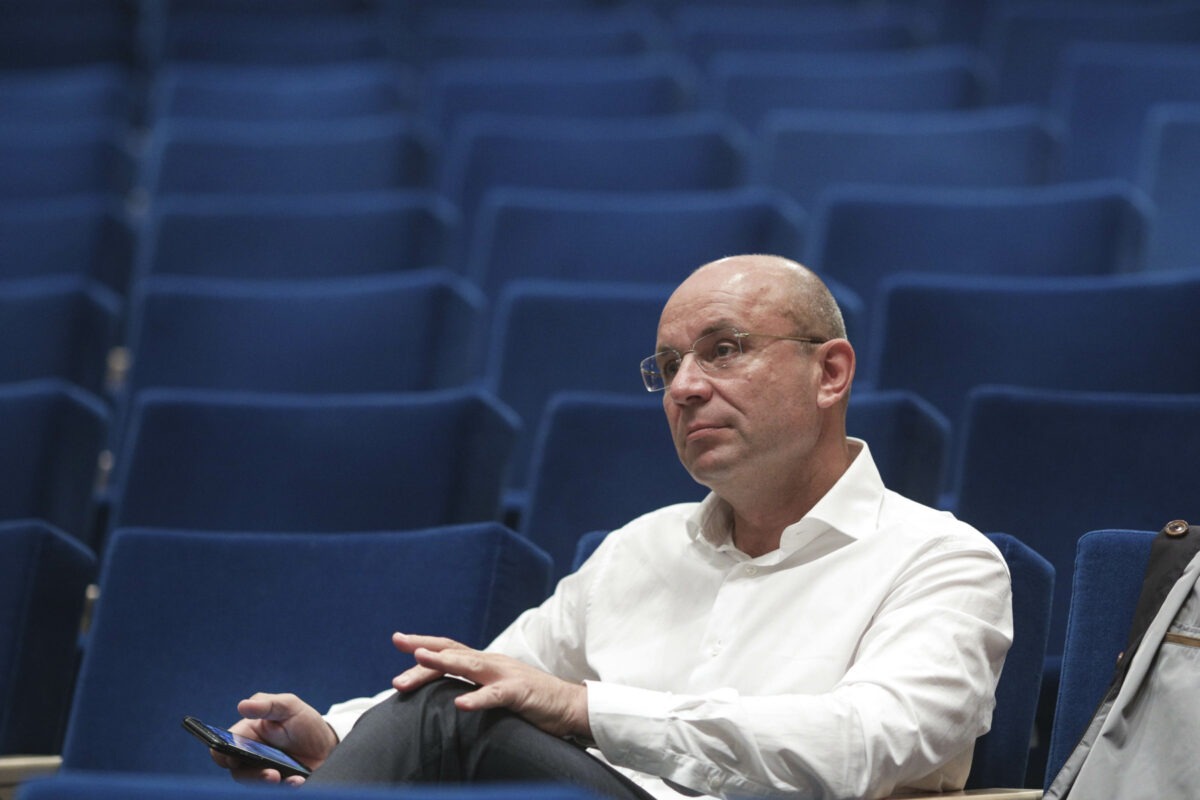
By Cozmin Gusa
www.solidnews.ro

Related Posts