Handcuffed but Unbroken: The Former Presidential Frontrunner, Călin Georgescu, Faces Romania’s Most Dramatic Political and Judicial Battle Yet
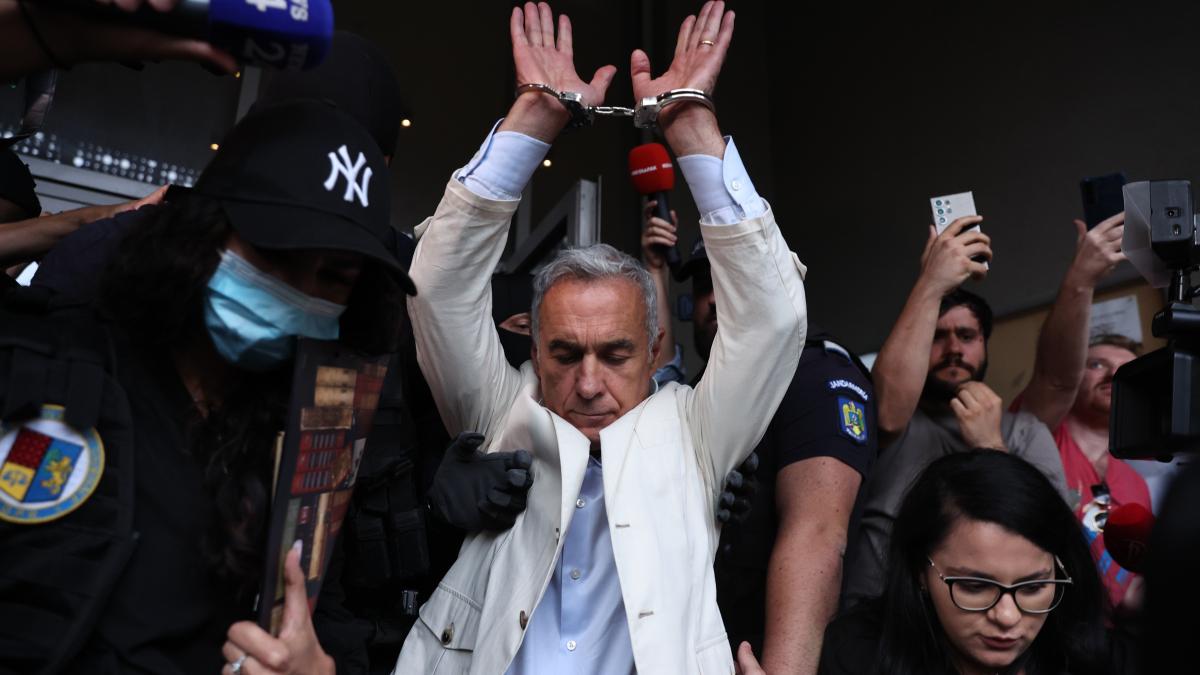
Romania awoke on Monday to another extraordinary scene involving Călin Georgescu. Shortly before seven in the morning on September 21, the former presidential frontrunner was stopped in traffic near a swimming pool in the Otopeni area, driven to his residence in Mogoșoaia, and made to attend a search conducted as part of a new investigation by the Directorate for Investigating Organized Crime and Terrorism. Masked officers were filmed at the property, and five homes in Bucharest, Mogoșoaia, Ciolpani and Buftea were searched. Georgescu was then taken to DIICOT headquarters for questioning as supporters gathered outside and gendarmes erected barriers. By Monday evening he had been detained, and prosecutors signalled their intention to seek pre-trial detention.
The allegations are serious. According to DIICOT, investigators are examining an alleged organized criminal group formed in September 2021 and suspected of deceiving Romanian businessmen by promising access to financing from foreign financial institutions. Prosecutors say one alleged victim transferred more than one million euros as a guarantee for a promised six-million-euro loan, followed by another 100,000 euros after being told the financing could rise to fifteen million. The alleged loss exceeds 1.1 million euros. Investigators have described a scheme spanning three countries and centered on a Swiss-based financial entity that independent journalists have characterized as a “ghost bank,” lacking legitimate authorization. Prosecutors ARE alleging that Georgescu used his political stature to lend the operation credibility.
By Monday evening, Romanian media reported that investigators had seized electronic devices, documents, alleged signal-jamming equipment, identity papers some of which prosecutors suspect may be false, and, according to one outlet, a sum of cash at his home. Those allegations deserve investigation, BUT, They also deserve something equally important, and easily forgotten in the drama of a televised dawn raid: restraint.
Romania is a member of the European Union, a constitutional democracy, and a country whose leaders routinely invoke the rule of law as a foundation of its Western orientation. That principle cannot become negotiable when the person under investigation happens to be one of the country’s most controversial figures. Călin Georgescu has not been convicted in this case, the allegations presented by prosecutors remain allegations, and search warrants are not verdicts. Same as a prosecutor’s theory is not a judicial finding. These distinctions sound elementary, but they matter enormously the moment criminal proceedings intersect with politics, and few cases in modern Europe sit at that intersection as heavily as this one.
Georgescu is not an obscure businessman investigated away from public view. He was the surprise frontrunner of Romania’s annulled 2024 presidential election, later barred from the rerun while leading in the polls, and he remains among the most recognizable and divisive political figures in the country. This is, moreover, not his first encounter with the prosecutors. In February 2025 he was detained and charged in a six-count case that included incitement to actions against the constitutional order and the promotion of fascist and extremist figures, placed under judicial control, and in September 2025 he was among more than twenty people charged in connection with an alleged plot surrounding the annulled election. That accumulated history places an exceptional burden on Romanian institutions. It does not mean Georgescu should be immune from investigation, because political prominence cannot be a shield from criminal law. But neither should political controversy be allowed to weaken the safeguards that criminal law exists to provide. The greater the political consequences of a prosecution, the greater the institutional duty to show that every measure is necessary, proportionate, and grounded in evidence that can survive independent judicial scrutiny.
Viewed against that political horizon, it becomes increasingly difficult to dismiss the suspicion that what is unfolding around Georgescu carries the unmistakable appearance of political retribution. Romania is again drifting toward the possibility of early parliamentary elections amid a prolonged governmental crisis, with President Nicușor Dan himself refusing to rule out a snap vote. The country is therefore entering another period in which political loyalties may be tested at the ballot box, while Georgescu remains a figure capable of mobilizing a substantial constituency. The Constitutional Court’s 2025 decision prevented him from entering that particular presidential rerun, but the Court itself did not frame the decision as a permanent lifetime exclusion from elected office. In fact, its reasoning acknowledged that such questions have a temporal dimension and must be assessed according to the circumstances of each electoral cycle. Against that background, the spectacle of yet another criminal case, another detention and another procession of accusations inevitably raises an uncomfortable question: is Romania investigating a citizen, or progressively constructing the conditions under which a political adversary can never realistically return to the electoral arena?
For Georgescu’s supporters, and increasingly for anyone concerned with democratic optics rather than political allegiance, the pattern is becoming extraordinarily difficult to ignore. He won the first round of a presidential election that was subsequently annulled, was prevented from standing in the rerun, has since faced successive prosecutions, and now finds himself detained once again at a moment when Romania’s political architecture is visibly unstable. Thise repeated legal encirclement of the man who produced perhaps the greatest electoral shock in post-communist Romania increasingly resembles an effort to ensure that the shock cannot be repeated. If Georgescu remains politically viable, then removing him from public life through accumulated criminal proceedings would achieve what his opponents failed to achieve cleanly at the ballot box: the permanent neutralization of a challenger whose electorate has demonstrably refused to disappear.
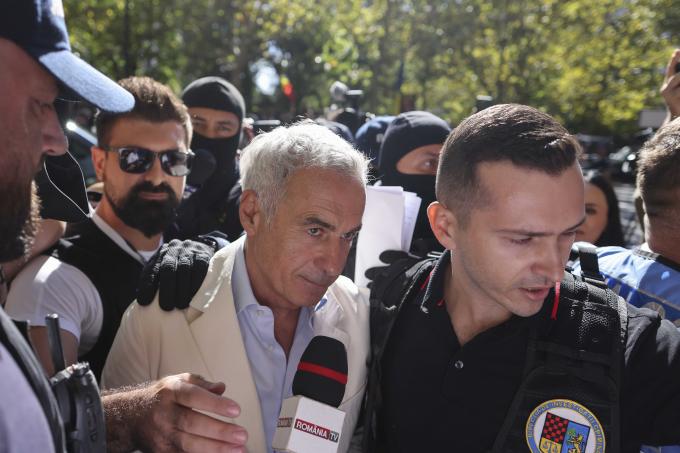
This is where the presumption of innocence stops being a courtroom technicality and becomes the whole point. Georgescu has pleaded not guilty and, as is his absolute right, reportedly declined to give statements to investigators, a choice that is a procedural protection and not a shred of evidence against him. The prosecution’s task it to now establish, with admissible evidence and before an independent court, who promised what, who controlled the transactions, what representations were actually made, and what criminal intent can be attributed to each defendant. Financial transfers may be highly relevant, but relevance is not guilt. These are questions for evidence, not headlines, and they have not been answered on September 21, 2026.
The European Court of Human Rights has repeatedly held that the presumption of innocence is more than a rule for the courtroom; it governs how public authorities speak about people who have not been convicted, precisely because institutional power can shape public judgment long before a judge ever rules. Romania should take that principle particularly seriously now.
DIICOT must be free to investigate credible allegations regardless of the suspect’s identity, but Georgescu must be free to contest them with the full protections owed to every defendant under Romanian and European law. Courts must weigh the evidence independently, and politicians, prosecutors and journalists alike should resist the temptation to turn an unfinished criminal case into a substitute political verdict on a man who has divided the nation.
This, ultimately, is where Romania itself is on trial. The strength of a democratic justice system is measured by whether it can investigate Georgescu without abandoning procedural restraint, judicial independence and the presumption of innocence. A democracy proves its commitment to law precisely when it applies the same standards to those who divide it as to those who do not. The burden now belongs to Romania’s institutions, and it is a narrow one: to prove, with admissible evidence and before an independent court, the criminal allegations they have made. Until they do, Călin Georgescu is not a convicted criminal. He is a defendant in a democratic European state, entitled to the presumption of innocence like anyone else. And how Romania treats that distinction will say as much about the country’s institutions as the eventual verdict will ever say about him.
But, so far, for this alleged crime there have been no conviction, same as for the previous crimes Georgescu has been accused of. And people are right to be enraged, because, if it can happen to a politician supported and voted by half of the country, it can surely happen to regular citizens.
By TDA