No Good Deed is Left Unpunished: Romania Armed Ukraine and in Return, Ukraine is Closing Romanian Classrooms
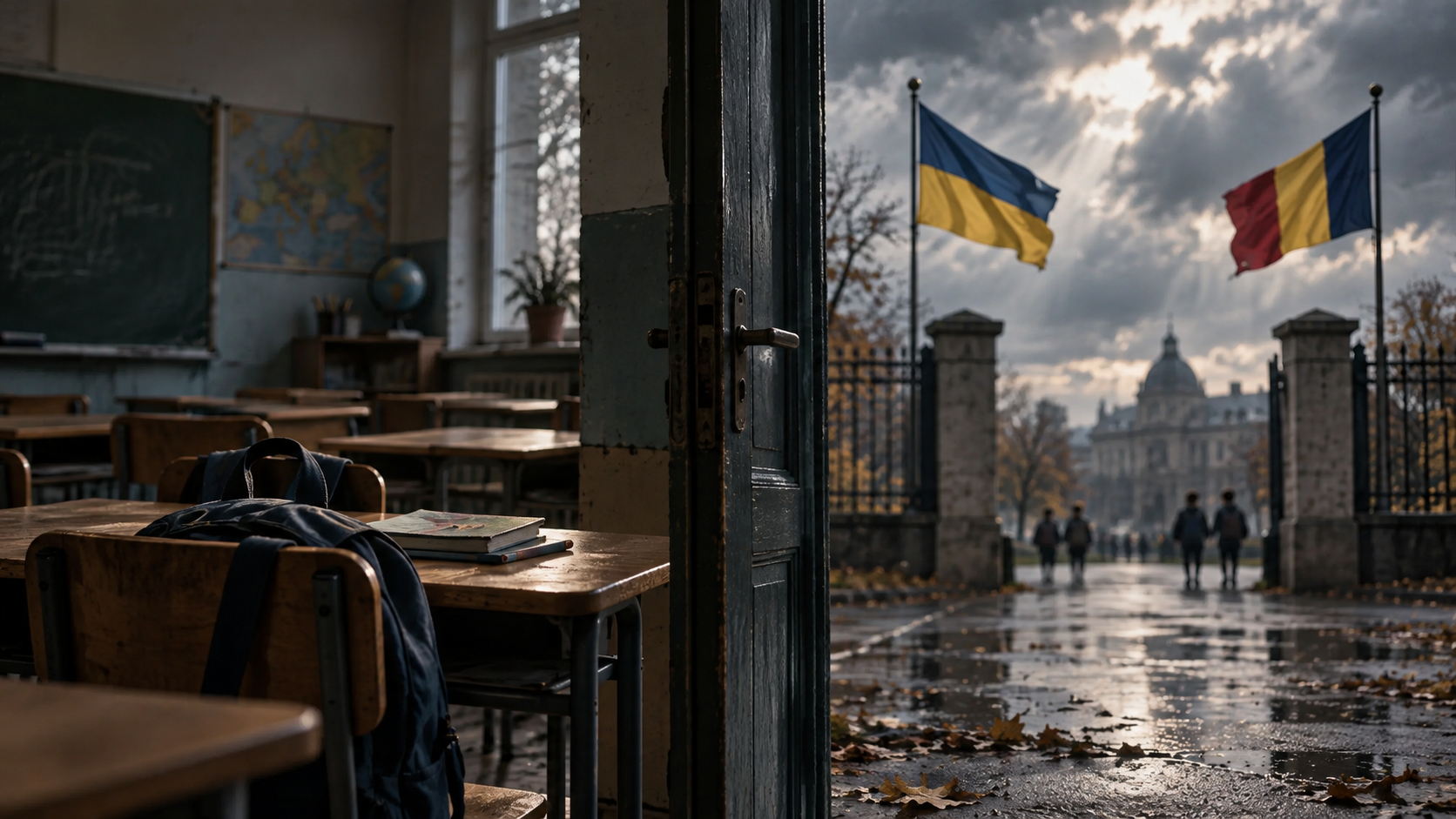
Romania gave Ukraine a Patriot air-defence system. It opened its territory to military assistance destined for the Ukrainian front. It helped train Ukrainian F-16 pilots. Its Danube ports and the port of Constanța became vital arteries for Ukrainian exports after Russia tried to choke the country’s access to the Black Sea. Romanian communities received hundreds of thousands of Ukrainians fleeing the war. Bucharest backed Kyiv’s sovereignty, its European aspirations and its future in NATO.
In 2024, the two countries signed a ten-year security agreement under which Romania committed itself to continued military, humanitarian, logistical and economic support. But, this month, in the Ukrainian village of Orlivka, a first-grade class teaching children in Romanian was closed four days after it opened. It’s a a betrayal that is difficult to ignore. Sure, one may argue the case is small in numbers, as it involves only one classroom in one village in the southern Odesa region. Politically, however, the case is much larger.
Orlivka lies close to the Romanian border in the Danube region, and, the overwhelming majority of the village’s population is ethnically Romanian. This is why, parents had asked for a Romanian-language first-grade class, succeeded in having it opened and then watched it disappear days later. The more serious allegation is how that decision was allegedly obtained. Anatoli Abgas, president of the Orlivka Local Development Agency said that parents who had originally requested Romanian-language education, were pressured to move their children into the Ukrainian-language class, then resubmitted their requests after intervention by Romania’s consul general. According to Abgas, pressure resumed after the Romanian diplomat left. He alleged that parents were threatened with loss of benefits and jobs, that their husbands could be targeted for military mobilisation, and even that they could be brought before the Ukrainian Security Service and branded traitors.
But, let us put aside the allegations Abgas made, since naysayers will argue that they have not been confirmed by any Ukrainian officials. Let’s look at the facts: a Romanian-speaking community asked for its children to be educated in Romanian, the class opened, but four days later, it no longer existed. For Romania, that should not be a minor bilateral irritation, as it touches a problem that has existed between Bucharest and Kyiv for decades. This is not the first time Romania has been betrayed by a neighbour it has helped, supported and praised for years.
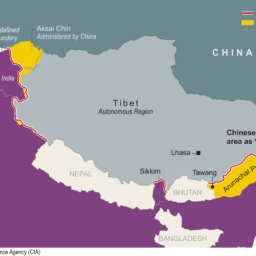
The communities concerned are not recent migrants, as many live in territories whose borders changed repeatedly during the violent history of twentieth-century Eastern Europe. Northern Bukovina and parts of Bessarabia belonged to Romania between the world wars. In June 1940, following a Soviet ultimatum, Romania ceded Bessarabia and Northern Bukovina to the Soviet Union. Soviet authorities subsequently incorporated Northern Bukovina and the Bessarabian districts of Khotyn, Akkerman and Izmail into Soviet Ukraine. Those borders eventually became part of independent Ukraine after the collapse of the Soviet Union in 1991. Contemporary U.S. diplomatic records document both the 1940 Soviet ultimatum and the subsequent incorporation of those territories into the Ukrainian Soviet Socialist Republic.
Let me make this clear: history is not an argument against Ukraine’s present borders. Romania formally accepted those borders and built its modern bilateral relationship with independent Ukraine upon them. The 1997 Treaty on Good-Neighbourly Relations and Cooperation recognised the existing frontier and created an explicit framework for protecting the Romanian minority in Ukraine and the Ukrainian minority in Romania.
But, this exact context is worth mentioning in order to get the full picture. The two states committed themselves to protecting ethnic, cultural, linguistic and religious identity. They recognised the right of minorities to preserve and develop their culture without forced assimilation. Most importantly for the Orlivka case, they agreed to create equivalent conditions for the study of minority languages and affirmed the right to education in one’s mother tongue in a sufficient number of state schools, taking into account the geographical distribution of the minority concerned. That agreement was signed nearly three decades ago, and, yet, the argument over Romanian-language education did not disappear.
Orlivka is not the first time Romanian communities in Ukraine have found themselves fighting to preserve their language in schools. The clearest break came in 2017, when Ukraine’s new Education Law sharply expanded the role of Ukrainian as the language of instruction after primary school. The reform affected several minorities, but Romanian and Hungarian communities were among those most directly exposed because they had long-established networks of schools teaching in their mother tongue. Ukraine itself acknowledged that Romanian-speaking pupils required a separate educational model because they often lived in compact Romanian-speaking communities. The Venice Commission accepted Kyiv’s legitimate goal of strengthening knowledge of Ukrainian, but warned that sufficient room had to remain for teaching in Romanian so that pupils could achieve genuine proficiency in their native language.
Romanian community organisations in the Chernivtsi region argued that the reform amounted to linguistic assimilation and reduced rights they had previously exercised. The controversy was serious enough for Romania to intervene diplomatically and financially, including by supporting Romanian-language pupils and teachers in Ukraine. The Council of Europe later continued to scrutinise whether Ukraine had struck an acceptable balance between promoting the state language and protecting minorities.
Then came the 2019 State Language Law. The Council of Europe’s Commissioner for Human Rights publicly criticised the speed with which it had been adopted and the lack of adequate consultation with linguistic minorities, explicitly naming the Romanian community among those potentially affected. The Commissioner warned against language policies built on a “zero-sum” logic in which strengthening one identity comes at the expense of another. That phrase is worth remembering, because it describes precisely the fear Romanian communities have expressed for years. And the pressure has not been limited to legislation. Official Ukrainian data submitted under the European Charter for Regional or Minority Languages show how fragile Romanian-language educational infrastructure can become. In Zakarpattia, for example, the number of preschool institutions teaching in Romanian fell from three in 2019, serving 159 children, to just one institution in 2020, serving 74. That single institution remained in subsequent years. The same Ukrainian report insisted that Romanian-language education remained sufficiently available in areas where Romanians live compactly, but the figures themselves show how quickly the institutional base can narrow.
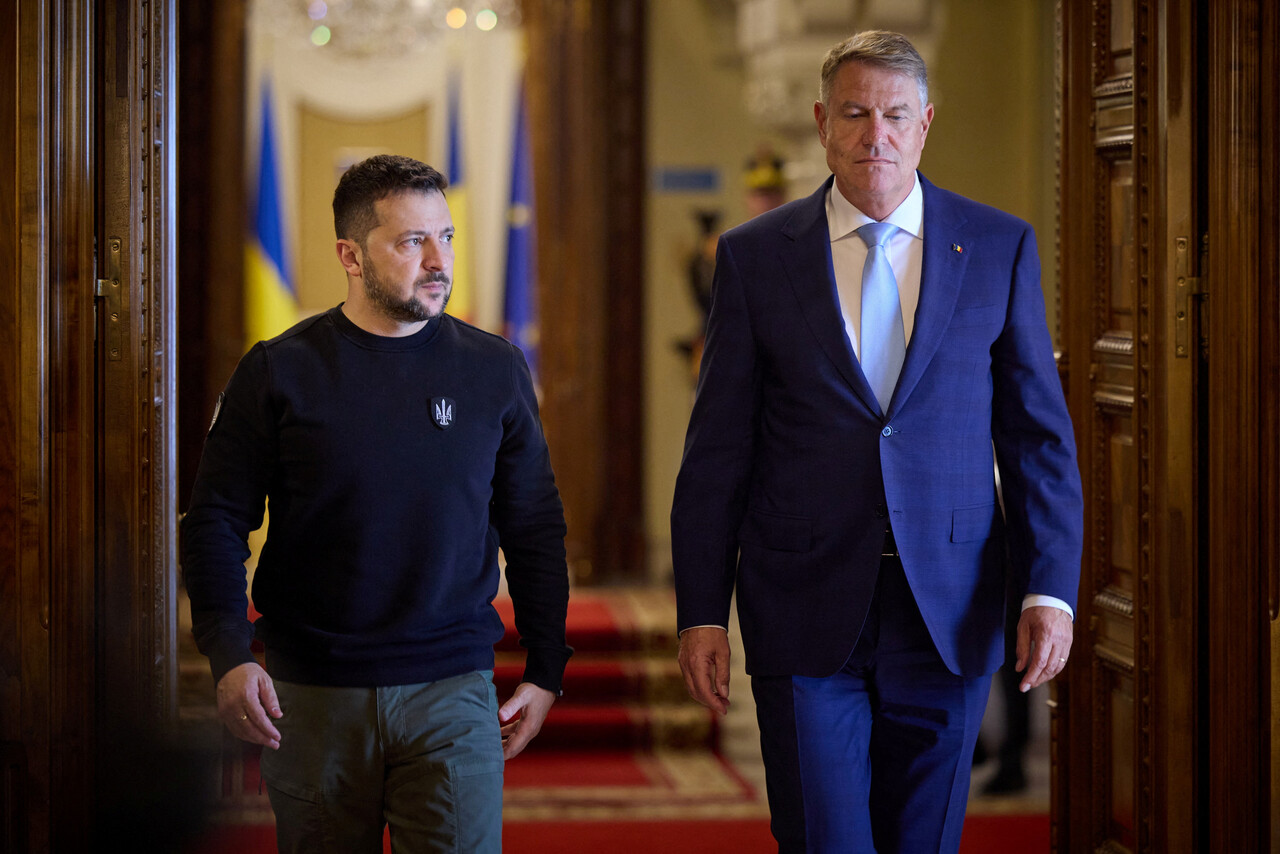
Perhaps the most revealing dispute, however, was about whether the Romanian language was allowed to be called Romanian. For years after independence, Ukraine continued to administratively distinguish between “Romanian” and “Moldovan” as separate languages and communities, preserving a Soviet-era classification that Bucharest repeatedly rejected. Romania argued that the distinction artificially fragmented the Romanian-speaking population and weakened its institutional weight in questions involving education, culture and minority rights. The issue became so entrenched that Presidents Klaus Iohannis and Volodymyr Zelensky explicitly instructed their governments in October 2023 to resolve the “artificial distinction” between Romanian and “Moldovan” without delay.
Romania has been remarkably patient. Each time, Bucharest has been asked to understand the context, accept another transition period, wait for another amendment, trust another bilateral commission or believe that implementation will eventually catch up with promises. Meanwhile, Romanian communities are expected to negotiate again and again for rights that treaties, European standards and Ukrainian law supposedly already guarantee. There is a point at which “complexity” stops being an explanation and becomes an excuse. Kyiv cannot spend a decade progressively narrowing, renaming, restructuring or renegotiating Romanian-language education and then react with surprise when Romanians conclude that Orlivka is not an isolated incident at all.
More than this, Romania’s assistance since February 2022 has not consisted merely of diplomatic declarations. The bilateral security agreement signed in Washington in July 2024 records the breadth of the support itself. Romania provided humanitarian assistance, received refugees, supplied military and security assistance, supported Ukrainian energy security, created transit corridors for exports and facilitated the passage of military equipment across Romanian territory. Romania also committed to donating a Patriot system to Ukraine and to continuing military-assistance packages coordinated between the two defence ministries. This Patriot decision deserves particular attention, because air-defence systems are among the most valuable military assets a state possesses. Romania, unlike other countries, did not send blankets and wish Ukraine good luck; it transferred a strategic weapons system needed for its own defence to a neighbouring country fighting a major war. Romania also hosts the European F-16 Training Center, which has been used to prepare Ukrainian pilots, so its territory has provided a corridor for military support. Its Black Sea and Danube infrastructure became critical after Russia attacked Ukrainian ports and withdrew from the Black Sea Grain Initiative. The European Commission described how Romania, Moldova, Ukraine, the United States and the EU expanded Danube transit, improved navigation on the Sulina Canal and increased access through Constanța to keep Ukrainian trade moving.
Then there are the people. By May 2026, UNHCR recorded more than 212,000 refugees from Ukraine in Romania. Since the beginning of the invasion, far larger numbers have crossed Romanian territory, while the Romanian state, municipalities, NGOs, churches and ordinary citizens provided accommodation, food, education and assistance. Ukraine itself has repeatedly acknowledged that help and Zelensky personally thanked Romania and the Romanian people in 2023 for military assistance and support “since the first days of the full-scale Russian invasion”.
This is why Orlivka matters disproportionately. Friendship between states cannot reasonably be measured as a commercial exchange in which one Patriot battery purchases one Romanian school. Minority rights are not payment for military assistance. Ukraine has an obligation to protect its Romanian citizens because they are Ukrainian citizens, not because Bucharest supplied weapons. But political relationships are built on reciprocity, credibility and trust, and that makes the contrast impossible to avoid. Romania has repeatedly been asked to treat Ukraine’s security as part of its own security and it has done so. Which is why Romania is also entitled to expect Ukraine to treat the cultural security of its Romanian minority as more than an administrative inconvenience.
Romania is not asking Ukraine to tolerate a newly imported foreign language, as the Romanian language was spoken in these communities before the modern Ukrainian state existed and it survived the Romanian state, Soviet rule, the collapse of the USSR and the first three decades of Ukrainian independence. A first-grade classroom in Orlivka is, therefore, not an instrument of Romanian expansionism, but a group of Ukrainian children learning in the language spoken by their parents and grandparents.
Kyiv’s struggle against Russia has been built, in part, around an insistence that imperial powers cannot decide the identity of smaller nations from above. Ukraine argues that Russia has no right to erase Ukrainian identity, rewrite Ukrainian history or treat Ukrainian language and culture as subordinate. Yet, the hypocrisy is hard to ignore. A democratic European Ukraine cannot demand respect for Ukrainian language and identity abroad while appearing indifferent when Romanian-speaking Ukrainian citizens ask to preserve theirs at home. Sure, the situations are not morally or historically identical, but the principle of cultural dignity is not difficult to understand.
If parents in an overwhelmingly Romanian-speaking village can be portrayed as disloyal merely because they request Romanian-language schooling, Kyiv creates the very grievance environment Moscow has spent years exploiting. And if the reported threats in Orlivka are substantiated, the problem becomes much more serious. The allegation that parents were told they could lose benefits, employment or see male relatives targeted for mobilisation if they insisted on Romanian-language education requires investigation.
If those claims are false, Ukrainian authorities should establish that publicly. If they are true, the officials responsible should face consequences. There should be no ambiguity about it. But…Ukraine is silent on the matter. Which is yet another slap in the face of its neighbor.
In the end, it seems that, for Ukraine, friendship is easiest when nothing is being askes of it. Romania and Ukraine have probably never been strategically closer, and war did what three decades of diplomacy often failed to do: it forced both countries to recognise how closely their security interests are connected. Romanian ports help keep Ukraine economically connected to the world, Ukrainian resistance keeps Russian military power farther from the Romanian frontier. The Black Sea binds their strategic futures together and their infrastructure is becoming interconnected, their militaries cooperate, their governments speak of a strategic partnership.
But strategic partnerships are tested precisely by the issues partners would prefer not to discuss. For Bucharest, Romanian-language education in Ukraine is one of those issues. For Kyiv, it may appear marginal beside missile attacks, occupied territory and the daily cost of war. For a Romanian family in Orlivka, however, it is not marginal at all, it is the language in which a six-year-old learns to read. Romania has spent the past four and a half years demonstrating that it understands Ukraine’s fear of losing territory, sovereignty and identity. Ukraine should have little difficulty understanding why Romanians care about losing a language classroom.
Kyiv should understand something else as well: goodwill is not inexhaustible. Romania’s support for Ukraine has survived political cost, financial cost and genuine security risk. Treating legitimate Romanian concerns with condescension, minimisation or bureaucratic evasions is an exceptionally poor way to repay that political capital. Allies are not ATMs, transit corridors or weapons depots. They are countries with their own history, citizens and red lines. Ukraine has spent years asking Romania to remember what is at stake for Ukrainians. Orlivka is a reminder that Kyiv does not care to remember what is at stake for Romanians too.
by I. Constantin