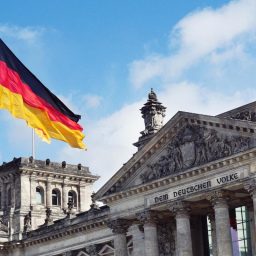
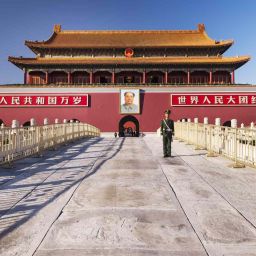
Elections in Russia and Germany, Mirrored: The Triumph of “Putin-FSB” Versus the Collapse of “Merz-BlackRock”!
Yesterday, Sunday, from a foreign policy perspective, the attention of the interested world was focused on Russia, where the first parliamentary elections since the beginning of the Ukrainian war were taking place, a major electoral test for Putin and his people, and, respectively, on Germany, which is in political and financial disarray, where regional elections were being held, but with symbolic significance: what was being tested, and what was tested, was the rejection of the current power of the country that is still the leader of the European Union.
In Russia, as you well know, Putin has ruled with an iron fist for 26 years. Putin and his party, which has undergone minor changes in composition or name, but let us simply call it Putin’s party, have always dominated the parliament in Moscow. In Germany, Global High Finance, for example, has been in control for far longer, for 80 years, ever since the Americans implemented the Marshall Plan and, one after another, imposed various competent puppets, for the most part, in the position of German chancellor.
Naturally, the puppets were of the Friedrich Merz type. I repeat, some were more competent. Merz strikes me as the most incompetent of them all. He is an exponent of multinational-style Global High Finance. I remind you that he served on the supervisory board of BlackRock, one of the largest companies in the world, a BlackRock about which I might say that it has more or less imposed Germany’s chancellors over the past 20 years. If you are wondering, in Germany’s case, what happened during the other 60 years, almost up until BlackRock came to power, it was much the same: High Finance imposed the chancellors. But High Finance, in those times, up until around 2000 or 2001, was called BMW, Daimler-Benz, Allianz, Bertelsmann, Porsche, Dr. Oetker, and, of course, Deutsche Bank. In other words, it was a form of domestic German capital.
Pay attention. All these ultra-multibillion-dollar companies I have just named are the same companies that retained the same names they had when, through the owners who preceded today’s owners, they served Hitler’s Nazi regime. All of them. Absolutely all of those you have just heard. Of course, they were saved by the Americans, but that is another story, one I will tell you at some point because it is interesting. What happened in the Russian elections? There was no turmoil and no fraud. It unfolded as I expected and, in practical terms, the alarmist cries, whether those of Sergei Lavrov, who was a candidate, or those of former president Dmitry Medvedev, were invalidated.
The European Union had no opportunity to interfere except through Ukrainian bombardments during the election days, Friday, Saturday, and Sunday, but those incidents caused no casualties and did not influence the electoral process. Precisely because of the way the vote unfolded, the manipulative Western propaganda concerning the Russian elections was invalidated: there were observers, people were not out in the streets, they went in an orderly fashion and voted. Only one party was banned from the elections, one that had a score of 3 to 5 percent, perhaps above 5 percent: Yabloko, meaning “apple.” But in a fundamentally Orthodox country such as Russia, perhaps, from their point of view, it was natural for it to be banned because Yabloko came forward with an excessively LGBT-oriented agenda. In the end, they also had independent candidates.
And speaking of candidates, judging by the results, Putin’s party has more than 50 percent, the Communist Party a little over 10 percent, and Zhirinovsky’s former party around 10 percent. Well, in the case of Zhirinovsky’s former party, we may have a surprise: the famous Viktor Bout, the “Lord of War,” whose role was played by Nicolas Cage in an Oliver Stone film, could become a member of the State Duma. That was the Russian election: in practical terms, a triumph for Putin.
In Germany, however, since I said we were looking at the two cases in parallel, Friedrich Merz was dealt another blow after disgracefully losing the elections two weeks ago, also regional elections. Yesterday, in the two federal states, in one of them he lost more than disgracefully. The partial official count, not yet formally confirmed, shows that he will fail to cross the electoral threshold, while in Berlin, the capital where he was expected to win, he was overtaken by the left-wing LGBT camp, the far left, so to speak, Die Linke. That is the name of the party. Berlin is Berlin. In practical terms, Merz can pack his bags and go home.
He is not going home, however. I saw him being very combative. I did not think him capable of such shamelessness. I thought this Merz was a more timid puppet, but he came out fighting and refused to acknowledge the disaster of his government and the German public’s lack of confidence. The Germans who voted yesterday once again rejected this Christian Democratic, Christian Social political establishment that has governed Germany for so long, but above all they rejected Global High Finance, which has this party in its grip. And Berlin, as I was saying, is a textbook case.
In one of the federal states, however, the same AfD, Alternative for Germany, won, a party that is nationalist and probably sovereignist as well. We shall see. I have read authentic documents showing how, more than 10 years ago, around 13 years ago if I am not mistaken, at the time it was founded, the AfD too was financed by the famous billionaire von Finck, who owned, among other things, the insurance companies Allianz and Munich Re, a multibillionaire whose capital was likewise of Nazi origin. Von Finck. I will return to this subject as well.
Now, regarding Germany, of course we Romanians applaud this failure, but you must be careful, friends, because this failure of the Party of Global High Finance, of Merz’s party and of Merz personally, will immediately give rise, starting today, to major abuses of power, not only inside Germany but especially within the European Union. Why? Because Global High Finance does not surrender. The money, the power, the intelligence services are in their hands.
Conclusions. Above all at the societal level, because politically I have already explained it. Yes, it is clear and beyond doubt that Russia is an autocracy, an autocracy dominated by Putin and his siloviki, which is why I said Putin-FSB. However, I want to underline one clear point: after what happened yesterday, the elections in Russia appear far more legitimate than those in countries aspiring to join the European Union, such as Moldova, a former Soviet republic, where the elections were rigged from beginning to end, or in our own highly Euro-Atlantic Romania, where elections have supposedly been rigged for I do not know how many years in a row, and were even annulled.
We and the Moldovans are worse off than the Russians. And if I look closely at the French, who rigged their own elections so that Macron could win a second time, we realize that the situation inside the Union is disastrous. And the citizens who are not protesting, the Russians, seem more satisfied than European citizens. For them, it is clear that even if they do not love Putin, he saved their country from the clutches of Global High Finance, into which Russia was thrown immediately after 1991, when the Soviet Union was dissolved at Christmas.
It was thrown there by the traitor Gorbachev, then by the drunkard Yeltsin. And that is probably why, even without loving Putin, they vote for his party, because he restored their dignity as Russians, as citizens of the new Russian Empire. Germany, on the other hand, is certainly a democracy, but one that, let this be clear, is controlled through the decisions and dictates of Global High Finance. Germany has been a democracy subjugated by the United States ever since the end of the Second World War. Do not forget that even today there are around 80,000 American soldiers on German soil.
In practical terms, Germany is under occupation. It is under occupation today, and has therefore been so for around 80 years. But what do we see after these elections? That the Germans no longer want this kind of status. That is why they vote for the AfD. They want, as Trump said about them, “Make Germany Great Again,” meaning make Germany great again. So we reach the conclusion that the Germans have sensed the deception and are taking revenge. Merz, BlackRock, and the Christian Democratic Union have been rejected. Well, German society is entering a downward spiral. Do not be surprised if these excesses lead to the AfD being banned by law. And then it will become official that Germany is no longer a democracy and, consequently, since Germany is the leader of the European Union, it will also become official that the EU is no longer a democracy.
So what? Who is going to shout about it? Nobody. The EU, the new USSR, as I have been saying for several years, is being led down the road to the graveyard, including through events of this kind.
Final conclusion. Through yesterday’s mirrored elections in Russia and Germany, the consequences of the war in Ukraine are being validated in different ways: a Russia that holds elections in wartime, with Putin winning triumphantly amid the applause of the Russian population, while Zelensky, who says he is a democrat, is afraid to organize elections and remains clandestinely in power, illegally. And, of course, the Collective West, which launched the war against Russia, with Germany at the head of the column, and which even now wants war with Russia, has been electorally rejected, as shown by these repeated examples from Germany.
That is all for now. But this is only the beginning of the geopolitical storm inside the European Union.
By Cozmin Gușă