Scroll Top

Beyond UN Reform: An Independent Commission to Reimage Multilateralism
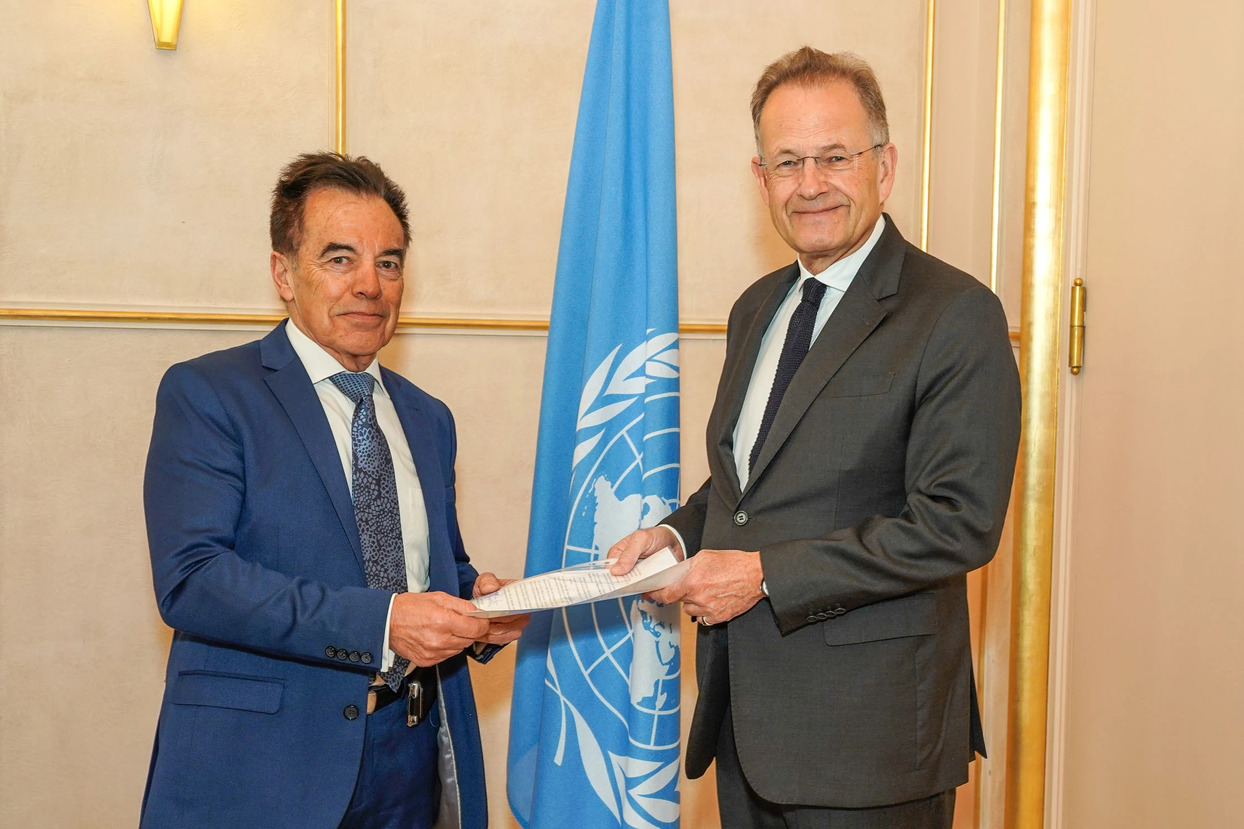
There is growing evidence that the current multilateral system is no longer capable of effectively addressing the escalating crises it faces. The foundational principles of international cooperation, consensus, collective action, and the primacy of international law are gradually eroding. International institutions, foremost among them the United Nations, established to resolve conflicts, prevent wars, and ensure collective security, are increasingly marginalized or paralyzed due to geopolitical tensions and institutional deadlock. The veto power within the Security Council is now frequently used not to promote peace, but to protect allies or strategic interests, even in the face of blatant violations.
Armed conflicts today are unprecedented in their intensity and complexity, accompanied by severe human rights violations and a growing international failure to provide effective protection to victims or ensure accountability for perpetrators. While parties to these conflicts persistently breach international humanitarian law, civilians, especially women and children, remain at the heart of the violence, suffering killings, displacement, starvation, and hardship without effective protection or adequate remedies.
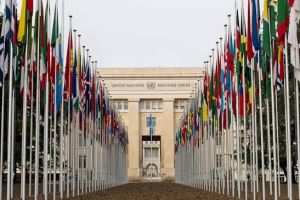
The former president of the General assembly of the UN and former Foreign Minister of Germany Annalena Baerbock during a briefing of UN diplomatic Missions in Geneva spoke on UN reform. The most important phrase of statement was” if you do not do it, they will do it to you”. She was obviously placing the responsibility on member states for the reform. Mr, Guy Ryder, Under Secretary General in Charge of UN 80, also addressed diplomats in Geneva on the same issue. When I posed the question “Whether the contributions of member states would return to previous levels should the UN80 reform be successful” his answer was that “this was not the aim of the UN80 quoting the Secretary General”. In other words, the UN80 could have no impact on the financial crisis of the UN. He also concluded that the “reform rests mainly with the member states”. The international system may have reached a point where its problems require a different process of institutional imagination, one that is independent of the structures, professional assumptions and political constraints it is intended to examine.
The UN80 contains ambitious restructuring objectives with extremely tight timelines and severe resource constraints. It has succeeded in putting reform on the agenda, but the scale of expectations may exceed what the political and financial circumstances permit reform cannot be treated simply as an organizational-management exercise because the UN operates within a highly contested geopolitical environment. The UN itself describes UN 2.0 as an initiative focused on internal organizational transformation, including new skills, culture and more effective support for Member States. The UN is actively supporting Member States in their pursuit of new solutions. A network of innovation labs has been established in more than 90 countries, serving as platforms for sharing new expertise in technology, data and other areas.
However, there are two important points which are practically putting the brakes to the reform of the UN:
Is the Secretariat capable when the staff faces layoffs capable of proposing ways of making the organization more efficient? The people who have worked within the existing system for many years are being asked to redesign that system at precisely the moment when many of them face uncertainty about their positions, functions or careers. The usual Secretariat reaction when someone proposes even the slightest changes is “This is how we have always done instead of perhaps this is precisely what we should stop doing”. Over decades, this attitude has become embedded in an institutional culture of bureaucratic inertia, in which established procedures acquire a legitimacy of their own, resistance to change becomes almost reflexive, and preserving familiar ways of working can take precedence over questioning whether they remain necessary, effective or fit for purpose. That is a difficult thing for any bureaucracy to do, particularly when its members are uncertain about their future.
Member States ultimately decide many of the important changes. Yet the same Member States that proposed duplicative resolutions, created the proliferation of mandates, committees, reports and institutional structures are now being asked to rationalize them. Does the UN`s intergovernmental machinery produce meaningful results, particularly when negotiations become repetitive, resolutions accumulate new provisions and financial implications, and consensus is pursued at the expense of substance?
Contrary to doomsday predictions, I am not simply proposing that the United Nations should be reformed from within on the contrary I am asking the question why should the objective be merely to restore the UN to a previous state when the international environment in which it operated has itself fundamentally changed? I am suggesting that the present crisis of the UN and multilateralism may create an opening to rethink how the UN is conceived, supported and revitalized through an initiative originating outside its established institutional structures, drawing on cross-sectoral expertise and using AI as an enabling instrument. My proposal is a substantially different proposition from the familiar calls for Security Council reform, administrative restructuring or improved funding. The UN 2.0 which the UN itself describes as an initiative focused on internal organizational transformation, including new skills, culture and more effective support for Member States. It focuses heavily on technocratic internal fixes at the expense of addressing structural and political failures. Upgrading software and staff digital literacy does not solve the deep paralyzing gridlock within the UN Security Council
The essence of my argument is that the current disarray in world affairs is not only as a threat to multilateralism, but also as a possible window of opportunity for institutional renewal. When established institutions face financial constraints, political deadlock and declining confidence, conventional reform mechanisms may struggle to generate the necessary momentum. An initiative originating outside those mechanisms could explore ideas that governments and the UN bureaucracy find difficult to develop on their own.
The financial crisis is particularly relevant because it exposes the dependence of the UN on the political and financial decisions of its member states. When funding becomes uncertain, the organization’s ability to fulfil its mandates is affected, while the underlying institutional and political disagreements remain unresolved. But there is a distinction between securing the funds needed to keep the existing system operating and reconsidering whether that system is adequately equipped for the challenges ahead.
The immediate priority of financial survival should not eclipse the longer-term question of institutional transformation. In other words, why should the objective be merely to restore the UN to a previous state when the international environment in which it operated has itself fundamentally changed?
This would not mean dismissing the achievements of the existing organization or bypassing its legitimate authority. Rather, it would mean recognizing that a crisis of confidence in established institutions can provide the impetus for a new process of reflection, experimentation and renewal. The challenge is to seize that opening before financial retrenchment and political fragmentation further diminish the capacity for collective action.
Rather than entrusting the task of reimagining the UN exclusively to governments, diplomats and existing institutional structures, we could envisage a body that brings together perspectives and capabilities that are rarely assembled within a single reform process.
Such a body could draw on: International relations, diplomacy and international law, science, technology and artificial intelligence, economics, finance and development, business, entrepreneurship and institutional innovation., civil society, humanitarian organizations and social movements, younger generations and representatives of regions and communities whose perspectives remain underrepresented in global decision-making.
The important feature would not simply be the diversity of its membership, but its independence of thought, cross-sectoral composition and capacity to develop proposals without being confined by existing institutional assumptions.
I would envisage a body that is independent of the UN’s formal hierarchy but engages constructively with the organization, its member states and regional institutions. Its mandate would be to ask fundamental questions that routine institutional reform may not adequately address: What functions should a genuinely twenty-first-century UN perform? Which existing structures remain necessary, and which need fundamental redesign? How could global decision-making become more inclusive, responsive and accountable? How could the UN’s financial model become more predictable and resilient? How could AI and other emerging technologies enable a more intelligent, participatory and effective system of global governance?
This would be neither a substitute for the UN nor an attempt to establish a rival institution. It would be a mechanism for reimagining the UN from outside, with the aim of helping it renew itself from within.
That distinction is essential. An external initiative would have no automatic authority to alter the UN Charter, bind member states or implement institutional reform. Its influence would depend on the quality of its proposals, the credibility of its participants, its ability to build coalitions and its capacity to connect its work with legitimate decision-making processes.
This new approach could use AI as an “enabler to global governance”. It would be treating AI as more than a technological addition to an institutional reform program. Properly conceived, it could help change how such a program is developed, how diverse perspectives are incorporated and how possible institutional arrangements are evaluated.
AI could help synthesize research, policy proposals, scientific evidence and practical experience from different countries and professional communities. This would enable participants to identify common ground, competing assumptions and neglected questions more efficiently.
Multilingual AI tools could lower some of the barriers to participation in international deliberations, helping communities, researchers and organizations contribute beyond the traditional diplomatic and institutional networks. AI could help synthesize research, policy proposals, scientific evidence and practical experience from different countries and professional communities. This would enable participants to identify common ground, competing assumptions and neglected questions more efficiently.
AI-assisted analysis could help compare different proposals for governance, financing, representation and accountability, identify potential trade-offs, and explore how reforms might perform under different geopolitical or financial scenarios.
In concluding the purpose would not be to ask an AI computer to decide what the United Nations should become, but to harness the combined power of collective human intelligence and computational exploration to understand the consequences, trade-offs and possibilities of alternative institutional choices. An independent, interdisciplinary commission could use AI not merely to process information, but to challenge conventional assumptions, explore scenarios that established institutions may be reluctant or unable to consider, and assess the potential implications of fundamentally different approaches to global governance. The ultimate responsibility, however, must remain with human beings, with the governments, societies and peoples whose future is at stake. The ambition is not to replace the existing multilateral system with a technological solution, but to open the intellectual space for reimagining it. At a time when the crisis of multilateralism is increasingly evident, the greatest risk may not be to question the established order, but to assume that no credible alternative can be conceived. The question is whether we have the political imagination and intellectual courage to explore what multilateralism could become, rather than simply trying to preserve what it has been.
By Ambassador George Papadatos Ph.D.Permanent Observer to the UN and other International Organizations in Geneva

Related Posts