TDA Forecast: Ukraine and Russia Could Sign a U.S.-Brokered Peace Agreement in December, With China Emerging as a Guarantor and Europe Pushed to the Margins
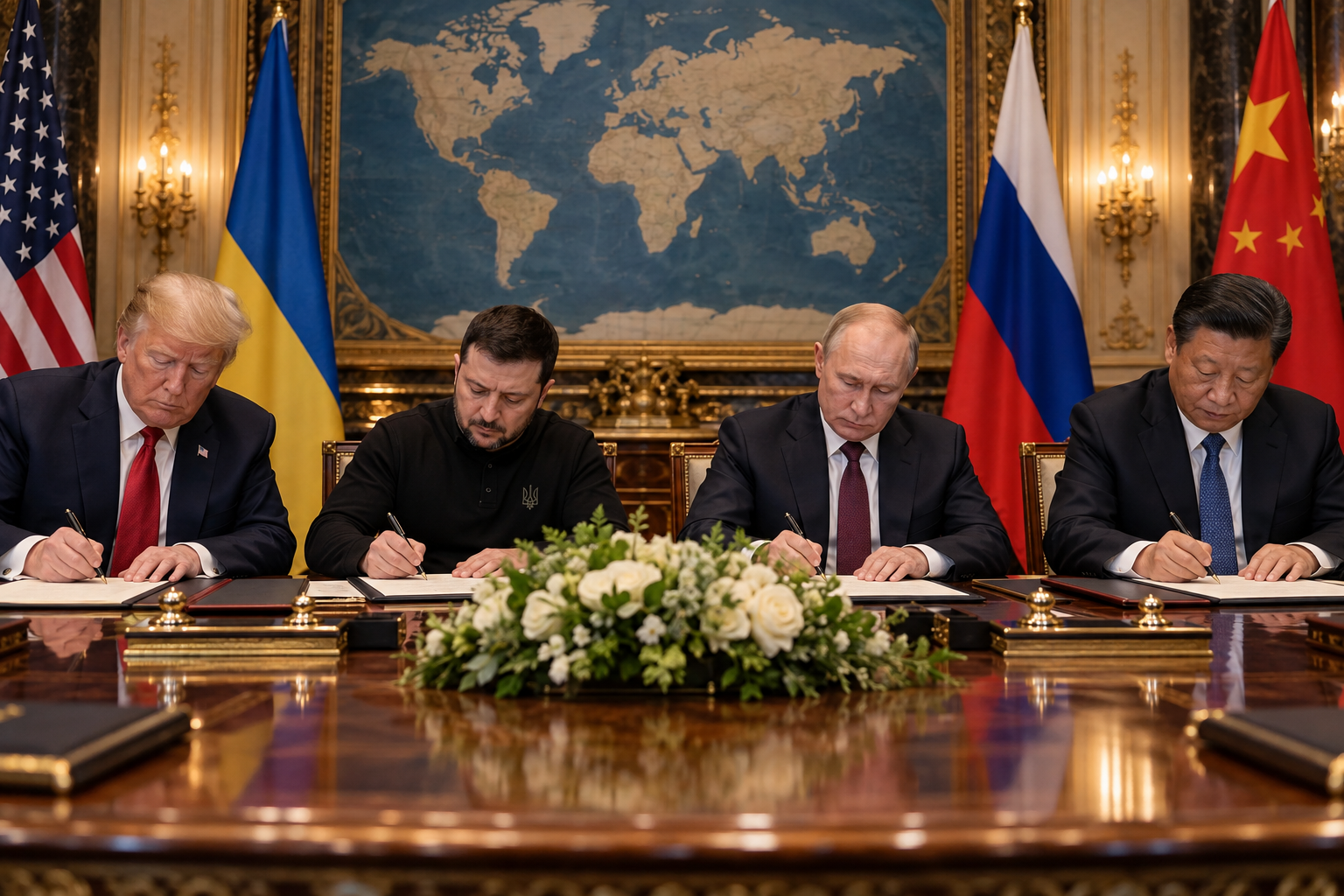
The war in Ukraine may be approaching the most consequential diplomatic moment Europe has seen since February 2022. Based on the direction of negotiations now taking shape between Washington, Moscow and Kyiv, The Diplomatic Affairs analysts assess that a formal peace agreement could be signed as early as December, most plausibly in Miami or Geneva, under U.S. mediation and with China assuming a role in the guarantee architecture surrounding the settlement. This is not yet a confirmed agreement, nor has a December signing been publicly announced by any of the governments involved. But the diplomatic sequence now unfolding makes such an outcome increasingly plausible.
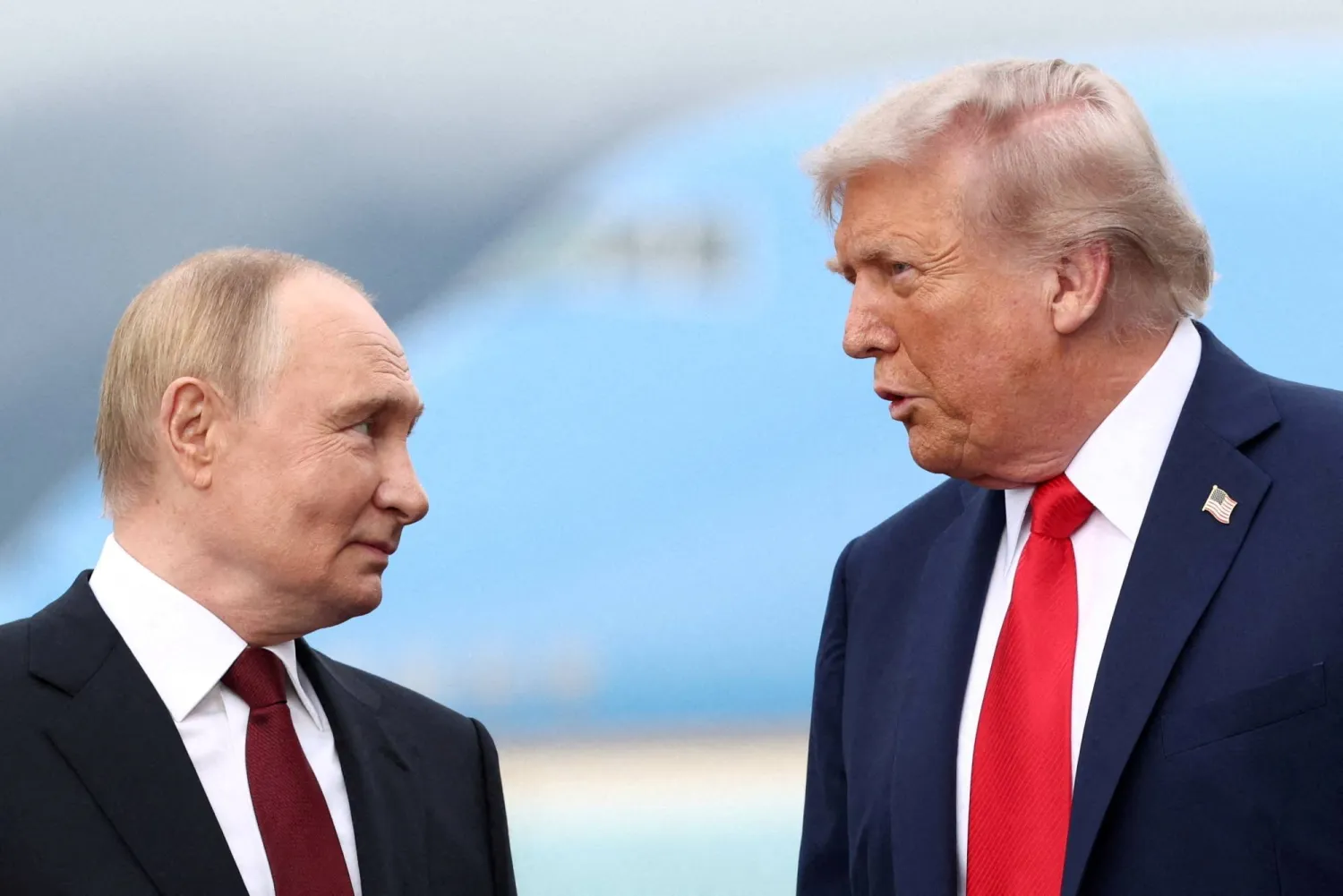
On October 21, Russian President Vladimir Putin agreed in principle to resume trilateral peace talks involving Russia, Ukraine and the United States, with discussions potentially beginning after November 10. U.S. special envoy Steve Witkoff has also raised the possibility of a higher-level process involving Donald Trump, Putin and Chinese President Xi Jinping, while Washington is increasingly focusing negotiations on postwar security guarantees and the economic architecture that would follow a ceasefire.
The timing is significant. December offers both political symbolism and practical opportunity. By then, several weeks of renewed technical negotiations could have taken place, allowing the United States to narrow the remaining disputes over territory, security guarantees, sanctions and reconstruction. Miami has already become one of the central venues for U.S.-led diplomacy on Ukraine, while Geneva carries the institutional memory of earlier U.S.-brokered negotiations between Russian and Ukrainian delegations. For that reason, The Diplomatic Affairs analysts believe both cities should now be watched closely. Miami would offer Trump something he instinctively favors: a controlled political setting on American soil, with the symbolism of the United States personally delivering an agreement it has spent months trying to construct. Geneva would offer something very different: neutrality, continuity and diplomatic legitimacy. It has already hosted difficult negotiations between Russia, Ukraine and the United States this year and remains one of the few cities capable of accommodating an agreement of this magnitude without automatically appearing to belong to either side. Either location would serve the same larger purpose. Washington would be the mediator, Ukraine and Russia would be the signatories, China could become the external guarantor. And Europe, despite bearing the direct security consequences of the war, may find itself relegated to a secondary role.
That last point is likely to become one of the most controversial features of any settlement. The European Union has repeatedly insisted that no durable peace framework can be constructed over the heads of Europeans. At its October summit, the European Council explicitly stated that Europe has a key role to play in any future peace settlement and would defend its interests, while Brussels continues to argue that Ukraine must receive robust long-term security guarantees. The European Commission reinforced that position again this week. Asked about possible U.S.-China-Russia discussions, Commission representatives said Ukraine had to be present whenever Ukraine itself was being discussed and stressed that Europe should also be involved when European security was at stake.
That is Brussels’ position, but it may not ultimately be Washington’s. The emerging American strategy appears increasingly centered on direct great-power bargaining. Trump’s diplomatic architecture is becoming easier to read. Russia must be brought into a negotiated settlement, Ukraine must receive sufficient guarantees to accept it, China must be given enough political ownership of the outcome to help restrain Moscow and stabilize the postwar order. Europe, by contrast, is increasingly being treated as an interested party rather than the principal negotiating power. That would represent a profound change in the balance of Western diplomacy.
Since the beginning of the war, European governments have been among Ukraine’s most important military, financial and political supporters. They have imposed sanctions, provided weapons, absorbed millions of refugees and repeatedly insisted that no peace should reward territorial aggression. But support does not necessarily translate into control over negotiations. The critical levers remain elsewhere. Washington controls the most important external security relationship with Kyiv. Moscow controls the Russian war effort and the territories it occupies. Beijing possesses unique influence over Russia as its largest strategic partner and remains the only major power capable of providing Moscow with political reassurance without being part of the Western alliance. That configuration increasingly points toward a settlement structured around the United States, Russia, Ukraine and China.
China’s possible role is particularly important. Beijing has consistently argued that dialogue and negotiation are the only viable path out of the conflict and has called for addressing what it describes as the legitimate security concerns of all sides. Chinese diplomats have continued to advocate a negotiated settlement throughout 2026, while opposing escalation and attacks on civilian infrastructure. A Chinese guarantee would take the form of political, economic and diplomatic commitments. Beijing could pledge to support the territorial and security framework established by the agreement, it could undertake to oppose renewed escalation, and perhaps, most importantly, China could signal privately to Moscow that violating the settlement would carry consequences for the broader Russia-China relationship. That would give Washington something Europe cannot offer: leverage over Moscow from the east. It would also amount to an implicit recognition that the postwar European security order can no longer be determined by Europe alone.
There are strong indications that the diplomatic process is already moving toward discussions of precisely this kind. Following talks with U.S. representatives this week, Zelensky said he supported a ceasefire and trilateral negotiations with Washington and Moscow, while continuing to emphasize the necessity of comprehensive security guarantees. Russia, meanwhile, has agreed in principle to return to negotiations and has indicated that post-conflict security arrangements for both Russia and Ukraine should form part of the agenda. Earlier negotiations in Geneva produced an indication that Russia could accept a U.S. plan for postwar guarantees for Ukraine, but those negotiations did not resolve the larger political dispute. And Europe is likely to resist any settlement that appears to legitimize Russian territorial gains or reduce Brussels to the role of financier after the decisive terms have already been written elsewhere. That resistance is understandable. The EU has spent nearly five years constructing its Ukraine policy around a central principle: borders cannot be changed through force. Its official position remains that Crimea, Donetsk, Luhansk, Zaporizhzhia and Kherson are Ukrainian territories and that Russia must not be rewarded for aggression. A Trump-brokered settlement may not fit comfortably within that framework. This is where the political confrontation inside the Western alliance could become almost as important as the negotiation with Russia itself.
Washington’s priority appears to be ending the war. Brussels’ priority is ending it without establishing a precedent that undermines the European security order. Those objectives are not identical. Trump has repeatedly demonstrated that he is willing to prioritize a workable transaction over ideological consistency. European leaders, by contrast, face the problem of living permanently with whatever settlement emerges.
If a December agreement freezes the conflict approximately along existing military lines, recognizes some territorial reality without formally recognizing Russian sovereignty, creates security guarantees for Ukraine and gradually reopens economic relations with Moscow, Washington may present it as a historic peace. Many European capitals may see the same document as an uncomfortable compromise imposed by strategic exhaustion. That disagreement could explain why the decisive negotiation may ultimately be conducted without the EU at the center of the table. Europe would almost certainly remain involved in implementation because European governments would be indispensable to Ukrainian reconstruction as they would likely finance substantial parts of the postwar economy, contribute troops, monitoring forces or security assistance. And Ukraine’s future relationship with the European Union would remain a major component of the postwar settlement. But implementation is not the same thing as authorship.
The real diplomatic shock would be if the final political bargain were written primarily by Washington, Moscow, Kyiv and Beijing, with Brussels consulted rather than decisive. That possibility is no longer remote. Recent peace talks in Miami did include European representatives from France, Germany, Britain, the European Commission and NATO. But Russia was absent from that round, and the meeting ended earlier than planned. The next phase looks different. Putin has now agreed in principle to return, China is being discussed as part of the broader summit architecture and Trump is visibly trying to convert bilateral relationships with Putin and Xi into instruments of conflict resolution.
December offers a natural deadline before winter deepens further and before the political calendar moves into 2027. If this trajectory continues, the final agreement may be less European than any peace settlement in Europe since the end of the Cold War.
By I. Constantin