The Peace of the Powerful: What Shenzhen Decided, and Who Was Not Asked
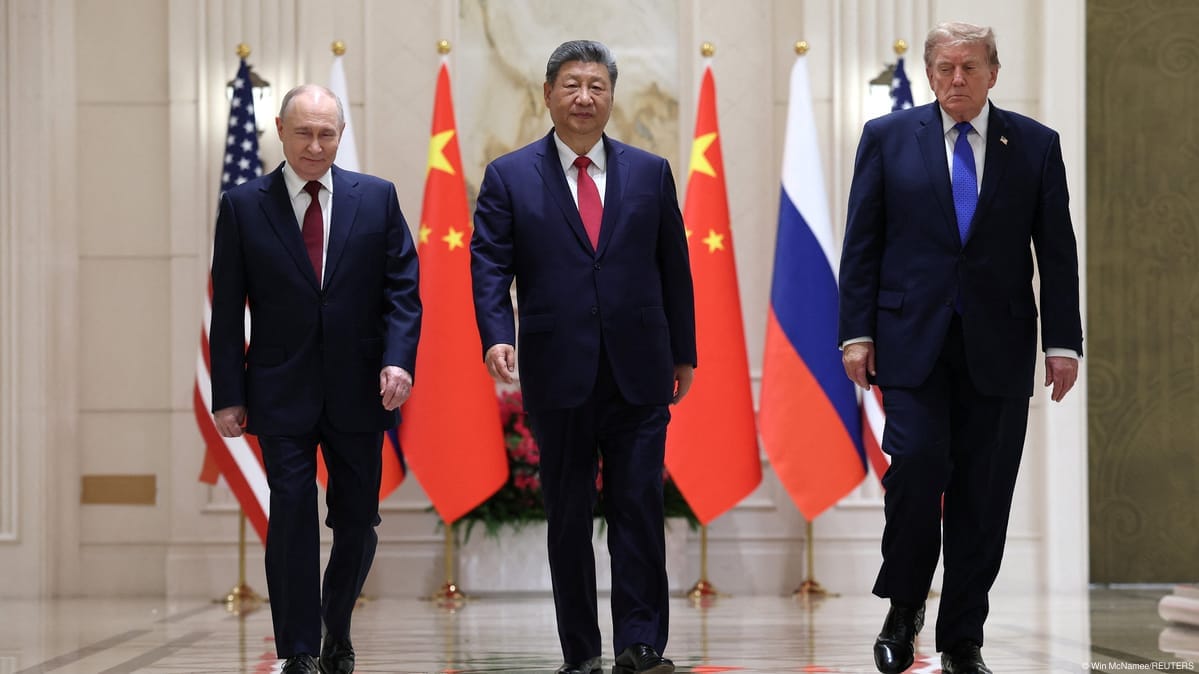
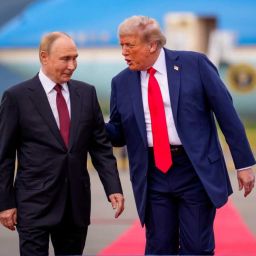
For ninety minutes on Thursday afternoon, in a conference hall in Shenzhen, the three men who between them command the overwhelming majority of the world’s nuclear weapons sat at the same table. Donald Trump, Xi Jinping and Vladimir Putin met from 4:27 to just before 6, on the sidelines of the Asia-Pacific Economic Cooperation summit, in the first encounter of its kind among the leaders of the United States, China and Russia. A Kremlin aide said they would discuss “building relations among major powers” and cooperating to stabilise the global situation. In the bilateral meetings that framed the day, the vocabulary was equally soothing: Trump and Putin were described as “committed to a peaceful resolution of the Ukrainian conflict,” while Xi spoke of a “constructive China-US relationship of strategic stability.”
Let us begin by saying plainly what deserves to be said. This is better than the alternative. A world in which these three leaders fly to the same city and talk for an afternoon is safer than a world in which they trade ultimatums across a widening void. After years in which the machinery of great-power diplomacy seemed to have seized entirely, the mere fact of the meeting is a relief, and anyone who cares about peace should allow themselves to feel it. If the warmth of Shenzhen translates into a genuine settlement in Ukraine, into restraint over Taiwan, into a cooling of the conflict with Iran, then this week will have earned its place in history, and the handshake on the tarmac will have been worth more than a thousand communiqués.
But relief is not the same as endorsement, and an honest column cannot stop at the photograph. Because the same scene that offers hope also revives an idea that Europe, and above all this part of Europe, has every reason to fear. It is the idea that the affairs of the world are properly settled by a handful of powerful men in a room, and that the smaller nations whose fate is on the agenda are not participants in the conversation but items on it.
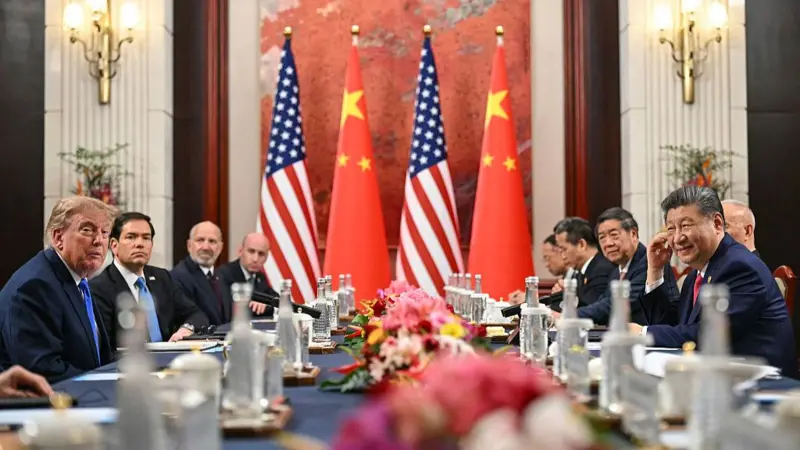
Consider who was in Shenzhen and who was not. The war in Ukraine was, by every account, central to the discussions. Trump and Putin devoted their bilateral to what both sides called a path toward peace. And yet the country whose territory, independence and dead are the subject of that peace, Ukraine, was not at the table. Nor was Europe, the continent that borders the war, funds much of Ukraine’s defence and will live with the consequences of any settlement for generations. The people most affected were the people least present.
This is the detail that should give even the most hopeful observer pause. There is a world of difference between a peace negotiated with a nation and a peace arranged over its head. The first is a settlement. The second is a partition. History in these longitudes is littered with the second kind, agreements between great powers in which the lines on the map were drawn by those who did not have to live inside them. For Romanians, for Poles, for the Baltic peoples, the phrase “the great powers have reached an understanding” does not sound like reassurance. It sounds like a warning passed down through the twentieth century.
A striking graphic has been circulating online in the hours since the summit, under the title “The New World Map,” the continents draped in the colours of the United States, Russia and China, with Shenzhen glowing at the centre. It is a crude piece of social-media theatre, and no borders have actually moved. But it captured, better than any official statement, the anxiety the meeting has stirred. When three men can decide the shape of the world in ninety minutes, the rest of the world is entitled to ask what, exactly, is being decided, and on whose behalf.
The distinction that matters now is between two futures that this summit could inaugurate, and they are easily confused because they use the same words. In the first, Shenzhen is the beginning of an inclusive peace. The great powers use their leverage to bring the warring parties to a table at which those parties actually sit, Ukraine negotiates its own future, Europe helps guarantee it, and the role of Washington, Beijing and Moscow is to make agreement possible rather than to impose it. In this future, the summit is a service to the smaller nations, not a transaction conducted above them.
In the second, Shenzhen is the return of the concert of great powers, the nineteenth-century model in which a few capitals divide the globe into spheres of influence and the nations within those spheres are expected to be grateful for the stability and quiet about the price. In this future, “strategic stability” is a polite name for a map on which some countries are sovereign and others are simply assigned.
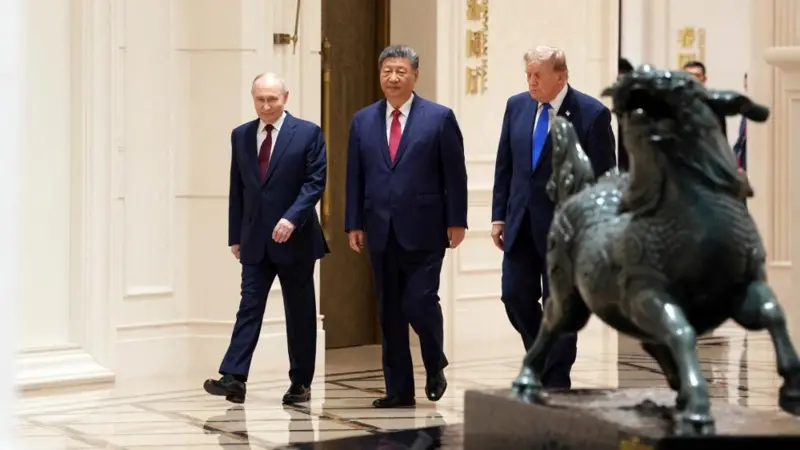
The tragedy is that from the outside, in the first hours, the two futures look almost identical. Both produce handshakes. Both produce talk of peace. Both produce reassuring phrases about major-power relations. The difference reveals itself only later, in a single test: whether the nations whose fate was discussed were asked, or merely informed.
None of this is an argument against the summit. It is an argument for vigilance about what the summit becomes. Europe’s task now is not to sulk about having been left off the guest list, nor to pretend the meeting did not matter, but to insist, loudly and immediately, that any settlement touching Ukraine must be made with Ukraine and with Europe, not merely ratified by them after the fact. The surest way to turn a hopeful summit into a dangerous precedent is for the smaller powers to accept, by their silence, that the great ones may speak for them.
So let us hold both truths at once, which is what grown-up foreign policy requires. The meeting in Shenzhen was good news, genuinely, and the prospect of de-escalation among the powers is to be welcomed without embarrassment. And the model of order it hints at is one that Europe must shape rather than accept, because a peace that is merely handed down is not a peace that lasts, and a stability built on the silence of the unconsulted is only the interval before the next grievance.
Three men talked for ninety minutes and the world grew a little safer. That is worth celebrating. Whether it also grew a little freer, or merely a little more neatly divided, is the question the coming weeks will answer, and it is the one the rest of us, the nations not in the room, must make sure is asked.
By I. Constantin