Trump receives warm reception from Xi and Putin in China, With a Three-Way Summit Set for Thursday
The images from southern China on Wednesday were the kind that diplomacy rarely produces any more: an American president embraced by his Chinese host, a handshake with the Russian leader, and three of the most powerful men on earth preparing to sit at one table. After years of confrontation, the language in Shenzhen was suddenly the language of peace, prosperity and strategic stability. This is a report on a day that felt, against all recent expectation, hopeful.
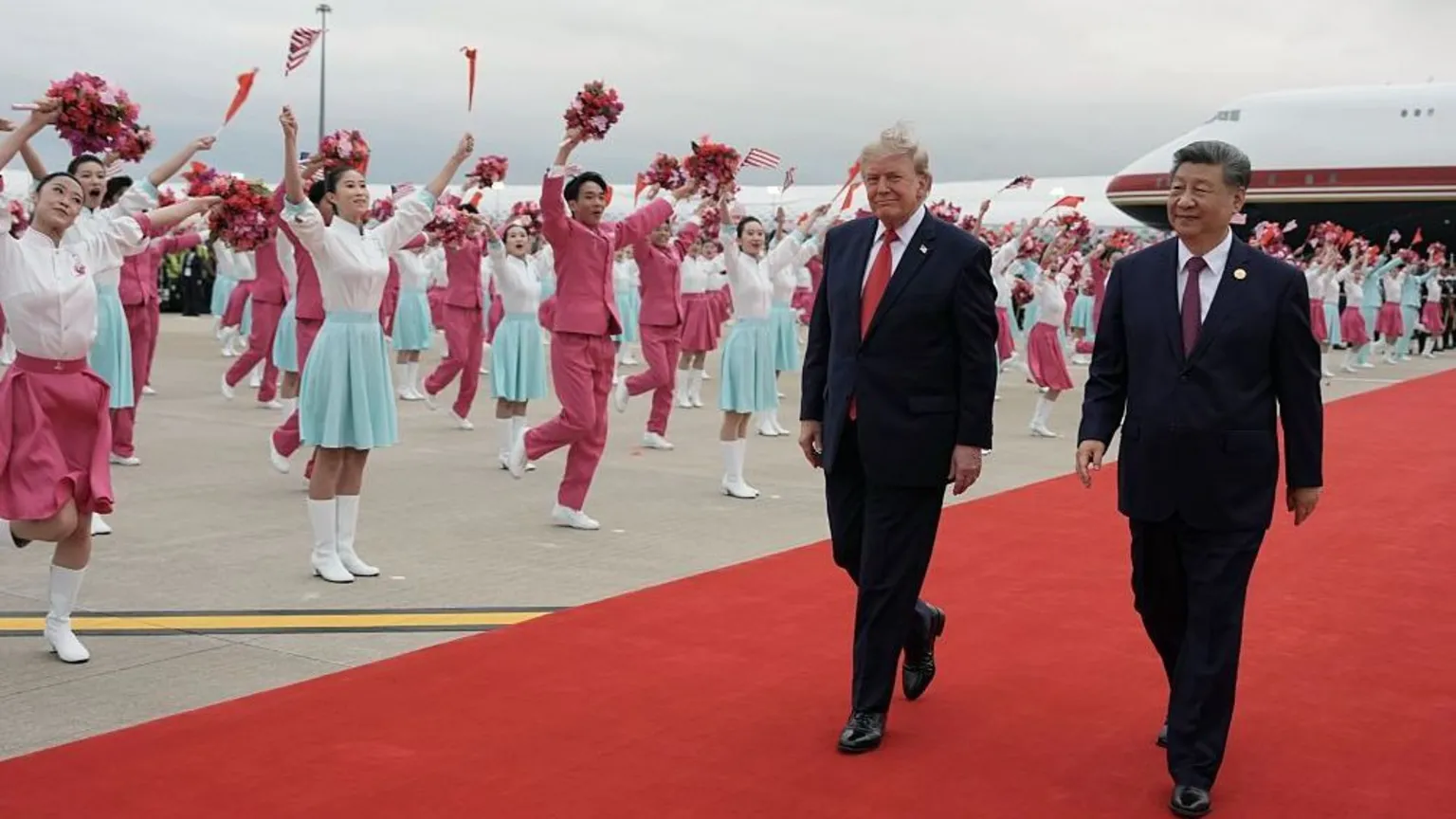
Donald Trump arrived in China on Wednesday, and with his arrival the center of gravity of his Asia tour shifted decisively. Having begun the day with a state visit in Manila, the president landed in Shenzhen at 4:42 in the afternoon local time, where he was met not by protocol officers but by Xi Jinping himself, in a personal welcome that included a red carpet, a military band, a flyover and a rare embrace. The gesture deliberately mirrored the reception Trump had given Xi in the United States in September, and it set the tone for the most consequential leg of the trip.
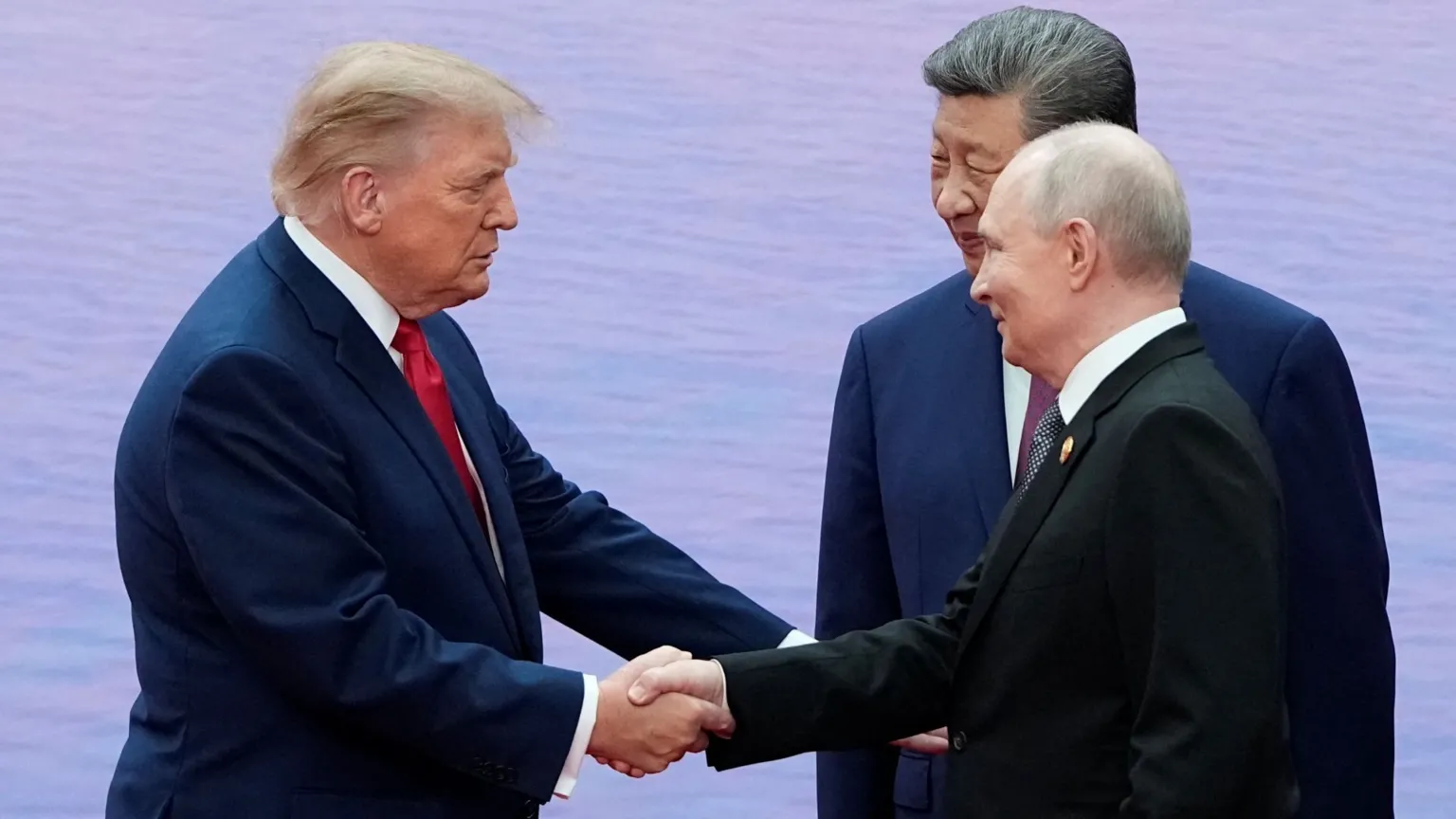
For all the ceremony in the Philippines earlier in the day, this was the image the world was waiting for, and it came with an even larger one attached. Among the leaders gathered as the Asia-Pacific Economic Cooperation summit opened was Russia’s Vladimir Putin. Trump and Putin shook hands and exchanged pleasantries at the festivities, and officials indicated that a sit-down on Thursday would see the Russian president “joining the conversation” with Trump and Xi, an encounter that, if it proceeds as planned, would be the first three-way meeting of its kind between the leaders of the United States, China and Russia.
The anticipation around that trilateral has run well ahead of its confirmed substance. The White House has said the three-way discussion will not focus on the war in Ukraine, and as day two closed the formal shape of the meeting, its agenda and whether it would be a true joint session rather than a sequence of bilaterals remained to be seen. What is clear is the symbolism. A sitting American president convening with his Chinese and Russian counterparts, at a moment of open conflict involving Iran and continuing war in Ukraine, is an event without obvious precedent, and it will be read around the world as a statement about how the great powers intend to manage, or divide, the global order.
If the embrace with Xi set the tone, it was another greeting that gave the day its historic charge. As the leaders gathered for the family photograph of the Asia-Pacific Economic Cooperation summit, Donald Trump and Vladimir Putin shook hands and exchanged greetings, their first meeting since the Alaska talks of 2025. For Putin it was a particularly striking moment: his first appearance in an APEC leaders’ photograph in nine years, a return from the diplomatic cold that would have seemed improbable only months ago.
And this was merely the prelude. On Thursday, the three presidents are expected to meet together on the sidelines of the summit, in what would be the first trilateral encounter of its kind between the United States, China and Russia. Trump also plans a separate sit-down with Putin, their first formal bilateral since Alaska. The symbolism is almost too large to absorb: the leaders of the three nations that hold the overwhelming majority of the world’s nuclear weapons, choosing to talk rather than to threaten, in the same room, on the same day.
Beijing framed the coming meeting in language that, coming from any of the three capitals, would once have been unthinkable in the current climate. The gathering, China said, would be devoted to “in-depth exchanges on safeguarding world peace and promoting strategic stability in major-power relations.” Putin, for his part, said he expected the summit to be “highly useful.” These are the phrases of men preparing to make progress, not to posture.
The most hopeful note of all concerned the war that has haunted Europe for nearly four years. Asked about Ukraine before his arrival, Trump struck a tone of unmistakable optimism. “I think it’s very close to getting it done,” he said. “We are going to have a good meeting on that.” For a conflict that has defied summit after summit, the suggestion from the American president that a settlement may finally be within reach is reason enough for cautious encouragement, and the fact that he intends to pursue it face to face with Putin, with Xi’s weight in the room, gives the effort a seriousness earlier attempts have lacked.
It would be naive to pretend the obstacles have vanished, and no one in Shenzhen pretended so. But diplomacy works by creating the conditions in which agreement becomes possible, and the conditions on display this week, the warmth, the courtesies, the shared vocabulary of stability, are precisely the conditions that have been missing. Peace is not announced. It is approached, step by step, and Wednesday looked like a step.
The hopeful mood extended to the summit’s central business, which is, after all, prosperity. APEC gathers twenty-one economies that together account for roughly 60 percent of global economic activity, and its animating idea has always been that open trade lifts all its members. In Shenzhen that idea found an unlikely chorus.
Xi used his address to business leaders to call for more open trade and equitable growth across the Asia-Pacific, pledging tariff cuts, wider market access and reforms to rules and standards, a vision of a region knitted together by commerce rather than divided by it. Even Putin spoke the language of economic openness, noting that the Asia-Pacific now accounts for more than half of Russia’s total trade and criticising the use of sanctions and barriers as instruments that, in his telling, have lost their force. And analysts following the meeting pointed to the most tangible prospect of all: an extension of the trade truce that Trump and Xi reached last year, the understanding that pulled the world’s two largest economies back from a spiral of escalating tariffs.
Trump himself, pressed on the frictions that remain, chose emphasis over grievance. The United States, he said, has “a very good relationship with China.” On the sensitive question of Taiwan he said he did not plan to raise it, though he expected Xi might, a studied restraint that itself signals a desire to keep the temperature low. Even the thorniest issue between the two countries, American limits on China’s access to advanced semiconductors, he addressed with candour rather than confrontation, acknowledging internal disagreement in his own administration while stressing the strength of the overall relationship.
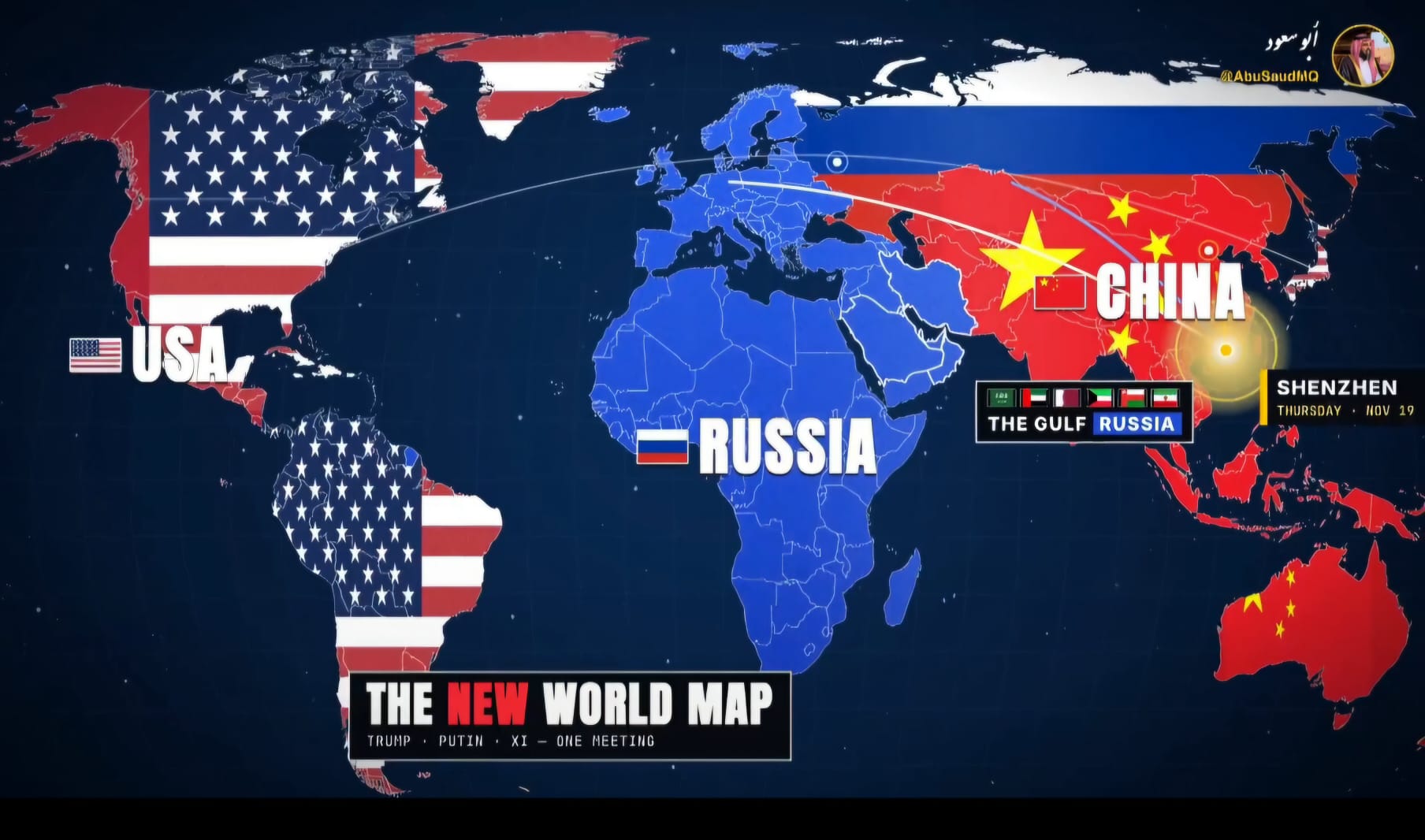
The graphic now circulating online captures, in a single dramatic frame, the anxiety and the awe that this week’s gathering has stirred. Under the heading “The New World Map” and the tagline “Trump, Putin, Xi, One Meeting,” it drapes the continents in three colours: the United States stretched in stars and stripes across both Americas, Russia in its white, blue and red banner spanning the north, and China in Communist red reaching across Asia, with a glowing marker over Shenzhen dated Thursday, November 19, and a small cluster of Gulf and Iranian flags tucked beside Russia’s name. It is not, of course, a real map, no borders have moved, and the image is the work of a social-media account rather than any government. But its message is unmistakable, and it explains why the summit has gripped the world’s imagination: the sight of the American, Chinese and Russian leaders converging on one Chinese city has revived the oldest question in geopolitics, whether the planet is once again being quietly divided among a handful of great powers. When these three men sit down together, much of the world cannot help but wonder where, on the map, that leaves everyone else.
Trump arrived in China fresh from a leg of the trip that had its own abundance of goodwill. In the Philippines, where the tour began, the imagery was personal and affectionate. President Ferdinand Marcos Jr. gave Trump a state welcome at Malacañang Palace, where the American president reunited with the 97-year-old Imelda Marcos and, surveying the palace, told his host simply, “I love what you’ve done here.” Marcos, in a gesture that delighted the travelling press, sent Trump a delivery of Jollibee, the beloved Philippine fast-food chain, calling it a “taste of Manila.” Trump’s verdict was a single word: “Fantastic.”
There was substance beneath the charm. Trump announced what he called “the biggest trade deal we’ve ever made” with the Philippines, centred on food and energy cooperation, floated joint work on nuclear power and the supply of American gas from a planned Alaska pipeline, and offered reassurance to Manila on the tensions in the West Philippine Sea. He also used the summit’s margins to advance trade conversations with Canada’s Mark Carney and Mexico’s Claudia Sheinbaum, the ordinary, patient work of a leader stitching together agreements across a region.
By nightfall the stage was set for the day that will define the tour. Two meetings with Xi are planned, one of them devoted to the economy. A bilateral with Putin is expected. And the three leaders are due to convene together, a tableau without precedent, to discuss, in Beijing’s words, world peace and strategic stability, and in Trump’s, a Ukrainian settlement he believes is “very close.”
None of it is guaranteed. Summits can disappoint, and the issues on the table, the war in Ukraine, nuclear arms, the conflict involving Iran, the contest over technology, are among the hardest humanity has devised for itself. But there is a difference between a world in which these leaders hurl ultimatums across a widening divide and a world in which they fly to the same city, embrace on the tarmac, shake hands before the cameras and sit down to talk. Wednesday gave us the second kind of world, if only for a day.
For a public wearied by years of confrontation, that is not nothing. It is, in fact, a great deal. The powers that could end civilisation in an afternoon chose instead to spend one together, speaking of peace and prosperity and the stability of their relations. Whether Thursday delivers the agreements that Wednesday’s warmth seemed to promise, the mere sight of Trump, Xi and Putin preparing to reason together is a reminder that diplomacy, so often pronounced dead, still has a pulse. Sometimes hope is simply the recognition that the door, long bolted shut, has been left ajar. In Shenzhen this week, it was.
By I. Constantin