Skip to main contentScroll Top

The Trigger Effect: Can Popular Mobilization Become an Unintended Catalyst of Political Change?

Can a movement mobilizing against the shortcomings of a backsliding democracy become the catalyst for its democratic renewal, or can it inadvertently accelerate the very political transformation it seeks to resist? The answer may lie in what I would call the trigger effect: the capacity of popular mobilization to destabilize an existing political equilibrium without necessarily determining the direction, nature or ultimate consequences of the change it initiates.
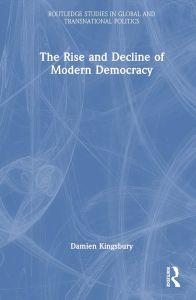
There is an abundance of books and articles attempting to explain the backsliding of modern liberal democracies, drawing on a wide constellation of overlapping ideas, theories, arguments and thinkers. Damien Kingsbury, in The Rise and Decline of Modern Democracy, identifies among the causes of democratic disillusionment the growing perception that democracy no longer addresses people’s most compelling needs or interests. Steven Levitsky and Daniel Ziblatt, in How Democracies Die, argue that democracy no longer necessarily ends with a bang—in a revolution or military coup—but may instead die with a whimper, through the gradual weakening of critical institutions, such as the judiciary and the press, and the erosion of long-established political norms. Benjamin Carter Hett, in The Death of Democracy: Hitler’s Rise to Power and the Downfall of the Weimar Republic, challenges the simplistic proposition that Hitler merely came to power through an electoral mandate. His rise cannot be understood without examining the decisions, miscalculations and political manoeuvring of Germany’s established elites, who sought to contain and co-opt the populist insurgency but ultimately helped bring the Nazis into power.
It is Hett’s analysis that prompted me to explore the role of popular mobilization in challenging existing and at times conflicting, political arrangements, and its potential to become a catalyst for political change whose direction is neither predetermined nor necessarily consistent with the aspirations of those who initiate it.
An important distinction, however, deserves consideration. Much of the debate about democracy and its decline focuses primarily on the political and institutional dimensions of liberal democracy, without sufficiently distinguishing them from the performance of democratic governance in addressing economic and social expectations. The distinction is not inconsequential. Liberal democracy rests on constitutional limitations on power, independent institutions, the protection of fundamental rights, political pluralism, and freedom of expression and the rule of law. Democratic governance, on the other hand, must also be assessed by its capacity to manage public finances, deliver economic growth, address inequality, provide public services, create employment and ensure that opportunities remain accessible.
These two dimensions are closely interconnected, but they are not interchangeable. A government may preserve democratic institutions while performing poorly in economic and social policy. Conversely, an authoritarian government may deliver economic growth or financial stability without providing political freedom, accountability or institutional safeguards. People may therefore become dissatisfied with the performance of their democratic government without necessarily rejecting democracy itself. Yet when such failures persist, dissatisfaction with government performance may gradually become distrust of the institutions through which that performance is delivered, and eventually a rejection of the political system itself.
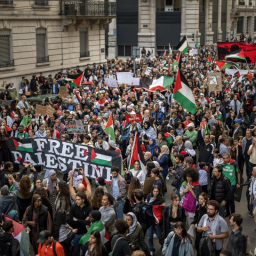
The mobilization of Gen Z, alongside broader constituencies such as the Yellow Vests and organized labour, illustrates how grievances extending beyond traditional ideological divisions can challenge an existing political equilibrium, expose the inability of governments to respond effectively and place established political arrangements under considerable pressure. These grievances may encompass the rising cost of living and declining purchasing power, housing unaffordability; wages that fail to keep pace with living costs, growing economic inequality and the perception that opportunities for younger generations are becoming increasingly inaccessible. Beneath these concerns lies a more fundamental sentiment: the belief that economic and political systems increasingly serve established interests rather than those who struggle to secure their place within them.
A young person protesting because they cannot afford housing, establish financial independence or envisage a reasonable prospect of improving their standard of living is not necessarily demanding a different political system. They may simply be demanding that the existing system work. The political consequences of such demands, however, can be considerable. When governments repeatedly fail to respond to expectations that citizens consider legitimate, economic frustration may gradually translate into institutional distrust, and institutional distrust into rejection of established political forces.
These grievances are not necessarily demands for a different political ideology. They are, first and foremost, demands for a different economic and social reality. Yet governments confronted with mounting public debt, limited fiscal space, competing priorities and increasingly fragmented political constituencies may find themselves unable to satisfy them. The resulting dilemma is not simply one of political unwillingness, but potentially one of diminished capacity to deliver. Higher public spending may aggravate fiscal pressures, while spending reductions or tax increases may provoke resistance from different sections of society. Reforms that may produce long-term benefits can impose immediate costs on particular constituencies. Economic growth alone may not resolve the distributional conflicts underlying popular dissatisfaction.
France offers an interesting contemporary illustration of this dilemma. Its economic and fiscal constraints, combined with political fragmentation and the weakening of established political forces, make it increasingly difficult for governments to reconcile competing demands and offer solutions that command broad public support. The problem is not necessarily that existing political parties have no solutions, but that their ability to implement them may be constrained by economic realities, political divisions and declining public confidence. When established political forces can no longer absorb discontent, accommodate competing demands or offer credible alternatives, the foundations of the existing political equilibrium begin to weaken.
But mobilization itself does not necessarily produce a political programme, an institutional alternative or a blueprint for the future. Its ability to unite people against existing arrangements does not imply an ability to unite them around what should replace those arrangements. Participants may share a rejection of the political establishment, economic insecurity or institutional failure, while holding fundamentally different views about the solutions. The movement may be extraordinarily effective in destabilizing the status quo while remaining incapable of defining a common political destination.
This is one of the inherent paradoxes of mass mobilization. The movement’s initial objectives, its composition and its eventual political consequences may be three entirely different things. People may take to the streets to demand economic justice, affordable housing, better wages and greater political accountability, without having any intention of supporting an alternative political ideology. Yet once the existing equilibrium is disrupted, the political consequences may extend far beyond the original demands.
The resulting political vacuum may be filled by established parties seeking to appropriate the movement’s demands, by new political entrepreneurs, populist leaders, radical forces or democratic reformers. Authoritarian and populist movements may capitalize on demands for stability, economic security, law and order and decisive leadership, offering apparently straightforward solutions to complex problems. Conversely, democratic reformers may interpret the same mobilization as an opportunity to renew institutions, restore public confidence and address longstanding economic and social inequalities.
The political outcome may therefore depend less on the original protesters than on the actors who succeed in interpreting, organizing and redirecting the grievances they express. A movement may begin spontaneously, without a clearly defined leadership or ideological orientation, but it rarely remains politically neutral once it starts challenging established power. Different political forces will attempt to appropriate its momentum, give direction to its demands and convert popular discontent into political capital. The original participants may ultimately find themselves supporting political forces whose objectives differ fundamentally from their initial aspirations.
The role of established political elites is particularly important in this process. Their response may determine whether mobilization becomes an opportunity for reform or an opening for forces seeking a more fundamental transformation of the political system. Governments may accommodate demands, initiate reforms, attempt to co-opt the movement, repress it or simply underestimate its strength. Political miscalculations can have consequences extending far beyond the immediate crisis.
This is where Hett’s analysis of the Weimar Republic becomes particularly relevant. The lesson is not that contemporary developments necessarily reproduce the historical circumstances that brought Hitler to power. The political, economic and institutional environments are profoundly different. Rather, the Weimar experience illustrates how established political actors, through misjudgment, political accommodation and attempts to manipulate forces they believe they can control, may contribute to outcomes they neither intended nor anticipated. Political transformation is not always the direct consequence of the movement that initiates it; it can also be the consequence of how others respond to that movement.
There is another possibility worth considering: mobilization may create a feedback loop that intensifies the very conditions that generated it. Economic dissatisfaction produces protests, which weaken government authority and disrupt political stability. Prolonged instability may discourage investment, delay economic decisions and increase uncertainty, further restricting the government’s ability to respond. If economic conditions deteriorate, the original grievances may become even more pronounced, generating renewed mobilization and potentially more radical demands. A movement intended to force political change may, under certain circumstances, aggravate the conditions it seeks to remedy.
But the opposite outcome is equally possible. Mobilization may force political elites to recognize that incremental adjustments are no longer sufficient. It may break institutional inertia, challenge entrenched interests, reopen debates that had become politically closed and create the conditions for reforms that would otherwise have been difficult to introduce. In this sense, disruption may become an instrument of democratic renewal.
There is, therefore, a paradox at the heart of democratic governance. Institutions are designed to provide stability, continuity and predictability. Yet these same qualities can, over time, encourage inertia, resistance to change and the preservation of arrangements that no longer adequately respond to society’s needs. Popular mobilization can challenge this inertia and compel institutions to confront problems that have long been ignored. But disruption alone does not guarantee renewal. The same forces that break institutional inertia may also weaken institutional safeguards.
What appears to be a political crisis, and is often interpreted as a crisis of democracy, may therefore originate, at least in part, in the inability of democratic governments to deliver on the economic and social expectations they have helped create. Yet the consequences of that failure are not necessarily confined to the replacement of one government by another, or even to the transformation of the political system itself.
The more fundamental question is whether popular mobilization becomes a force for democratic renewal or an unintended catalyst for a political transformation that ultimately departs from the aspirations of those who set it in motion. The movement may initiate a process whose consequences are far greater than its original objectives, and whose ultimate beneficiaries may be entirely different from those who took to the streets.
This is the essence of the trigger effect: popular mobilization can set political change in motion, but it cannot necessarily determine its direction. The outcome will depend on the economic and institutional conditions in which it occurs, the responses of established political forces and, ultimately, the ability of competing actors to shape what follows.
By Ambassador George Papadatos Ph.D
Head of Delegation and Permanent Observer of EPLO
at the United Nations and other International Organizations in Geneva

Related Posts