The Key to the Future of Maritime Industry
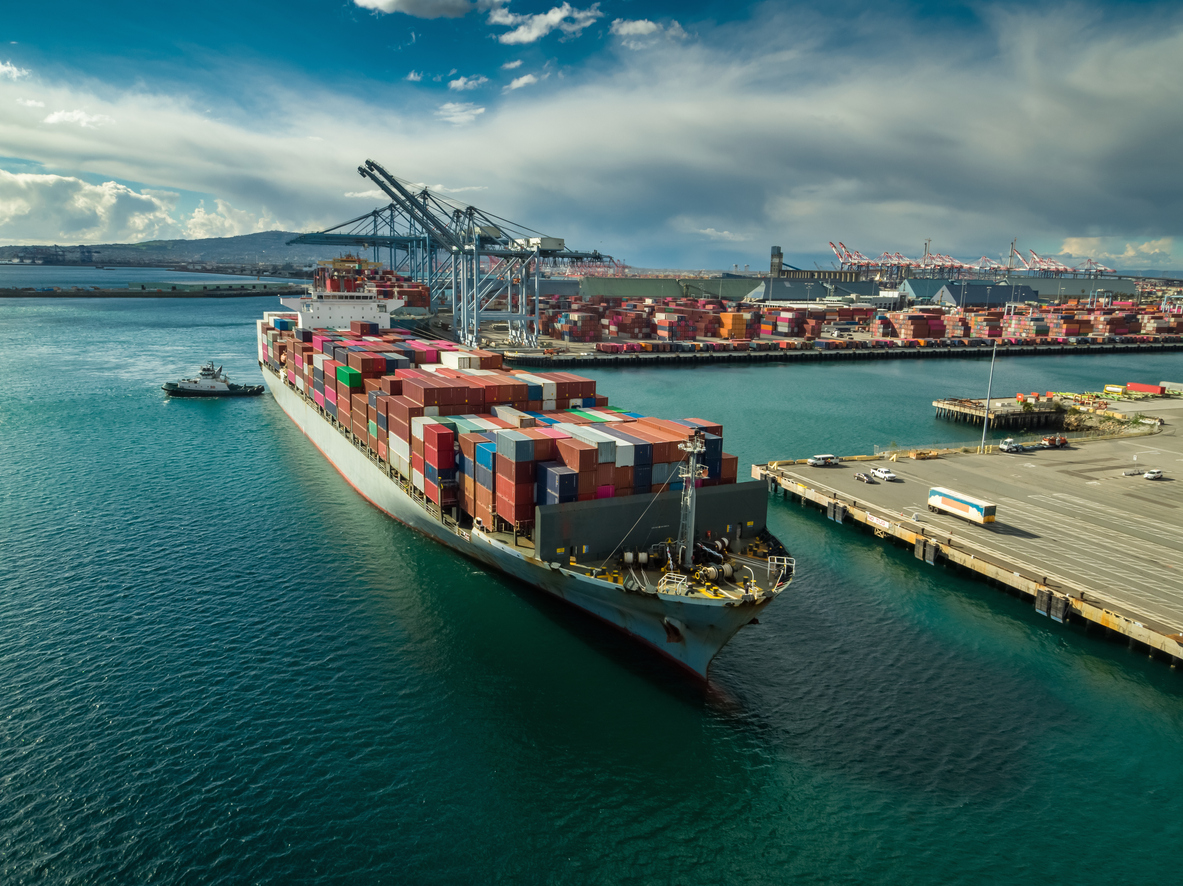
In response to the tide of globalization, maritime industry booms owing to the demands for larger volumes of cargoes and routes to distant destinations. There is no denying that maritime industry plays a vital role in global supply chain as nearly 80% of world trade rests on it. Nevertheless, the increasing costs of chartered freight, the pandemic and the burgeoning aging population, are all challenging the shipping industry. Fortunately, coming out as the brainchild of the Nippon Foundation, Suzaku, a fully autonomous vessel, was recently launched in Japan, and will elevate operational efficiency, alleviate labor crunch and cut down costs notably if is put into use.
In spite of the ordinary appearance, with no conventional steering wheel in sight, the 100-metre long cargo ship Suzaku is monitored in real time by the fleet operation center in Chiba, east of Tokyo. Before successfully released into markets, Suzaku shall undergo several demonstration testings ensuring that the autonomous vessels can perform difficult maneuvers, prevent collisions and secure uninterrupted telecommunication with headquarters under extreme situations, since changeable weather condition is not the only factor that influences the voyage, but possible collision, cyber attacks and pirates also matter, according to the Economist. “You can’t control the sea,” says The Nippon Foundation Executive Director Mitsuyuki Unno. “There can be strong winds, rough seas and fishing boats and recreation boats can appear out of nowhere. There’s always the fear of collision,” Mr Unno explains.
Actually, the Suzaku was not the first autonomous vessel tested by the consortium. According to the Nippon’s official website, the Nippon Foundation launched the MEGURI2040 Fully Autonomous Ship Program in February 2020 for the development and verification of fully autonomous ship navigation. On January 11, 2022, a fully autonomous small tourism boat successfully navigated the waters around Sarushima, an island off the coast of Yokusuka City in Kanagawa Prefecture. This was the world’s first successful demonstration of fully autonomous navigation of a small tourism boat from departure to docking, and the application of this technology is expected to serve as an essential means of transportation to and from offshore islands. Given that more than half of the ship operators are over the age of 50, it may also ease Japan’s labor crunch that once created repercussion for safety.
On January 24, 2022, the navigation of 194 TEU Mikage was carried out, and was completed on January 25. Mikage is equipped with radar sensors, a global navigation satellite system, an automatic identification system (AIS), infrared cameras used in the nighttime, and an AI learning system that can detect other ships or obstacles. In addition, instead of manually casting anchors, drones were used to deliver the heaving line to the port, indicating a viable alternative for mooring operation. Furthermore, the image capture technology aided to handle docking with a throttle lever in the control room automatically making repeated, incremental movements.
Compared to conventional vessels, electronic hijacking and pirates can also be problems. Though communication with ships will be backed up by satellites and IT security software inbuilt to the systems on land, there is still a long way to go for further testing and according improvement of algorithms.
“The goal of the consortium is to put fully autonomous ships into operation by 2025 and to have half of all Japanese coastal ships running autonomously by 2040.” If accomplished, enormous economic potential could be unleashed due to the reduced costs in insurance premiums and the capacity for various services traveling to remote islands that was sometimes considered unaffordable in the past, thus attracting younger tech savvy generation of seafarers, according to the Economist.
Exhilarating as it might be, Mr Kengo Minami from Nihon University’s College of Law pointed out that the current maritime legal system should be amended regarding accident liability and other laws, and a licensing system should also be considered. Besides, deciding the exporting price and making crew member training procedures can be problems that come along as the vessels being introduced worldwide.
The testing on autonomous vessels could be a giant step in the maritime industry, but back to maritime industry itself, in addition to increasing costs and dwindling workforce in most developed countries, what developing countries face is the lack of opportunities, funds, technology and relevant talents to connect to, build and manage the ports. So it comes back again to the widely acknowledged hurdle—the unequal distribution of resources.