An Overview of India-Pakistan Tensions and Disagreements

Photo: Unsplash.com
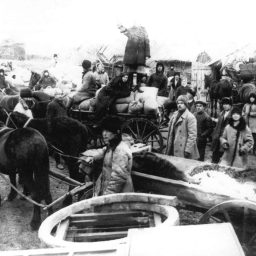
India and Pakistan, two nuclear-armed neighbors in South Asia, have a history of conflict and disagreements that date back to their inception as independent nations in 1947. The roots of these tensions are deep, complicated, and multifaceted, involving historical, political, territorial, and religious issues. The partition of British India into India and Pakistan in August 1947 was a significant turning point that shaped the future relationship between these two nations. The partition was based on the Two-Nation Theory, which suggested that Muslims and Hindus were two distinct nations and thus required separate homelands. However, the process was marred by violence, communal riots, and a massive cross-border migration of Hindus and Muslims, leading to an estimated one million deaths. The memory of this violent separation continues to strain relations between India and Pakistan. The most prominent and enduring dispute between India and Pakistan is over the region of Jammu and Kashmir. At the time of partition, the princely state of Jammu and Kashmir, with a Muslim majority population but a Hindu ruler, was given the choice to join either India or Pakistan. The ruler acceded to India, a decision contested by Pakistan, leading to the first Indo-Pakistan war in 1947-48.

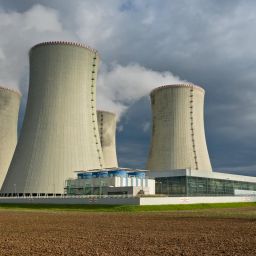
The war ended with a UN-mediated ceasefire, leaving India in control of about two-thirds of the state and Pakistan the remainder. Subsequent wars in 1965 and 1999, and continuous cross-border skirmishes, have failed to resolve the issue. In addition to Kashmir, the status of Siachen Glacier, an uninhabited high-altitude territory, has been a point of conflict between the two nations since 1984. Control over this area has strategic importance for both countries. Religious and ethnic divides also fuel the India-Pakistan tensions. The partition created a predominantly Hindu India and a predominantly Muslim Pakistan, but significant populations of Hindus stayed in Pakistan and Muslims in India. The treatment of these minority groups in both countries often becomes a point of contention. India has consistently accused Pakistan of sponsoring cross-border terrorism, particularly in the disputed region of Jammu and Kashmir. Attacks such as the 2001 Indian Parliament attack and the 2008 Mumbai attacks, which India attributes to Pakistan-based groups, have heightened tensions. Pakistan, on the other hand, accuses India of supporting separatist movements in Balochistan and Sind provinces. Both countries view each other’s actions as a threat to national security, thus sustaining a cycle of suspicion and hostility. The acquisition of nuclear weapons by both India and Pakistan in the late 20th century has added a new dimension to their dispute. The nuclear capabilities have acted as a deterrent to a full-scale war but have also raised international concerns about the potential for a nuclear confrontation. The India-Pakistan dispute is one of the world’s most protracted and dangerous conflicts. Despite multiple attempts at peace talks and confidence-building measures, trust deficit, historical baggage, and the core issue of territorial disputes have kept the tensions alive. The resolution of these issues requires dialogue, diplomacy, and a mutually agreed-upon commitment to peace.
By Cora Sulleyman