Scroll Top

Fed Rate Cuts and US Presidential Election

Image Credit federalreserve.gov

The Federal Reserve announced a 50bps cut in the target range for the federal funds rate. In this month’s Fed rate meeting, forecasts for economic growth, unemployment, and inflation were adjusted and revised. The rate cut signaled to the market to open a new round of easing cycle, combined with Fed Chairman Jerome Powell’s hawkish statement at the press conference, making global asset prices show a wave of trend. While this rate cut may signal recessionary expectations to the market, current economic indicators in the U.S. suggest that the U.S. economy is more likely to achieve a soft landing. Reviewing the history of the Federal Reserve’s interest rate cuts, today’s U.S. economic situation is most similar to that of 1995. At the same time, the Fed’s interest rate cut not only affected the market, but also affected the U.S. political scene. The timing of the rate cut was met with mixed reviews from both Democrats and Republicans. Democrats mainly sang the praises of the rate cut, while Trump-led Republicans mainly attacked the timing of the cut as politically motivated.

Image Credit federalreserve.gov

On September 18, 2024 EST, the Federal Reserve’s September interest rate meeting released its interest rate resolution to the public, a table of economic projections, and a press conference. The Federal Reserve announced that it was lowering its target range for the federal funds rate by 50 basis points to a level between 4.75% and 5.00%. The official news of this Fed meeting ended the market debate over whether to cut rates by 25 bps or 50 bps. It’s worth noting that this rate cut is the first by the Fed in four years.
In September’s Fed rate meeting, the Fed made adjustments and corrections in many areas. On the economic growth front, the Fed lowered its 2024 U.S. growth forecast from a modest 2.1% to 2.0%, maintaining its long-term economic growth rate of 1.8% in 2024 and its 2% growth forecast for 2025 and 2026. On the employment front, the Fed raised its forecast for the unemployment rate at the end of 2024 to 4.4% from 4.0%, raised its forecasts for 2025 and 2026 to 4.4% and 4.3%, respectively, and maintained its forecast for the long-run unemployment rate at 4.2%. At the same time, the meeting adjusted the description of employment from “new jobs moderated” to “new jobs slowed”. On the inflation front, the Fed lowered PCE and core PCE inflation to 2.3% and 2.6% respectively in 2024 and 2.1% and 2.2% respectively in 2025, and maintained its 2.0% forecast for inflation beyond 2026 and in the longer term. At the same time, the meeting adjusted the description of inflation from “inflation moderated, but remained high” to “inflation moved further towards the Committee’s 2% target, but remained high”.
In terms of risk assessment, the meeting revised the risks to inflation and employment from “moving towards a better balance” to “already largely in balance” and added the description that “the Committee has gained greater confidence that inflation can move towards the 2% target on a sustainable basis”. The meeting highlighted the slowdown in the labor market and weakened inflation risks to explain the behavioral rationale for this 50 basis point rate cut. In a subsequent press conference, Fed Chairman Jerome Powell said the Fed is not in a hurry to cut rates nor is there any fixed interest rate path, and that the public should not view this 50 basis point cut as a new trend. At the same time, he said the current rate cut was an act made after considering the balance of upside inflation and downside risks in the labor market.
This rate cut is more signal than substance, and Fed will probably further open the easing cycle. The Fed’s current 50 basis point rate cut slightly exceeded market expectations. The rate cut was welcomed by the markets despite the Fed’s actions raising concerns about whether it was trying to boost underlying economic weakness. But Fed Chairman Jerome Powell’s relatively hawkish remarked at a press conference signaled caution to the markets. The market showed optimism and then caution in this regard. Global asset prices showed a flurry of movement on the night of the Fed’s rate meeting. U.S. stocks closed lower Wednesday. The Dow Jones Industrial Stock Average price index fell 103.08 points, or 0.25 percent, to close at 41,503.10. The index rose 375.79 points after the Federal Reserve decided to cut interest rates by 50 basis points. The Standard & Poor’s 500 Index fell 0.29 percent to close at 5,618.26. The Nasdaq Composite Index fell 0.31 percent to 17,573.30. U.S. stocks and U.S. bonds showed an inverted “V” type reversal, short-term high back, is expected to follow the upward space. The U.S. 10-year Treasury yield ended up slightly higher at around 3.7%.

The dollar index fell and then rose, reaching a low of 100.2 before rising to a level of around 100.7. Gold pulled up more than 1%, topping $2,600, but fell back sharply by $50 after Powell’s conference. Copper, tin and other non-ferrous metals, on the other hand, opened higher and closed lower. The follow-through recession-rate cut trade may continue for some time. But the Fed’s rate-cutting program can probably be disproved shortly into the future, and U.S. stock and U.S. bond conditions may be relatively shaky in the short term.
The Federal Reserve this time to take “aggressive + front-loaded” interest rate cut operation, the previous conventional preventive interest rate cut framework has broken through. China Guotai Junan Securities analysts believe that although Powell provided a relatively conservative path for rate cuts during the year, it is expected that there is still the possibility of aggressive rate cuts in the follow-up, and U.S. stocks and U.S. bonds are expected to usher in new allocation opportunities. Guotai Junan Securities research found several possible marginal increments to this rate cut. The first is that the Federal Reserve started to cut rates in a relatively aggressive manner. While its recession-resistant attitude caters to market expectations, it is likely to follow up with more conservative expectation management.
There are two main reasons for this marginal incremental judgment. First, the Fed’s dot plot shows a rate cut of 100 bps for the year. the current rate cut of 50 bps means that only 25 bps may be cut in November and December this year. The second was Powell’s continued emphasis in his press conference on the fact that there would be no rush to move on rate cuts. The second is that in its report, the Federal Reserve further downgraded its growth forecast for 2024 and raised its unemployment forecast, but still provided the U.S. with a soft-landing growth path. In addition, the Federal Reserve lowered its inflation expectations across the board. However, it will be difficult for U.S. domestic inflation to return to the 2% target in the near future. The Fed will continue to face the “dual mission of employment and inflation”. Finally, the Fed expects the overall path of subsequent rate cuts will continue until 2026. The level of rate cuts is currently expected to be reduced by 100BP, 100BP, and 50BP in 2024, 2025, and 2026, respectively, ultimately stabilizing the federal funds rate at 2.75%-3.0%. The overall rate-cutting program is in a front-loaded mode, focusing mainly on 2024, and responding to a potential recession through fast-paced precautionary rate cuts.
 With the help of the Fed’s interest rate cuts, there is hope that the U.S. economy will find the right path to a soft landing. This rate cut may signal pessimism and recessionary expectations to the market. However, the team of Qian Wei, Chief of Overseas Economics and Large Asset Classes at CITIC Securities, and the team of Ma Kunpeng, Chief of Banking, in their report, “The Fed’s Interest Rate Cut Landed on the Ground, What’s Behind It to See? pointed out that a soft landing is still the baseline assumption for this rate cut compared to the risk of recession.
The team emphasized that the mismatch between supply and demand is the core contradiction in the current job market, and that a quick and substantial rate cut could increase the probability of a soft landing. The report analyzes that “the Fed’s aggressive actions are expected to stabilize the easing expectations and liquidity improvement trend since mid-year and help the economy stabilize.” In the years following the New Crown outbreak, the lack of supply in the U.S. was the backdrop for the Fed’s interest rate hikes that dampened labor demand. However, at present, the U.S. economy will be further cooling. The labor supply improvement is optimistic, and even having the risk of surplus. The labor market continues to cool, and the inflation data continues to fall. But there are still some economic data show resilience.
The Federal Reserve lowered interest rates to boost demand in response to the current labor backdrop. With the help of lower interest rates, there is a greater probability of a soft landing for the US economy than the risk of falling into recession. China Southwest Futures Institute’s research also analyzed that in the background of the U.S. lower residential and corporate sectors leverage, the U.S. economy has the hope and conditions to achieve a soft landing.
Various U.S. economic data remain better. In terms of employment data, the U.S. non-farm payroll report for August was released on September 6th. Data from the U.S. Department of Labor’s Bureau of Statistics showed that U.S. nonfarm payrolls added 118,000 jobs in June, revised from 179,000. Nonfarm payrolls added 89,000 jobs in July, revised from 114,000 jobs. After revisions, the combined number of jobs added in June and July was 86,000 lower than before revisions. In addition, nonfarm payrolls increased by 142,000 in August, which was lower than the 160,000 expected. However, it was an improvement relative to July’s data. The unemployment rate fell to 4.2%, in line with expectations and the first decline after four consecutive months of rising unemployment. U.S. average hourly wages rose 3.8% year-over-year in August, compared with expectations of 3.7% and the previous 3.6%, while the year-over-year improvement was 0.4%, compared with expectations of 0.3% and the previous 0.2%. U.S. bonds rose and the U.S. dollar index fell after the release of U.S. nonfarm payrolls and other data. In terms of inflation data, the Bureau of Labor Statistics released data on September 11 showing a gradual decrease in U.S. inflation. The U.S. unquartered CPI improved 2.5% year-on-year in August, in line with market expectations, the fifth consecutive month of lowering, and down from the previous reading of 2.9%. The value hit the lowest level of inflation since February 2021 and was expected to be elevated by 2.6%. U.S. quarterly CPI improved 0.2% m/m in August, unchanged from the previous value and market expectations. U.S.
August unquartered core CPI rose 3.2% year-on-year, compared with expectations of 3.2% and the previous reading of 3.2%. U.S. quarterly core CPI improved 0.3% in August, compared to expectations of 0.2% and the previous 0.2%. In terms of manufacturing and services data, the U.S. August ISM manufacturing PMI was 47.2, expected 47.5, the previous value of 46.8. August Markit manufacturing PMI initial value of 48, a new low for the data in 8 months. The initial Markit Services PMI for August was 55.2, a new high within the last 2 months. U.S. Markit Composite PMI initial value of 54.1 in August, a new low in the last 4 months. On the real estate front, the U.S. real estate market is gradually recovering on the back of falling mortgage rates. The United States real estate sector, which is the most sensitive to interest rates, recovered relatively early. The team of Qian Wei, Chief of Overseas Economics and Broad Assets, and Ma Kunpeng, Chief of Banking, of CITIC Securities, in their report, “Fed rate cuts hit the ground, what’s to watch behind? in which they predicted that the 30-year mortgage rate could fall to 5.5% by the end of the year, pulling back from a high of 8%. While the U.S. real estate market still suffers from high home prices, high mortgage payments, and low supply, improved sales are still to be expected. The team predicts that growth in used and new homes could pick up to 4% and 8% next year. Other data from the United States performed relatively well.
The University of Michigan report released on September 13th, the preliminary value of consumer confidence index 69, expected 68.5, higher than the final value of 67.9 in August. The value has risen for two consecutive months, with September’s figure the highest since May of this year. In addition, the report showed that the data on consumer expectations for inflation over the next year has fallen for the fourth consecutive month to 2.7%. On the monetary policy front, the Fed will continue its cycle of rate cuts in light of cooling labor markets and slowing inflationary pressures. The Fed’s dot plot of interest rates implies another 50 bps cut during the year, with a high probability of one in November and one in December. 2025 will also see a 100 bps cut.
 Charlie McElligott, an analyst at Nomura Securities, based his research on the Fed’s history of rate cuts and found that almost every time the Fed kicks off a rate-cutting cycle with a 50-basis-point cut, the market performs quite poorly. This includes January 2001 in the wake of the Internet bubble, November 2002 when the economic recovery slowed down, September 2007 at the time of the global financial crisis, and March 2020 at the time of the new crown epidemic. However, these events have become history. “Nothing is normal in this cycle of bizarre elements (unprecedented monetary and fiscal interventions, market overreactions and underreactions, accompanied by dramatic swerves and regime shifts that create momentum shocks).” McElligott wrote in the report, “In fact, we’ve experienced 11 Fed rate hikes in a year and a half, including multiple large 75 basis point hikes ……So making the appropriate types of moves in the event of a policy reversal should be expected, shouldn’t it?” Nomura Securities looked at historical cases based on 50 basis point rate cuts and market returns in the month before and months after the Fed’s rate cut and analyzed the following characteristics. First, the S&P 500 was down an average of 1% in the 30 days leading up to the rate resolution.
The necessities category gained an average of 0.8%, making it one of the best performing sectors, while technology stocks fell 2.6%, making it one of the worst performers. Energy stocks, industrials and precious metals underperformed. The Russell 2000 index of small-cap stocks fell an average of 1.7 percent. Value stocks have outperformed growth stocks and their yield curves are trending bullish. Second, the S&P 500 was essentially unchanged three months after the 50bps rate cut. The exceptions to this were year 1974, year 2001 and year 2007. The S&P 500 took a huge hit at the time. Contrary to the resolution to cut interest rates, small-cap stocks rose an average of 5.6%. Technology and value stocks outperformed. Metals prices surged. The dollar rose. It’s worth noting that Nomura Securities’ forecasts may not be accurate in an unconventional economic cycle now disrupted by the new crown epidemic. For the first time since the Coronal Virus pandemic outbreak, household net wealth in the U.S. grew during the recession. Gains in the S&P 500 remained solid. At the same time, the U.S. job market is relatively tight.
JP Morgan’s analysis suggested that America today is more like America in 1995. They believed that investors may be “exploring uncharted territory”. They also analyzed that the cycle of interest rate cuts that began in 1995 may be most similar to today’s situation. However, at that time, interest rates were cut for the first time by 25 basis points, whereas this year, rates were cut for the first time by 50 basis points. JP Morgan mentioned that there were two major backdrops to the 1995 rate-cutting cycle. Real GDP growth that year was 2.7%, CPI was 2.5%, and unemployment was 5.7%. That year’s nonfarm payroll additions fell below 100,000 only twice and averaged 179,000 per month. If the two sub-100,000 values are deleted, the monthly average is 207,000 per month. Large amounts of money flowed into money market funds (MMFs) and the M3 money supply grew rapidly. The yields on these MMFs adjusted slowly as money market rates fell. The 1995 soft landing of the U.S. economy boded well for today’s Federal Reserve, according to a study by analyst Dario Perkins of TS Lombard. In his report, he analyzed that the current economic and financial environment in the U.S. was not yet significantly unbalanced. This reduces the risk of serious problems after the Fed falls behind the market curve. To avoid falling behind the market curve, the Fed may take a sharper cut in interest rates than it did in 1995.
Economically, the Federal Reserve’s interest rate cuts make 2024 a special year for the United States. Politically, 2024 is an equally important year for the United States: it is a presidential election year. The rate cut has not only triggered an uproar in the market, but also in the political arena. The timing of this Fed rate cut is only seven weeks before Presidential Election Day. Is there a political element to the Fed’s choice to cut rates at this particular time, which is theoretically independent of the U.S. election? Different people have different attitudes. Federal Reserve Chairman Jerome Powell said the Fed’s decisions are based on service to the American people and won’t be about politics or anything else, dodging questions about the U.S. election. He emphasized that the Fed did not set any other filters when making decisions. He insisted that the Fed was an “independent institution” and that its decisions were not influenced by political pressure. JPMorgan Chase CEO Jamie Dimon said the Fed’s rate cut won’t affect the U.S. election and hopes for a soft landing for the U.S. economy.
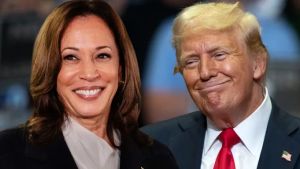
However, the Republicans and Democrats are divided on this, and the two presidential candidates are even more divided on this. Democratic candidate Harris hailed the current rate cut as a boon for middle-class families. Republican candidate Donald Trump, on the other hand, had strong words, slamming the Fed for cutting rates at this time as politically motivated. At present, economic policies have become the focus of the election campaign, and both parties hope to use their economic platforms to gain higher approval ratings. Incumbent Democratic President Joe Biden praised the rate cuts. He said on X: “Inflation and interest rates are falling while the economy remains strong, which critics say can’t happen – but our policies are lowering costs and creating jobs.” Similarly, Democratic presidential candidate Harris said the decision was “especially welcome news for Americans bearing the brunt of high gas prices.” Harris’s economic program had been attacked by Republicans as “communist-style, price-regulated, radical liberal economics.” High interest rates and inflation are among her biggest political burdens.
They have hit American families and affected voters’ perceptions of Democratic economic policies. “I know that prices are still too high for many middle-class and working families, and my top priority as president will be to lower the cost of everyday needs like health care, housing and groceries.” She said, “This is the opposite of what Donald Trump would do as president. While proposing tax cuts for billionaires and large corporations, his plan would add nearly $4,000 a year to the cost of families by imposing a Trump tax on goods they depend on, like gasoline, food and clothing.” For Harris, the Fed’s current rate cut would be one of her accomplishments as a sitting vice president. It would make up for the disadvantage of not having a clear economic platform since she became the Democratic nominee. Mark Zandi, an economist from Moody’s Analytics, told the Washington Post that the rate cut “will certainly provide an economic boost to Harris’ campaign.”
Republican presidential nominee Donald Trump, however, is taking the exact opposite approach to this. A big reason why the timing of this rate cut will trigger such a big upset for Trump is that Trump has made pushing the Fed to cut rates a very important part of his economic platform. By cutting rates by 50 basis points at this point, the Fed has not only allowed the current Democratic administration to reach an important achievement in economic policy, it has also finished Trump’s economic policies, which he has been selling to voters, ahead of schedule, and diminished the appeal of his policies. Trump said at a campaign event in Manhattan that whatever the Fed’s motives, the rate cut was a “very unusual number.” He said, “I think if they’re not just playing politics, then cutting rates that much would indicate a very bad economy. Either way, that’s a big rate cut.” Back in June of this year, Trump hinted that the Federal Reserve’s interest rate cuts this fall could be seen as a form of political interference, “Interest rates are very high right now and it’s hard for them.
I know they want to try to do that. Maybe they’ll do it before the election, before Nov. 5, even though they know they shouldn’t.”. Trump supporters also came down hard on the Fed for choosing to cut rates so close to Presidential Election Day. John Alfred Paulson, founder of U.S. hedge fund firm Paulson & Co. and a Trump goldman, said the Federal Reserve should “stay out of presidential politics.” Known as the “Wall Street God of Empty” and “the first hedge fund”, he shorted about $25 billion in mortgage securities during the 2008 U.S. subprime mortgage crisis, earning a huge profit of $15 billion. As a billionaire, Paulson is sensitive to the behavior of the Fed, “Traditionally, the Fed has never cut rates as an election approach, and the only time it has done so this century was in the wake of the 2008 financial crisis, when significant action was needed. But we are in a different position today. This decision sidesteps the question of whether the timing was chosen with the intention of boosting Vice President Harris’ campaign.” Paulson is a Trump ‘super-donor’. Well-informed sources had said that Trump intended to appoint Paulson as the new Treasury secretary after his successful presidential campaign. But not all Republicans support Trump’s opposition to rate cuts. Politico magazine had received statements from Rep. Dan Meuser, Sen. John Kennedy and Thom Tillis. “It’s time (to cut rates),” they said, arguing that Trump should put the greater good for the U.S. ahead of politics.
By Weifeng Sun

Related Posts