Scroll Top

BRICS: Challenging the Western Supremacy

Photo: Reuters

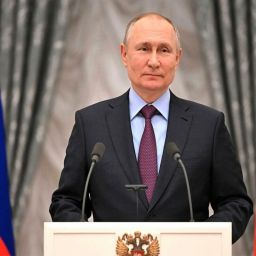
The BRICS group, which includes Brazil, Russia, India, China, South Africa, and recently added Egypt, Ethiopia, Iran, and the United Arab Emirates, has the potential to become the main forces behind global economic growth in the years to come, according to a major statement made by Russian President Vladimir Putin. The ramifications of this claim are particularly relevant in light of the changing global power structures and economic environments as the BRICS summit draws near, which is scheduled to take place in Kazan, Russia, from October 22–24. BRICS nations represent a formidable block, both in terms of population and economic potential. Together, these countries account for nearly 40% of the world’s population and a substantial portion of global GDP. The rapid economic growth rates observed in these nations contrast sharply with the stagnation experienced in many Western developed countries. For instance, while advanced economies like those in Europe and North America struggle with slow growth and rising debt levels, BRICS countries have been investing heavily in infrastructure, technology, and human capital.

Putin’s assertion that BRICS will be the engines of global economic growth highlights a pivotal shift. As emerging markets continue to expand their influence, traditional economic powerhouses are being compelled to acknowledge the changing tides. The BRICS nations, benefiting from youthful populations, abundant natural resources, and increasing technological innovation, are positioned to capture significant shares of future economic development.
At its core, the expansion of BRICS is not merely about economic growth; it is also deeply political. The addition of countries like Iran and the UAE signifies a strategic move towards creating a counterbalance to Western hegemony. Putin’s vision for BRICS includes fostering cooperation among member states to promote a multipolar world, where global governance is not dominated by a few Western nations.
This vision is particularly relevant in the context of increasing geopolitical tensions. As Western countries impose sanctions and leverage their economic power to influence global affairs, BRICS seeks to offer an alternative model of cooperation based on mutual respect and shared interests. The collaboration among these diverse nations is poised to challenge the established norms of international trade and political engagement, promoting a more equitable distribution of power on the global stage.
The upcoming BRICS summit in Kazan is expected to be a crucial platform for discussing these themes. Business leaders and officials from member states will gather to explore avenues for cooperation, investment opportunities, and strategies to enhance collective economic resilience. With a focus on sustainable growth, technology transfer, and innovation, the summit aims to strengthen ties among member states and set a unified agenda for future collaboration.
One of the key topics likely to be discussed is the enhancement of intra-BRICS trade, which remains relatively low compared to trade with Western nations. By reducing trade barriers and fostering economic integration, BRICS countries can leverage their collective market size to drive growth and development. Initiatives to create a BRICS development bank and further financial cooperation will also be on the agenda, aiming to reduce reliance on Western financial institutions.
It is becoming more and more obvious that a revolutionary change is about to occur in the world as Vladimir Putin declares the BRICS countries to be the future drivers of global economic expansion. BRICS’s rapid economic growth, demographic advantages, and shared goal for a multipolar world make them a powerful force in world politics and economics.
The BRICS group is more than just an economic partnership; it is a larger movement for more openness and balance in global governance in the face of uncertainty and threats from conventional powers. The world will be intently observing how these countries express their ideas and work together to influence the future of the global economy as the Kazan summit draws near. By doing this, BRICS might potentially reshape the landscape of global politics and economic development for years to come.
By Paul Bumman

Related Posts