An Ocean of Peace, an Age of Alliances: How the Fiji–Australia Treaty Redraws the Pacific Security Map

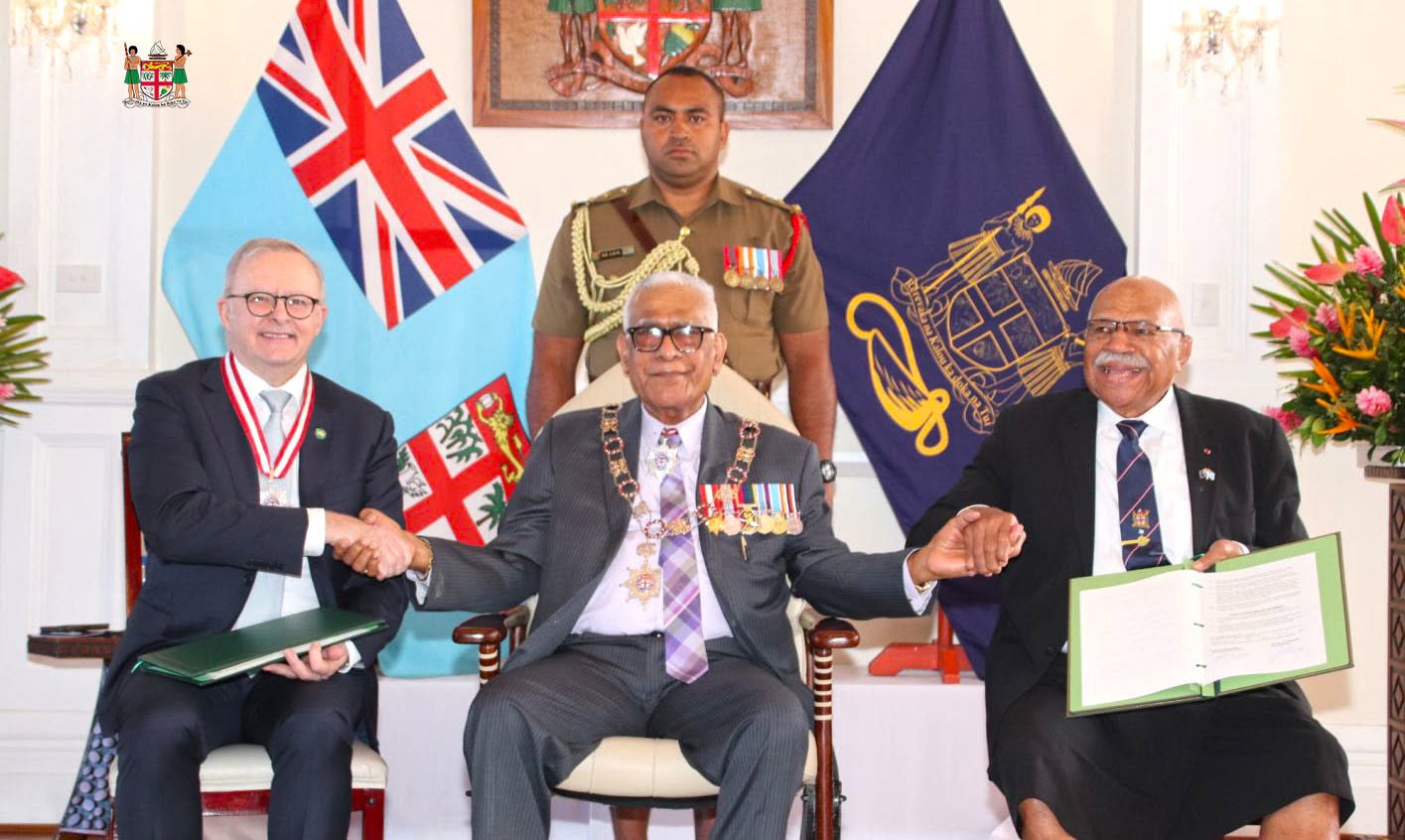
On July 6, in Suva, the prime ministers of Australia and Fiji signed two treaties that Canberra describes as among the most significant undertakings in its diplomatic history. And, within hours, Chinese state media announced that a submarine had test-launched a long-range ballistic missile in the South Pacific. Beijing had notified Canberra in advance; Australia’s foreign minister, Penny Wong, called the test destabilizing and declined to speculate on whether the timing was a message. She hardly needed to. The choreography of that single day captured, better than any communiqué, what the Pacific has become: an ocean where every handshake is answered by a show of force.
The centerpiece is the Ocean of Peace Alliance, also known by its Fijian name, the Veitacini Treaty, a mutual defense pact binding each country to come to the other’s aid “at times of greatest need,” and committing both to consult over any security development threatening their sovereignty. Its significance is best measured in firsts and fourths: this is the first military alliance Fiji has ever concluded in its history as an independent state, and only the fourth for Australia, whose previous treaty allies are the United States and New Zealand (under ANZUS, signed in 1951) and Papua New Guinea, added just last October through the PukPuk Treaty. Seventy-five years separated Australia’s first alliance from its second; barely nine months separate its third from its fourth. That acceleration is the story.
Alongside the defense pact came the Vuvale Union (“vuvale” meaning family in Fijian) an economic and climate package worth more than A$1 billion (about US$690 million) over a decade, deepening integration between the two countries’ economies, security institutions and people. Canberra has learned the region’s central lesson: in the Pacific, security agreements unaccompanied by development money are read as extraction, not partnership.
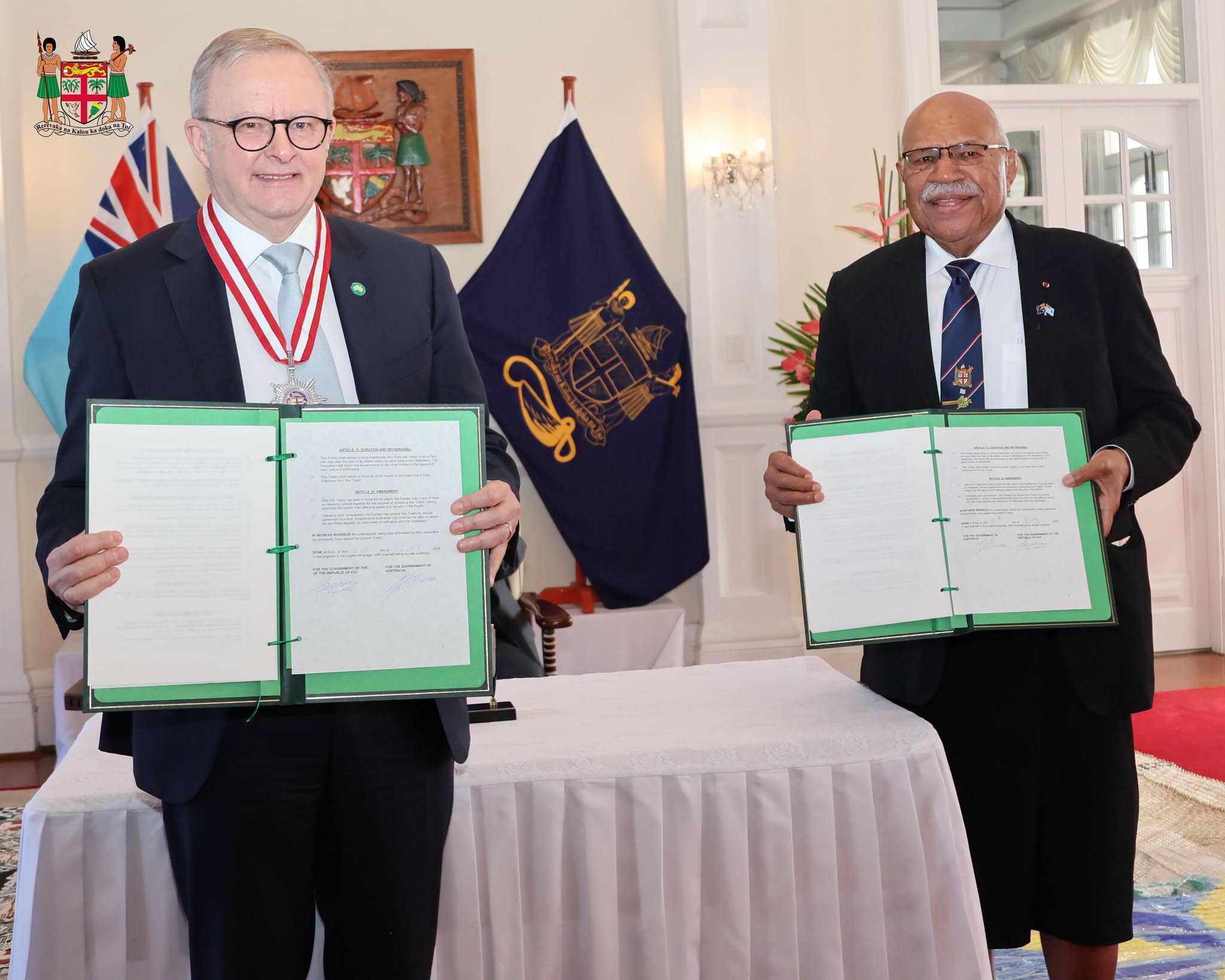
The Suva signing is not an isolated event but the capstone of a systematic Australian campaign to lock in its neighborhood, treaty by treaty. In October 2025 came the PukPuk defense pact with Papua New Guinea. Then the Nakamal Agreement with Vanuatu, a package reportedly worth about A$500 million, named for the traditional Melanesian meeting house, and carrying an emotional weight beyond its clauses: descendants of the South Sea Islanders hailed it as historic recognition of the “blackbirding” era, when tens of thousands of ni-Vanuatu and other Melanesians were coerced or kidnapped in the nineteenth century to labor on Queensland’s sugar plantations. Add the Falepili Union with Tuvalu, the world’s first treaty offering climate migration pathways in exchange for a security veto, and a coherent architecture emerges: Australia is converting historical ties, guilt included, into binding strategic commitments.
The catalyst for all of it can be dated precisely: 2022, when China signed a secretive security pact with the Solomon Islands, igniting fears in Canberra and Washington of a future Chinese military foothold within striking distance of Australia’s coast. Everything since, the treaties, the billion-dollar packages, the restored embassies and rugby diplomacy, is the answer to that shock.
It would be a mistake, however, to read Suva as simply falling into line. Fiji’s trajectory tells a more interesting story about Pacific agency. Under Frank Bainimarama, who took power in a 2006 coup and turned to Beijing when Western sanctions bit, Fiji became China’s closest partner in the region. Since Sitiveni Rabuka’s return to office in 2022, the pendulum has swung back toward Suva’s traditional partners, but on Fijian terms. It was Rabuka, not Albanese, who proposed the alliance, and its very name is his: the “Ocean of Peace” is a concept Rabuka has championed for years and successfully embedded in the Pacific Islands Forum’s own declarations, a vision of the region as a zone insulated from great-power conflict.
Rabuka has been equally deliberate in refusing the anti-China framing. He told reporters he expected no severe pushback from Beijing and insisted the treaty threatens neither Fiji’s relationship with China nor Australia’s. Regional analysts make the same point: for Pacific governments, these pacts are less about choosing Washington’s side than about extracting maximum benefit – climate finance, labor mobility, infrastructure, security guarantees – from a moment when, for once, the great powers are competing for their signatures. The colonized ocean has learned to auction its geography.
Three tensions will determine whether July 6 marks the founding of a stable order or merely a new phase of competition.
The alliance may grow and that cuts both ways. Canberra has signaled the Ocean of Peace Alliance could expand to other Pacific nations, raising the prospect of a Melanesian security bloc anchored to Australia. But the region’s premier institution, the Pacific Islands Forum, derives its influence precisely from consensus and non-alignment; a hardening lattice of bilateral pacts risks splitting the “Blue Pacific” family the treaties claim to protect, especially with Solomon Islands bound to Beijing and Kiribati cultivating its own Chinese ties.
Militaries are not what the Pacific says it fears most. Tonga’s prime minister told a regional audience only days before the Suva signing that climate adaptation is the Pacific’s top security challenge. Pacific leaders have spent years insisting that rising seas, not rising powers, are the existential threat. If alliance-building crowds out climate finance rather than accompanying it, the region’s patience with the new architecture will be short. The Vuvale Union’s billion-dollar climate and economic component suggests Canberra understands this; whether the money matches the rhetoric over a decade is another matter.
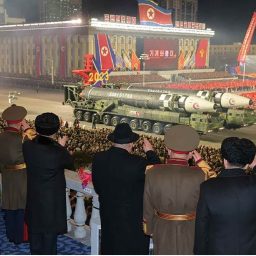
And China will answer. The submarine launch on signing day, officially a routine exercise with a dummy warhead, followed Tonga’s ratification of the nuclear test-ban treaty amid its own unease over Chinese missile activity, and came as Beijing pointedly declared that Pacific cooperation “should not target third parties” while writing checks to the Forum secretariat. The competition is no longer creeping; it is overt, and it now has a nuclear-capable dimension in waters that Pacific nations, veterans of decades of colonial-era atomic testing whose “jellyfish babies” are still remembered, had hoped never to see militarized again.
For generations, the islands between Asia and the Americas appeared on strategic maps mostly as empty blue space. The events of a single week in July 2026, a mutual defense treaty in Suva, a missile rising from the sea, a billion dollars pledged to a “family” union, confirm that the emptiness was always an illusion. The Pacific map has been redrawn. The question the region itself keeps asking, from Suva to Funafuti, is whether it will be allowed to hold the pen.
By I. Constantin
Sources: Australian Department of Defence; ABC News/AP; AFP; Euronews; The Canberra Times; Asia Times; Islands Business/PACNEWS; RNZ Pacific (July 2026).