Scroll Top

Is 2026 the year of China?

In the first quarter of 2026, China’s economy surprised on the upside, recording 5% year-on-year GDP growth—the fastest pace in the last three quarters, despite the destabilizing geopolitical environment generated by the war in Iran. The quarterly figure, up 1.3% compared to the previous three months, confirmed a structural resilience that many observers had not expected, fueled primarily by the strength of the manufacturing sector and exports.
Industrial production grew 5.7% in March, while exports jumped 15% for the entire quarter, driven particularly by high-tech sectors: industrial robots increased 33%, semiconductors 24%, and integrated circuits a whopping 78% in the quarter. The boom in artificial intelligence and the partial reduction of US tariffs, facilitated by a US Supreme Court ruling last February, have helped sustain this trend, with foreign sales of electric cars doubling in March alone.
Domestic demand remains the system’s real weakness: retail sales grew by just 1.7% in March, while per capita household spending recorded its lowest real growth rate since 2022, at 2.6%. Durable consumption, cars, furniture, appliances, is declining sharply, a sign that household confidence is struggling to consolidate. The real estate market, for its part, continues its long contraction, with investments falling by 11.2%, while private investment recorded a decline for the first time outside of the Covid period. Urban unemployment rose to 5.4%, the highest level in a year, increasing pressure on policymakers to intervene with targeted stimulus measures.

On the price front, significant development is noteworthy: in March, producer prices returned to positive territory for the first time since 2022, ending more than three years of industrial deflation. This signal of normalization could, if confirmed in the coming months, alleviate some of the pressure on manufacturing margins.
The war in Iran has so far had a limited impact on the Chinese economy, thanks to the strengthening of energy security built in previous years. However, some effects are beginning to be felt. Paradoxically, the war could also create opportunities for China, whose green tech and electric vehicles are benefiting from growing global demand in response to rising energy prices.
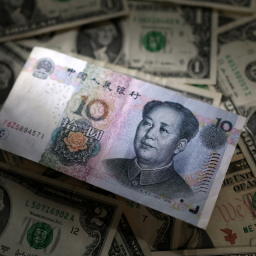
On the currency market, the yuan has recently benefited from its relative safe-haven status, rising to its highest level in three years. However, in March, demand for foreign currency in China hit a record high: $257.64 billion in purchases by institutions, businesses, and individuals—the highest since the SAFE series began in 2010. Cross-border payments also peaked at $855.9 billion, and investment in foreign securities ($382.5 billion) exceeded capital inflows ($329.3 billion). This suggests a structural repositioning of flows toward the dollar, reducing the scope for further appreciation of the yuan. The People’s Bank of China, for its part, is unwinding some defensive measures introduced in the past, adopting a more neutral stance that is helping to moderate the rate of appreciation of the currency without, however, reversing its trajectory. The overall picture that emerges is of an economy still capable of sustained growth, but with an increasingly unbalanced structure: a world-class industrial and technological offering, while domestic demand struggles to keep pace. The challenge in the coming quarters will be to bridge this gap, in a geopolitical context that remains uncertain and in a global market moving increasingly rapidly toward the energy and digital transition—two areas in which China currently appears well-positioned.
Chinese exports of green technologies increased in March, confirming signs that manufacturers are benefiting from growing global demand for alternative energy sources, at a time when traditional supplies are being jeopardized by the war with Iran.
The most significant growth was recorded in shipments of lithium-ion batteries and electric vehicles, with annual increases of 34% and 53%, respectively, according to data released Saturday by the Chinese General Administration of Customs. Solar cells also saw 80% growth last month. All three exports increased from February levels.
The data provides the first comprehensive picture of Chinese green technology investments have surged since the United States and Israel launched attacks on Iran seven weeks ago, effectively blocking the Strait of Hormuz and triggering a global energy crisis. The disruptions caused by the conflict have exacerbated energy security concerns for countries dependent on imported fuels and have prompted consumers and industries to seek alternatives.
“This is just the beginning; the knock-on effects of high energy prices will be felt for months to come,” said Euan Graham, senior analyst at the British think tank Ember. “Green technologies represent a way out of soaring fuel costs for consumers and a long-term path for countries to reduce their dependence on fossil fuels. China is well-positioned to meet this growing demand.”
Even after Iran announced the reopening of the Strait of Hormuz on Friday evening (Asian time), it could still take months for maritime traffic to return to normal levels, assuming a peace agreement is reached.
China also leads in solar and wind power
China, which already dominates global supply chains for solar and wind energy, batteries, and electric vehicles, now faces a further opportunity to expand its influence. Years of developing manufacturing capacity, often at the expense of profitability, have allowed Chinese manufacturers to rapidly and competitively expand distribution in overseas markets, making eco-friendly products a new growth driver for the country’s exports.
Specifically, according to the China Passenger Car Association, shipments of electric and hybrid vehicles reached a record 349,000 units in March. Dealerships in major Asian capitals have reported an influx of customers turning to electric vehicles to avoid the skyrocketing fuel prices that have skyrocketed since the war began.
“Chinese automakers can rapidly expand their global presence during the Strait of Hormuz crisis,” said Cui Dongshu, secretary general of the China Passenger Car Association, during a briefing last week.
Contemporary Amperex Technology, the world’s largest manufacturer of electric vehicle batteries, said during a financial results conference call on Wednesday that growing uncertainty about crude oil supply and prices will push customers to increase their use of electric vehicles in the short term.
Domestic policy changes also impacted on green technology exports in the first quarter. For example, export tax rebates for the solar and battery sectors were eliminated or reduced starting in April, which analysts say could prompt companies to accelerate shipments before the subsidies expire.
By Domenico Greco

Related Posts